
Rosemary Whole Wheat Bread: Rustic Flavor, Hearty Goodness
This Rosemary Bread With Whole Wheat provides a deeply aromatic and satisfying loaf, incorporating whole wheat flour for increased fiber content and a hearty, robust texture.
The recipe involves active kneading for 10 minutes and a total of 2 hours for yeast proofing, culminating in a tender, chewy crumb.
The fresh rosemary infuses throughout the dough, creating a vibrant, earthy flavor that elevates simple meals. Prepare this versatile bread to enhance weekend meals, complement savory soups, or serve alongside a robust cheese platter.
Rosemary Bread With Whole Wheat
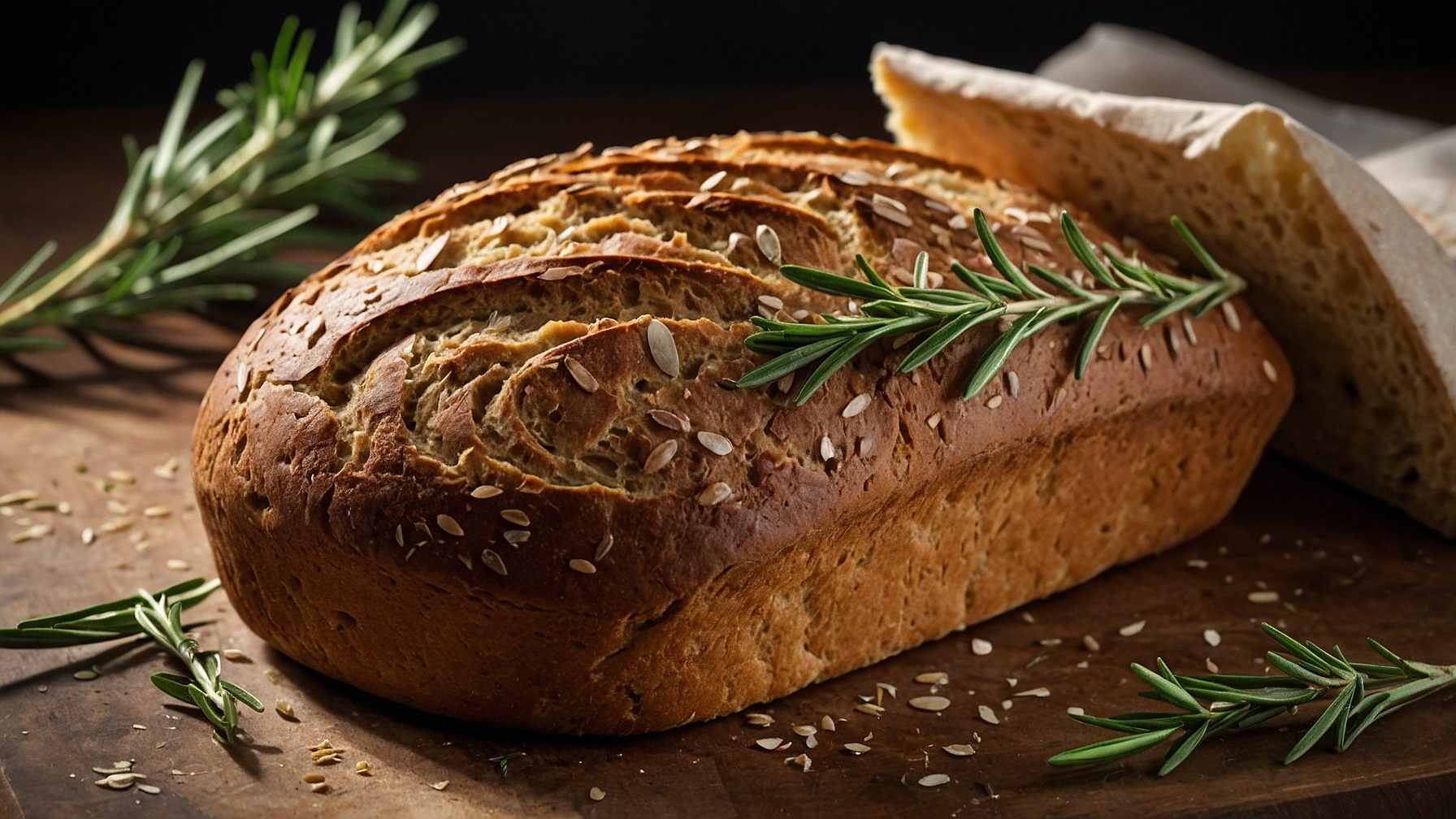
Prepare a whole wheat loaf infused with fresh rosemary.
Ingredients
- 1 ½ cups (360ml) warm water, 105-115°F (40-46°C)
- 2 teaspoons (6g) instant dry yeast
- 1 tablespoon (12g) granulated sugar
- 2 cups (240g) unbleached all-purpose flour
- 1 ½ cups (180g) whole wheat flour
- 1 ½ teaspoons (9g) fine sea salt
- 2 tablespoons (30ml) olive oil, plus additional for greasing bowl
- 2 tablespoons (10g) fresh rosemary, finely chopped
Instructions
- Combine 1 ½ cups (360ml) warm water, 1 tablespoon (12g) granulated sugar, and 2 teaspoons (6g) instant dry yeast in a large mixing bowl. Stir to dissolve sugar and yeast. Rest mixture 5-10 minutes until a thick, frothy layer forms.
- Whisk 2 cups (240g) unbleached all-purpose flour, 1 ½ cups (180g) whole wheat flour, and 1 ½ teaspoons (9g) fine sea salt in a separate large bowl. Whisk until thoroughly combined and lump-free.
- Pour 2 tablespoons (30ml) olive oil and 2 tablespoons (10g) finely chopped fresh rosemary into the activated yeast mixture. Gradually add whisked dry ingredients to wet ingredients. Mix with a wooden spoon or spatula until a shaggy, cohesive dough forms and no dry flour streaks remain.
- Turn dough onto a lightly floured work surface. Knead dough vigorously 8-10 minutes, using a push-and-fold motion, until smooth, elastic, and passes the windowpane test (stretch a small piece thinly enough to see light through without tearing).
- Lightly grease a large bowl with olive oil. Place kneaded dough into bowl; turn once to coat with oil. Cover bowl tightly with plastic wrap or a damp kitchen towel. Let dough rise in a warm, draft-free place (75-80°F / 24-27°C) for 60-90 minutes, until visibly doubled in size.
- Gently punch down risen dough. Transfer dough to a lightly floured work surface. Shape dough into a round boule or an oblong loaf, ensuring a taut surface and even thickness.
- Place shaped loaf onto a parchment-lined baking sheet or into a lightly greased 9×5 inch (23×13 cm) loaf pan. Cover loaf loosely with plastic wrap or a damp kitchen towel. Let rise 45-60 minutes in a warm place until visibly puffy, nearly doubled, and a gentle finger poke leaves a slight indentation that slowly springs back.
- 20 minutes before the second rise finishes, preheat oven to 400°F (200°C). Place a baking stone or heavy baking sheet in the oven during preheating, if using.
- Before baking, use a sharp knife or bread lame to make 2-3 shallow scores (½ inch / 1.25 cm deep) across the top of the loaf. Transfer loaf into preheated oven. Bake 35-45 minutes until crust is deep golden brown and internal temperature registers 200-210°F (93-99°C).
- Immediately transfer bread from baking sheet or loaf pan to a wire cooling rack. Cool completely 1-2 hours before slicing. Complete cooling prevents a gummy texture.
Notes
- Use warm water within the 105-115°F (40-46°C) range. If yeast mixture is not foamy after 10 minutes, discard and restart with fresh yeast and correct water temperature.
- For hand kneading, use the heel of your palm to push, fold, and turn dough. For a stand mixer, knead on medium-low speed 6-8 minutes until dough pulls away from bowl sides.
- Place covered dough in a warm, draft-free location. Use a turned-off oven with the light on for a warm environment. Avoid open windows or air conditioning vents.
- Store cooled bread at room temperature in an airtight container, sealed plastic bag, or bread box for 3-4 days. For longer storage, slice and freeze individual slices in a freezer-safe bag for up to 2-3 months.
- To achieve a denser loaf with stronger whole wheat flavor, increase whole wheat flour to 2 cups (240g) and reduce all-purpose flour to 1.5 cups (180g). Add 1-2 tablespoons (15-30ml) more water for proper dough consistency.
- Substitute dried rosemary for fresh. Use 1 tablespoon (2g) dried rosemary for every 2 tablespoons (10g) fresh. Crumble finely before adding to dough.
- To achieve a crispier crust, add steam to the oven during initial baking. Place a small pan of hot water on the bottom rack immediately after placing bread inside. Remove the pan after the first 15 minutes of baking.
- If dough feels excessively sticky after initial mixing, add additional all-purpose flour, 1 tablespoon (8g) at a time, during kneading. Incorporate fully after each addition until dough is tacky but not excessively adhering to hands or work surface.
Pro Tips for Perfect Rosemary Whole Wheat Bread
Ingredient Tips
- Whole Wheat Flour Blend:Substitute 100g (about 3/4 cup) of your total whole wheat flour with unbleached bread flour to achieve a lighter texture and improved rise; this ensures better gluten development than 100% whole wheat alone.
- Fresh Rosemary Preparation:Finely chop 2 tablespoons of fresh rosemary leaves into 1/8-inch pieces; this prevents large, woody bits in the bread and allows the aromatic oils to distribute more evenly during mixing.
- Water Temperature for Yeast:Ensure your water is precisely between 105-115°F (40-46°C) using an instant-read thermometer; water too cool won’t activate the yeast, while water too hot will kill it, hindering your loaf’s rise.
- Honey Addition:Add 1 tablespoon of honey or maple syrup to the warm water with the yeast; this provides readily available food for the yeast, boosts its activity, and contributes to a beautiful golden brown crust.
- Salt Incorporation:Use 1.5 teaspoons of fine sea salt and add it to the dough after the first 2-3 minutes of kneading; salt directly mixed with yeast can inhibit its growth, so slight delay ensures optimal activity.
- Olive Oil Quality:Incorporate 2 tablespoons of a good quality extra virgin olive oil into the dough for richness and a more tender crumb; save an additional 1 teaspoon for greasing your proofing bowl to prevent sticking.
Technique Tips
- Dough Hydration Check:Start with 320ml (1 1/3 cups) of warm water and be prepared to add up to 2 additional tablespoons incrementally; aim for a dough that is shaggy but cohesive and just pulls away from the sides of the bowl after 5 minutes of mixing, not too stiff.
- Optimal Kneading Duration:Knead the dough for a full 10-12 minutes in a stand mixer on medium-low speed (setting 2-3), or 15-20 minutes by hand, until it becomes smooth, elastic, and easily passes the windowpane test (stretches thin enough to see light through without tearing).
- First Rise Visual Cue:Allow the dough to bulk ferment in a warm spot (75-80°F/24-27°C) for 60-90 minutes, or until it has visibly doubled in size and a gentle poke with a floured finger leaves an indentation that slowly springs back by about half.
- Effective Shaping for Structure:After the first rise, gently deflate and shape the dough into a tight log or boule by folding the edges repeatedly underneath itself, creating significant surface tension; aim for 8-10 folds to ensure a strong structure and maximum oven spring.
- Second Rise Indicator:Proof the shaped loaf in a lightly oiled 9×5-inch loaf pan for 30-45 minutes in a warm environment, or until it has increased by 50-75% and feels light and airy; a gentle poke should leave an indentation that remains for 1-2 seconds.
- Steam Baking for Crust:Preheat your oven to 425°F (220°C) with an empty oven-safe pan on the bottom rack for 30 minutes. Immediately after placing the bread in, pour 1 cup of boiling water into the hot pan, then reduce the oven temperature to 375°F (190°C) after 10 minutes to create essential steam for a crisp, crackly crust.
- Internal Temperature for Doneness:Bake for 30-35 minutes, rotating the pan halfway through, until the crust is deep golden brown and an instant-read thermometer inserted into the center of the loaf registers 200-210°F (93-99°C); this ensures the crumb is fully cooked, not gummy.
- Cooling Time:Immediately transfer the baked loaf from the pan to a wire rack and cool completely for at least 60 minutes before slicing; slicing hot bread can result in a gummy texture as starches haven’t set.
Common Issues
- Dense, Heavy Loaf:If your bread is dense, ensure you kneaded for the full 10-12 minutes to develop gluten adequately. Also, verify both rises: the first should double in volume (60-90 min), and the second should increase by 50-75% (30-45 min) before baking.
- Crumbly Dough Consistency:Whole wheat flour absorbs more liquid. If your dough feels too crumbly during mixing, add 1-2 tablespoons of warm water incrementally until it forms a cohesive, shaggy ball that just pulls away from the mixing bowl.
- Poor Oven Spring (Flat Top):Ensure your oven is fully preheated to 425°F (220°C) for at least 30 minutes to create an initial burst of heat. Also, double-check yeast activity by proofing 1 teaspoon in 1/4 cup of 105-115°F (40-46°C) water with a pinch of sugar; it should foam within 5 minutes.
- Pale or Soft Crust:If your crust is pale or lacks crispness, ensure the initial 10 minutes of baking are at 425°F (220°C) with steam. Consider baking an additional 5-7 minutes if needed, until the internal temperature reaches 200-210°F (93-99°C) and the crust is a deep golden brown.
How to Store and Enjoy Your Rosemary Whole Wheat Bread
Rosemary Whole Wheat Bread offers a rustic texture and aromatic herb notes. Proper storage and reheating are crucial to preserving its unique character, ensuring every slice is as enjoyable as the first, whether fresh from the oven or weeks later.
Refrigerator Storage
Duration: 5-7 days in an airtight plastic bag or container.
Refrigeration slows mold growth but significantly accelerates staling. Starch molecules recrystallize, firming the crumb and softening the crust. The aromatic rosemary flavor may also mellow over time. For optimal texture and flavor, consume within 3-4 days; after day 5, the bread’s quality noticeably declines, becoming drier and chewier.
Freezer Storage
Duration: 2-3 months
Freezing is the superior method for long-term storage, preserving texture and flavor much better than refrigeration. Ensure the bread is completely cooled before freezing. For a whole loaf, wrap tightly in a layer of plastic wrap, then an additional layer of heavy-duty aluminum foil or place it in a freezer-safe bag, expelling all air. For slices, separate them with parchment paper before stacking and wrapping the stack similarly. This double-wrapping prevents freezer burn. To thaw, simply remove the bread from the freezer and let it sit at room temperature for 2-4 hours (for a whole loaf) or 30-60 minutes (for slices). Thawed bread might have a slightly drier, less elastic crumb, but its flavor largely remains intact. A quick reheat will restore much of its original glory.
Reheating Instructions
- Oven (Best Method):Preheat to 350°F (175°C). For a whole thawed loaf, bake for 10-15 minutes. For individual thawed slices, bake for 5-7 minutes. This method effectively restores a crisp, golden crust and a soft, warm interior.
- Toaster/Toaster Oven (Excellent for Slices):Toast on a medium setting for 2-4 minutes, or until golden brown and warm throughout. This efficiently restores crispness to the crust and warms the interior without drying it out.
- Skillet/Griddle (Great for a Buttery Finish):Heat a dry or lightly buttered skillet over medium heat. Place slices in the skillet and toast for 2-3 minutes per side, or until golden and warmed through. This method creates a lovely crisp, slightly chewy exterior, especially if using butter.
- Microwave (Acceptable for Speed, but Changes Texture):Place a single slice on a microwave-safe plate and heat on high for 15-30 seconds. While quick, this method tends to make the bread soft and chewy initially, but it can quickly become tough and dry as it cools. The desirable crisp crust will be lost.
Make-Ahead Tips
Rosemary Whole Wheat Bread is an excellent candidate for make-ahead preparation. The entire baked loaf can be prepared in advance and stored as detailed under ‘Freezer Storage’. This allows you to bake several loaves at once and have delicious bread on hand whenever needed. Alternatively, you can prepare the dough up to the shaping stage and freeze the shaped dough. Store this unbaked, shaped dough wrapped tightly in plastic wrap and foil in the freezer for up to 1 month. Thaw overnight in the refrigerator, then let rise at room temperature before baking as usual for a truly fresh-baked experience.