
Peanut Butter Millionaire Shortbread Bars: An Irresistible Twist
These Peanut Butter Millionaire Shortbread Bars combine three irresistible layers for a decadent, crowd-pleasing dessert that looks impressive but is surprisingly simple to assemble.
Featuring a buttery shortbread base, a creamy peanut butter caramel, and a rich chocolate topping, this recipe uses just 12 common ingredients and requires about 30 minutes of active preparation time.
Ideal for holiday cookie exchanges, dessert platters, or as a special treat for any gathering, these bars offer a delightful blend of salty and sweet flavors.
Peanut Butter Millionaire Shortbread Bars
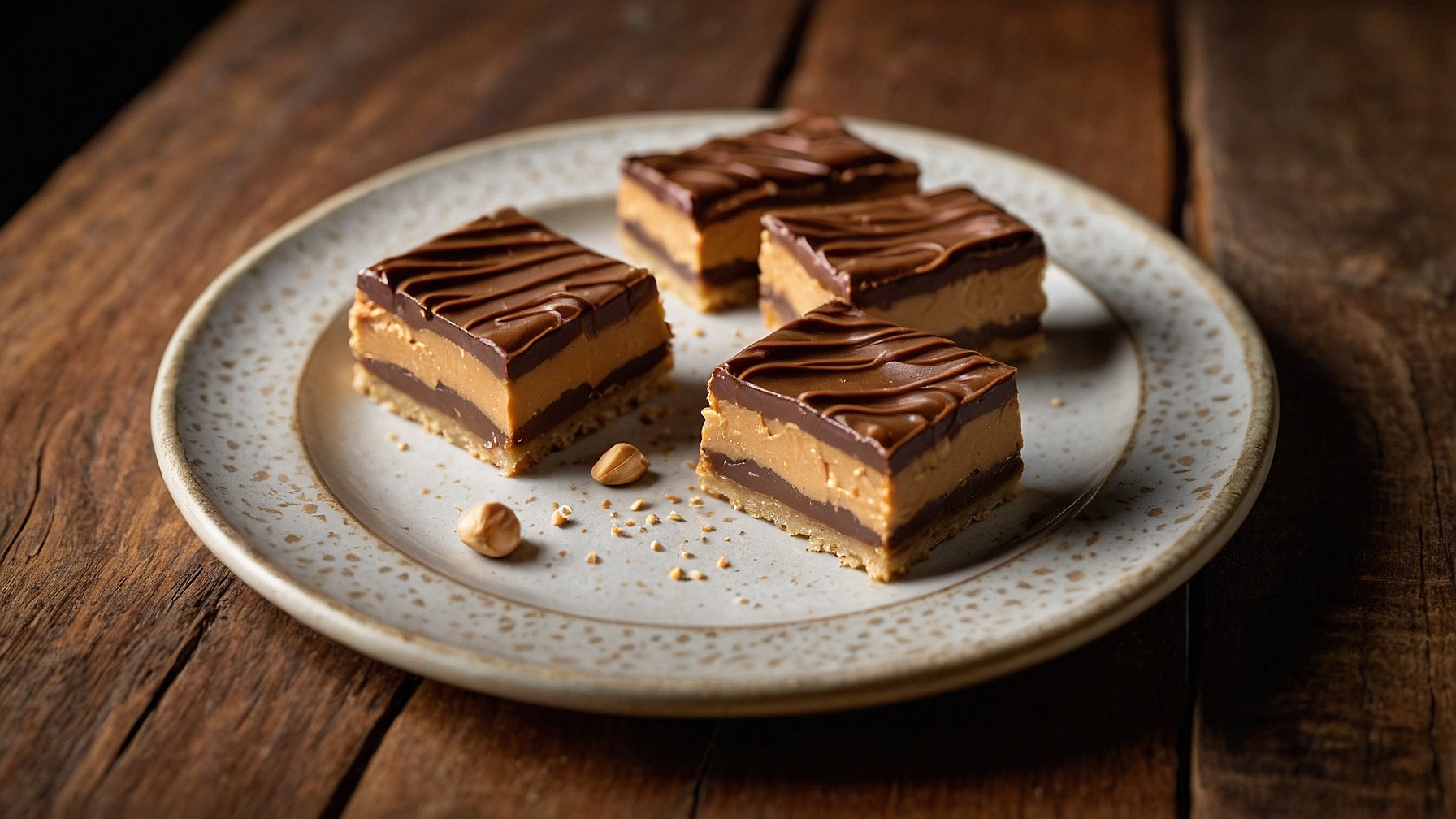
Prepare Peanut Butter Millionaire Shortbread Bars with a buttery shortbread crust, a peanut butter caramel, and a chocolate topping.
Ingredients
- For the Shortbread Crust:
- 1 cup (226g) unsalted butter, very cold and cut into 1/2-inch (1.25cm) cubes
- 2 cups (240g) all-purpose flour, sifted
- 1/2 cup (100g) granulated sugar
- 1/2 teaspoon (2.5g) fine sea salt
- For the Peanut Butter Caramel Layer:
- 1/2 cup (113g) unsalted butter
- 1/2 cup (100g) light brown sugar, firmly packed
- 1/4 cup (60ml) heavy cream (double cream)
- 1 cup (250g) creamy peanut butter, well-stirred if natural
- 1 cup (120g) powdered sugar (confectioners’ sugar), sifted
- 1 teaspoon (5ml) pure vanilla extract
- 1/4 teaspoon (1.25g) fine sea salt
- For the Chocolate Topping:
- 2 cups (340g) semi-sweet chocolate chips (or finely chopped chocolate bar)
- 1 tablespoon (15ml) vegetable oil or refined coconut oil
Instructions
- Prepare the Shortbread Crust:
- Adjust an oven rack to the middle position. Preheat oven to 350°F (175°C). Line a 9×13 inch (23x33cm) baking pan with parchment paper, leaving an overhang on the sides.
- In a large mixing bowl, whisk 2 cups (240g) all-purpose flour, 1/2 cup (100g) granulated sugar, and 1/2 teaspoon (2.5g) fine sea salt until thoroughly combined.
- Add 1 cup (226g) cold, cubed unsalted butter to the dry ingredients. Using a pastry blender, two knives, or fingertips, cut butter into the flour mixture until it resembles coarse crumbs with pea-sized pieces of butter remaining.
- Transfer the shortbread mixture to the prepared baking pan. Press it down firmly and evenly across the bottom using fingers or a flat glass, ensuring a compact, uniform crust.
- Bake for 20-25 minutes, until edges are lightly golden brown and the center appears set. Remove from oven. Cool completely in the pan on a wire rack for at least 30 minutes.
- Make the Peanut Butter Caramel Layer:
- In a medium, heavy-bottomed saucepan, combine 1/2 cup (113g) unsalted butter, 1/2 cup (100g) packed light brown sugar, and 1/4 cup (60ml) heavy cream over medium heat. Stir constantly until butter is melted and sugar is dissolved.
- Bring mixture to a full rolling boil. Boil for exactly 1 minute, stirring continuously to prevent scorching. The caramel will thicken slightly and develop a richer color.
- Remove saucepan from heat immediately after the 1-minute boil time.
- Add 1 cup (250g) creamy peanut butter, 1 cup (120g) sifted powdered sugar, 1 teaspoon (5ml) pure vanilla extract, and 1/4 teaspoon (1.25g) fine sea salt to the hot caramel. Whisk vigorously until all ingredients are thoroughly combined and the caramel is smooth and lump-free.
- Immediately pour warm peanut butter caramel evenly over the completely cooled shortbread crust. Spread from edge to edge with an offset spatula or spoon back.
- Transfer pan to the refrigerator. Chill for at least 2 hours, or until the peanut butter caramel layer is firm to the touch and fully set.
- Add the Chocolate Topping:
- In a microwave-safe bowl, combine 2 cups (340g) semi-sweet chocolate chips and 1 tablespoon (15ml) vegetable oil. Microwave on high in 30-second intervals, stirring well after each interval, until chocolate is fully melted and smooth. Alternatively, melt over a double boiler, stirring until completely smooth and glossy.
- Pour melted chocolate evenly over the chilled, set peanut butter caramel layer. Gently tilt pan or use an offset spatula to spread chocolate from edge to edge, creating a smooth, uniform top layer.
- Return pan to the refrigerator. Chill for an additional 1 hour, or until chocolate topping is completely firm and set.
- Once chocolate is fully set, remove pan from the refrigerator. Use parchment paper overhang to lift the slab onto a cutting board. Allow to sit at room temperature for 5-10 minutes to prevent cracking. Using a large, sharp knife, slice bars into 24 even squares or rectangles. Serve.
Notes
- Clean Cuts: For clean cuts, ensure each layer is fully chilled and set before adding the next. When cutting, use a large, sharp knife. Heat the knife under hot water, wipe dry, make a cut, then wipe and reheat for the next cut. This prevents chocolate from cracking and dragging.
- Storage: Store Peanut Butter Millionaire Shortbread Bars in an airtight container at room temperature for up to 3 days, or in the refrigerator for up to 1 week. If refrigerating, allow to come to room temperature for 10-15 minutes before serving for optimal texture.
- Peanut Butter Type: Creamy conventional peanut butter is recommended for a smooth caramel. If using natural creamy peanut butter, ensure it’s well-stirred to prevent oil separation. Avoid crunchy peanut butter as it alters the caramel’s texture significantly.
Pro Tips for Perfect Peanut Butter Millionaire Shortbread
Ingredient Tips
- Cold Butter (Shortbread):Cut 1 cup (226g) cold unsalted butter into 1/2-inch cubes straight from the fridge. This creates steam pockets during baking for a tender, crumbly shortbread texture.
- Creamy Peanut Butter (Caramel):Use exactly 1/2 cup (128g) shelf-stable creamy peanut butter (e.g., Jif), not natural or oil-separated brands. Its consistent emulsion prevents separation in the caramel, ensuring a smooth, uniform texture.
- Sweetened Condensed Milk (Caramel Base):Opt for a full 14-ounce (397g) can of sweetened condensed milk, not evaporated milk. This provides the crucial high sugar content and viscosity for a thick, stable caramel that sets perfectly.
- High-Quality Chocolate (Topping):Select at least 6 ounces (170g) of good quality dark chocolate (60-70% cacao) or semi-sweet chocolate chips. Better chocolate melts more smoothly and sets with a beautiful, glossy finish.
- Flaky Sea Salt (Finishing Touch):Sprinkle 1/2 teaspoon of flaky sea salt (like Maldon) over the wet chocolate layer immediately after pouring. This provides a crucial textural contrast and balances the sweetness with a burst of savory depth.
Technique Tips
- Pressing Shortbread Uniformly:After combining 1 cup (226g) cold butter, 1/2 cup (100g) granulated sugar, and 2 cups (240g) all-purpose flour, press the mixture firmly and evenly into a 9×13 inch baking pan. Use the bottom of a flat-bottomed measuring cup to achieve a consistent 1/2-inch thickness, ensuring even baking.
- Blind Bake Shortbread Perfectly:Prick the entire surface of the pressed shortbread dough with a fork about 20-30 times. Bake at 350°F (175°C) for 18-22 minutes, until the edges are a delicate light golden brown. This pre-baking step prevents a soggy bottom layer once the caramel is added.
- Caramel to Soft-Ball Stage:Cook caramel ingredients (1/2 cup butter, 1/2 cup brown sugar, 1/4 cup granulated sugar, 14 oz SCM, 1/2 cup peanut butter) over medium-low heat for 8-12 minutes, stirring constantly. Continue until it reaches 238°F (114°C) on a candy thermometer, visibly thickens, and pulls away from the bottom of the pan for 1-2 seconds when stirred.
- Baking Soda for Softer Caramel:Immediately after removing the cooked caramel from the heat, stir in 1/4 teaspoon of baking soda. This small addition chemically reacts to create tiny air bubbles, yielding a softer, less brittle caramel that’s easier to chew without sticking.
- Achieve Smooth, Crack-Resistant Chocolate:Melt 6 ounces (170g) chocolate with 1 tablespoon of neutral oil (like vegetable or canola) in a microwave-safe bowl in 30-second intervals, stirring thoroughly after each, until completely smooth and glossy. The oil prevents the chocolate from becoming too hard and brittle when set, making cutting easier and preventing cracks.
- Extended Chill for Clean Slicing:After the chocolate layer is poured, refrigerate the entire pan for a minimum of 2-3 hours. This extended chill time ensures all layers are firm and properly set, allowing for clean, precise cuts. For best results, let the bars sit at room temperature for 10 minutes before cutting.
Common Issues
- Crumbly, Dry Shortbread:If your shortbread dough feels too dry and crumbly to press into the pan, add 1-2 teaspoons of ice-cold water, one drop at a time, and mix until just cohesive enough to hold together. This provides the necessary moisture without developing too much gluten, ensuring a tender base.
- Caramel Too Hard or Chewy:If your caramel layer sets too hard or is unpleasantly chewy, it was likely overcooked. Next time, aim for a caramel temperature of 235°F (113°C) instead of higher, or reduce the simmering time by 1-2 minutes. A “soft ball” forming in cold water test is your visual cue for perfect consistency.
- Caramel Not Setting Firmly:If your caramel remains too soft and sticky, it was undercooked. Return the mixture to medium-low heat and continue simmering, stirring constantly, for an additional 2-3 minutes. Ensure it reaches the 238°F (114°C) mark on your candy thermometer or forms a firm-ish soft ball when tested in cold water.
- Cracked Chocolate Topping When Cutting:To prevent the chocolate layer from cracking, ensure the bars have sat at room temperature for 10-15 minutes before attempting to slice. Use a large, sharp knife warmed under hot running water for 30 seconds, wiping it completely dry before making each cut. Repeat warming for every 1-2 slices for the cleanest finish.
Peanut Butter Millionaire Shortbread Bars are a delightful indulgence, and knowing how to properly store and, if desired, gently reheat them ensures every bite is as heavenly as the first. Here’s your comprehensive guide:
Storage, Serving, and Delicious Variations
Refrigerator Storage
Duration: 5-7 days in airtight container
For optimal freshness and texture, store your Peanut Butter Millionaire Shortbread Bars in an airtight glass container or a quality food-grade plastic container. The shortbread base will remain delightfully crisp for the first 2-3 days but will gradually absorb moisture from the other layers, becoming softer by day 5. The peanut butter caramel will stay firm and perfectly chewy, while the chocolate topping will maintain its satisfying snap. The intense peanut butter flavor will be most vibrant initially, mellowing slightly towards the end of the storage period. To prevent the chocolate from developing “bloom” (a harmless white film caused by temperature fluctuations), ensure the container is truly airtight and the refrigerator temperature is stable.
Freezer Storage
Duration: 2-3 months
These bars freeze exceptionally well. For best results, cut the bars into individual servings. Wrap each bar tightly in plastic wrap, then add an additional layer of aluminum foil to protect against freezer burn. Place the wrapped bars in a heavy-duty freezer bag or an airtight freezer-safe container. To enjoy, transfer the desired number of bars from the freezer to the refrigerator overnight (8-12 hours) or thaw at room temperature for 1-2 hours. The shortbread may become slightly more crumbly once thawed, and the peanut butter caramel will firm up considerably, requiring a moment to soften slightly at room temperature before eating for the best chewy texture. The chocolate layer might experience some minor blooming, but this will not affect flavor.
Reheating Instructions
- Room Temperature:This method is highly recommended for preserving the original texture. Simply let refrigerated bars sit at room temperature for 15-30 minutes before serving. The shortbread will retain its slight crispness, and the caramel will be perfectly chewy.
- Oven:Preheat oven to 300°F (150°C). Place bars on a parchment-lined baking sheet. Warm for 5-7 minutes, just until the chocolate topping begins to look glossy and the caramel softens slightly. Keep a close eye to prevent the chocolate from fully melting and separating. This method works best for slightly crisping up the shortbread if it has softened in the fridge.
- Microwave:Place a single bar on a microwave-safe plate. Heat on 50% power for 10-15 seconds. The goal is to gently soften the caramel and chocolate without fully melting them. Overheating will cause the chocolate to melt into a liquid and the shortbread to become gummy. This method is quick and acceptable if you’re short on time, but it may compromise the shortbread’s texture and can lead to uneven heating.
Make-Ahead Tips
Peanut Butter Millionaire Shortbread Bars are excellent make-ahead treats. The shortbread base can be baked, cooled completely, and stored in an airtight container at room temperature for up to 2 days, or frozen for up to 1 month. The peanut butter caramel layer can be prepared up to 3 days in advance and stored in an airtight container in the refrigerator; gently reheat it over low heat or in short microwave bursts to make it pourable before spreading over the shortbread. The chocolate topping should always be added just before the final chill to ensure a smooth, unblemished finish. Assembling the bars the day before serving allows ample time for the layers to set perfectly, resulting in clean cuts and a beautiful presentation.