
Salted Caramel Cookies: Your New Favorite Indulgence
These Salted Caramel Cookies deliver a perfect balance of sweet and savory in every chewy bite, ideal for a quick dessert.
This recipe requires only 8 common ingredients and bakes in under 15 minutes, making it an efficient choice for any occasion.
Prepare a batch for holiday platters, bake sales, or as a delightful after-dinner indulgence that consistently satisfies.
Salted Caramel Cookies
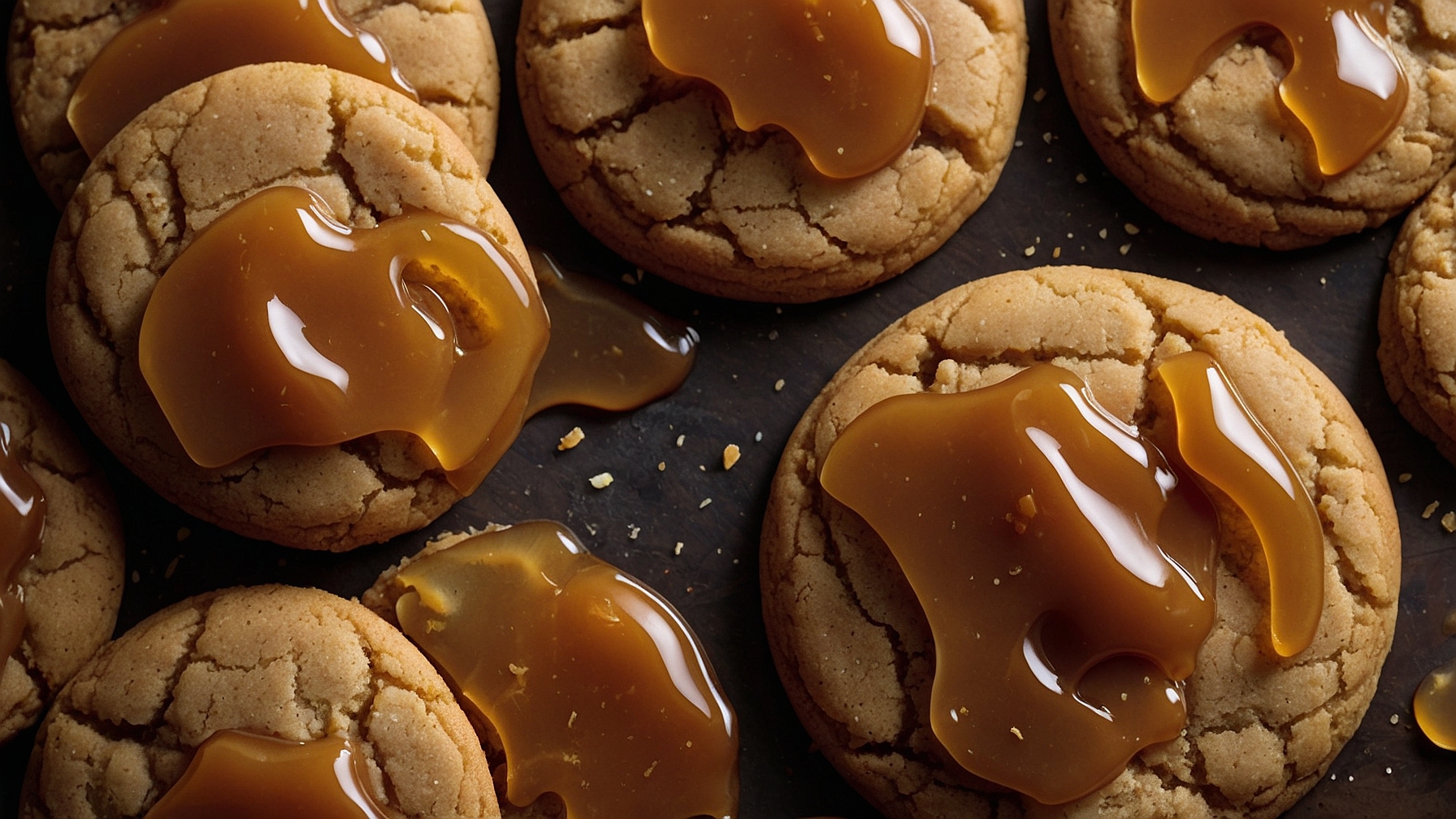
Prepare soft, chewy cookies with warm, gooey caramel centers and flaky sea salt.
Ingredients
- For the Cookie Dough:
- 2 ½ cups (300g) all-purpose flour, spooned and leveled
- 1 teaspoon (5g) baking soda
- ½ teaspoon (3g) fine sea salt
- 1 cup (226g) unsalted butter, softened
- ½ cup (100g) granulated sugar
- 1 ½ cups (300g) light brown sugar, firmly packed
- 2 large eggs, at room temperature
- 1 teaspoon (5ml) pure vanilla extract
- For the Salted Caramel Filling:
- 25 soft caramels (approx. 6 oz / 170g), unwrapped
- 2 tablespoons (30ml) heavy cream
- For Finishing:
- 1-2 teaspoons (5-10g) flaky sea salt
Instructions
- 1. Whisk: In a medium bowl, whisk 2 ½ cups (300g) spooned and leveled all-purpose flour, 1 teaspoon (5g) baking soda, and ½ teaspoon (3g) fine sea salt for 30 seconds. Set aside.
- 2. Cream: In a large mixing bowl with an electric mixer, cream 1 cup (226g) softened unsalted butter, ½ cup (100g) granulated sugar, and 1 ½ cups (300g) firmly packed light brown sugar on medium speed for 2-3 minutes until light and pale.
- 3. Add: Incorporate 2 large room temperature eggs, one at a time, beating after each until combined. Stir in 1 teaspoon (5ml) pure vanilla extract for 15-30 seconds until incorporated.
- 4. Combine: Add the reserved dry ingredients to the wet ingredients. Mix on low speed for 1-2 minutes until combined.
- 5. Chill: Cover cookie dough with plastic wrap. Refrigerate for 1-24 hours until firm.
- 6. Prepare Filling: While dough chills, combine 25 unwrapped caramels (approx. 6 oz / 170g) and 2 tablespoons (30ml) heavy cream in a small microwave-safe bowl.
- 7. Melt: Microwave caramel mixture for 30-45 seconds. Stir. Continue microwaving in 15-second intervals, stirring after each, for 1-2 minutes total until smooth and melted. Cool slightly until warm, not hot.
- 8. Preheat: Preheat oven to 350°F (175°C). Line two baking sheets with parchment paper or silicone mats.
- 9. Scoop: Scoop 1.5-inch (4cm) dough portions. Roll into balls, then flatten into 2-inch (5cm) disks.
- 10. Fill: Spoon ½ teaspoon (2.5ml) caramel into the center of each dough disk. Keep caramel away from edges.
- 11. Seal: Bring dough edges over caramel. Pinch firmly to seal. Reroll into a ball, ensuring caramel is fully enclosed.
- 12. Bake: Place filled dough balls 2 inches (5cm) apart on baking sheets. Bake one sheet at a time for 12-14 minutes until edges are golden brown and centers are slightly soft.
- 13. Cool: Remove baking sheets from oven. Sprinkle warm cookies with 1-2 teaspoons (5-10g) flaky sea salt. Cool on baking sheets for 5-7 minutes. Transfer to a wire rack to cool.
- 14. Serve: Serve cooled cookies.
Notes
- Caramel Consistency: If caramel stiffens, microwave for 10-15 seconds to soften. If too hot, cool a few minutes.
- Dough Chilling: Chill dough for stated time to prevent spreading and caramel leakage.
- Sealing: Firmly seal caramel inside dough to prevent leaks during baking.
- Optimal Flavor: Use pure vanilla extract and butter. Do not omit flaky sea salt.
- Storage: Store cooled cookies in an airtight container for 3-4 days. Reheat in microwave for 10-15 seconds before serving.
- Freezing Dough: Freeze formed, filled dough balls on a baking sheet until solid (1-2 hours). Transfer to a freezer bag for up to 2 months. Bake frozen dough, adding 2-3 minutes to baking time until edges are golden.
Pro Tips for Perfect Salted Caramel Cookies
Ingredient Tips
- Butter Temperature for Creaming:Bring unsalted butter to exactly 67°F (approx. 30 minutes at room temperature) before creaming; this ensures maximum air incorporation, resulting in a light, tender crumb.
- Sugar Ratio for Texture:Use a 2:1 ratio of light brown sugar to granulated sugar (e.g., 200g brown sugar to 100g white sugar) for a chewier, moister cookie with crisp edges.
- Room Temperature Eggs:Use large eggs at precisely 70°F (submerge in warm water for 5 minutes if cold) for optimal emulsification, preventing a greasy texture and promoting uniform dough.
- Accurate Flour Measurement:Weigh all-purpose flour using a digital kitchen scale to 120 grams per cup, instead of scooping, which prevents adding excess flour and a dry, tough cookie.
- Dough Salt for Balance:Incorporate 1 teaspoon of fine sea salt directly into your dry ingredients to balance the sweetness of both the cookie base and caramel, enhancing overall flavor perception.
- Caramel Consistency:Select a thick, jarred salted caramel sauce (one that slides off a spoon slowly) or homemade caramel cooked to 240°F, ensuring it holds its swirl and doesn’t disappear.
- Flaky Sea Salt:Sprinkle 1/4 teaspoon of large, flaky sea salt (Maldon is ideal) onto each cookie immediately after baking for a distinctive crunch and intense salty contrast.
Technique Tips
- Creaming Process:Cream softened butter and sugars on medium-high speed for a full 3-4 minutes until visibly light, fluffy, and pale yellow, creating crucial air pockets for a soft cookie.
- Mixing Dry Ingredients:Mix dry ingredients into wet on the lowest speed setting for only 30-45 seconds, stopping as soon as no flour streaks are visible, preventing gluten overdevelopment and tough cookies.
- Dough Chilling:Chill cookie dough in the refrigerator for a minimum of 2 hours, or ideally 12-24 hours, allowing flavors to deepen and fats to solidify, significantly reducing spreading for thicker cookies.
- Uniform Scooping:Use a 2-tablespoon cookie scoop (approximately 40-45 grams of dough) for uniform size, promoting even baking and consistent golden brown edges across the batch.
- Caramel Swirl Placement:Before baking, drop 1/2 teaspoon of thick, chilled salted caramel onto the center of each dough ball, then gently swirl 2-3 times with a toothpick, ensuring the caramel remains visible.
- Precise Baking:Bake cookies at 375°F (190°C) for 9-11 minutes, removing when edges are perfectly golden brown and set, but centers still appear slightly soft and puffed.
- Cooling on Sheet:Allow cookies to cool on the hot baking sheet for 5 minutes after removing from the oven; this allows them to finish setting up without crumbling before transferring to a wire rack.
Common Issues
- Cookies Spreading Excessively:If cookies spread too thin, gently fold an additional 2 tablespoons of all-purpose flour into remaining dough, chill for 45 minutes, and ensure butter was precisely 67°F, not warmer.
- Caramel Burning/Disappearing:To prevent caramel from burning or sinking, ensure caramel is thick (slides off a spoon slowly) and bake at 350°F for 11-13 minutes, allowing for slower, gentler melting.
- Dry or Cakey Cookies:If cookies are dry or cakey, reduce baking time by 1-2 minutes, removing when edges are golden brown but the very center still looks slightly underbaked; verify oven temperature with a thermometer.
- Cookies Sticking to Pan:Always line your baking sheet with parchment paper or a silicone baking mat. If using an unlined pan, grease it generously with 1 teaspoon of shortening per cookie placement for clean release.
- Insufficient Saltiness:For a more pronounced salty flavor, sprinkle an additional 1/8 teaspoon of flaky sea salt onto each warm cookie immediately after it comes out of the oven, adhering to the melted caramel.
- Uneven Baking:Rotate your baking sheet 180 degrees halfway through baking (at 5 minutes) when baking at 375°F to ensure all cookies receive even heat exposure and achieve uniform golden brown edges.
How to Store and Enjoy Salted Caramel Cookies
Salted caramel cookies, with their irresistible combination of chewy cookie, gooey caramel, and a touch of sea salt, are a delightful treat. Ensuring they maintain their optimal texture and flavor requires proper storage and, at times, careful reheating. Whether you’re planning to enjoy them over a few days or save them for a special occasion, these guidelines will help preserve their deliciousness.
Refrigerator Storage
Duration: 3-5 days in an airtight glass or heavy-duty plastic container.
For best results, allow cookies to cool completely before transferring them to an airtight container. Layer them between sheets of parchment paper if stacking to prevent sticking, especially if the caramel is particularly soft. Storing in the refrigerator causes the caramel to firm up slightly, resulting in a chewier, denser texture. The cookie base may lose some of its initial crispness but will remain soft. Beyond 5 days, the cookies tend to dry out, and the caramel might become overly stiff or begin to crystallize, diminishing the overall quality and fresh flavor.
Freezer Storage
Duration: 2-3 months
Freezing is an excellent option for longer storage. To freeze, ensure cookies are completely cool. Individually wrap each cookie tightly in plastic wrap, then place them in a single layer in a freezer-safe airtight container or heavy-duty freezer bag. This prevents freezer burn and protects the delicate caramel. To thaw, simply remove the desired number of cookies from the freezer and let them sit at room temperature for 1-2 hours. Alternatively, you can reheat them directly from frozen (see reheating instructions). Expect the caramel to be slightly firmer upon thawing, but the overall flavor and texture remain very good.
Reheating Instructions
- Oven:Preheat oven to 300°F (150°C). Place cookies on a baking sheet lined with parchment paper. Reheat for 5-8 minutes, or until the caramel is gooey and glistening, and the cookie edges feel slightly crisp. This method works best for restoring a fresh-baked texture and softening the caramel perfectly.
- Microwave:Place an individual cookie on a microwave-safe plate. Heat for 10-15 seconds on high. The caramel should be visibly softened and warm. While quick and convenient, microwaving may result in a softer, chewier cookie texture rather than a crisp one, and the caramel can become extremely hot very quickly.
Rating Methods: The Oven method works best for achieving a texture closest to freshly baked. The Microwave is an acceptable option for speed, but be mindful of potential texture changes and hot spots in the caramel.
Make-Ahead Tips
Salted caramel cookies can be made ahead in several stages. The unbaked cookie dough can be prepared, formed into logs or individual balls, wrapped tightly in plastic wrap, and refrigerated for up to 3 days or frozen for up to 1 month. Bake directly from chilled or frozen, adding a few extra minutes to the baking time as needed. If your recipe involves a separate caramel sauce, you can prepare the sauce up to 2 weeks in advance and store it in an airtight container in the refrigerator. Gently reheat the caramel on the stovetop or in the microwave until pourable before drizzling or incorporating. For baked cookies, preparing them 1-2 days in advance is ideal for peak freshness if you’re planning an event, adhering to the refrigerator storage guidelines.