
Artisan Pizza Dough: Your Guide to Bakery-Quality Crust at Home
Achieve a perfectly chewy and airy crust with this Artisan Pizza Dough, designed to elevate your homemade pizza to bakery-quality standards.
This streamlined recipe requires only 4 basic ingredients and benefits from a cold fermentation process that develops incredible depth of flavor and a superior texture.
While the dough needs a minimum of 24 hours to ferment in the refrigerator, the active preparation time is less than 15 minutes.
This process makes it ideal for planning ahead, ensuring you have a flavorful foundation ready for any topping combination.
Make this dough for a memorable family pizza night, a gathering with friends, or simply to enjoy the unparalleled taste of freshly baked pizza.
Artisan Pizza Dough
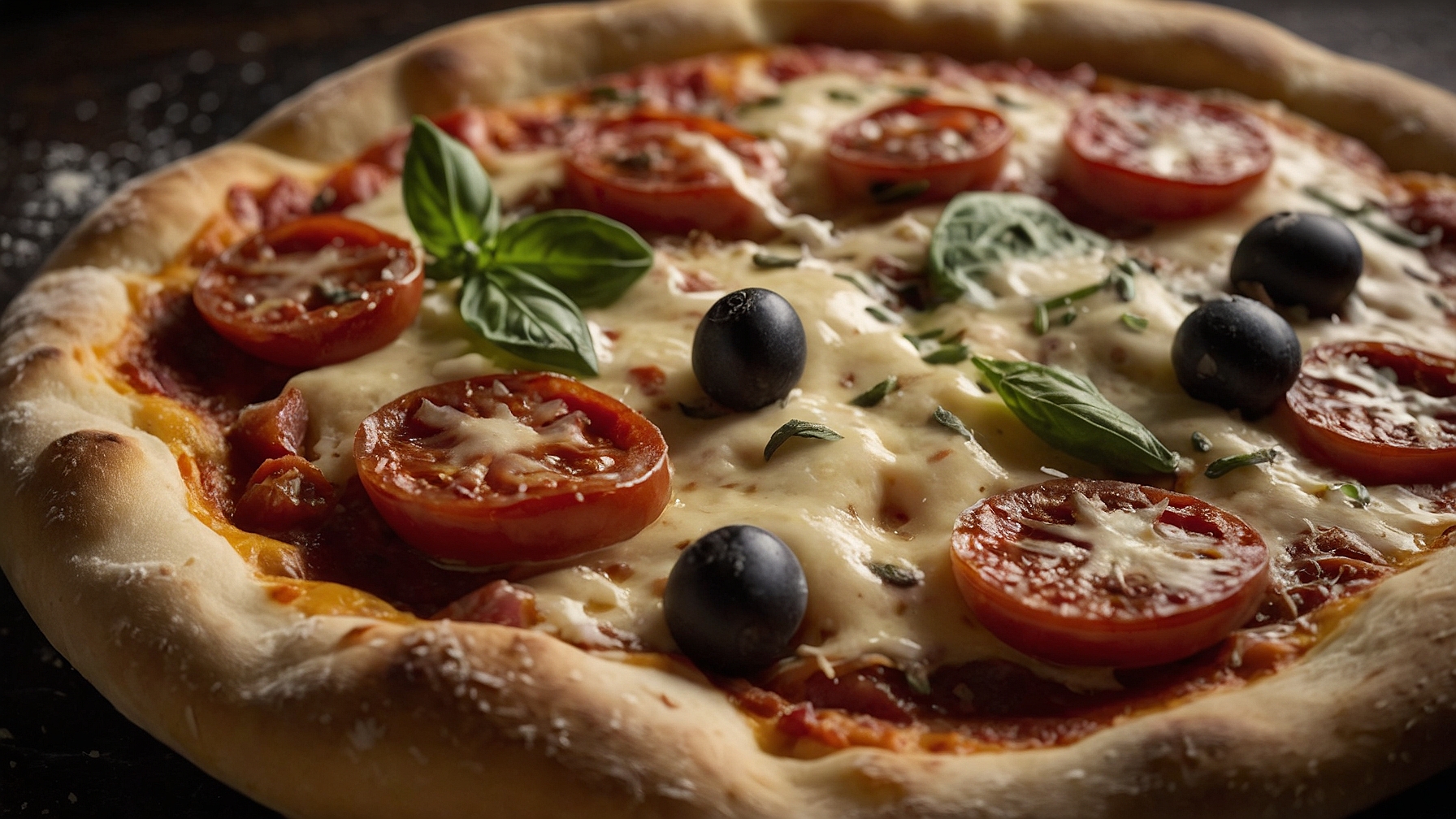
Yields a tender, chewy crust with open crumb, crispness, and balanced texture.
Ingredients
- 500g (4 cups) unbleached bread flour, plus extra for dusting
- 360ml (1 ½ cups) warm water, 105-115°F (40-46°C)
- 7g (2 ¼ teaspoons) active dry yeast (one standard packet)
- 10g (2 teaspoons) fine sea salt
- 15ml (1 tablespoon) extra virgin olive oil, plus more for greasing
- 5g (1 teaspoon) granulated sugar, optional
Instructions
- Activate Yeast (Active Dry): Combine 360ml (1 ½ cups) warm water, heated to 105-115°F (40-46°C), and 5g (1 teaspoon) granulated sugar (if using) in a large mixing bowl. Sprinkle 7g (2 ¼ teaspoons) active dry yeast over the water. Stir gently. Let proof 5-10 minutes until a thick, bubbly foam blankets the surface, confirming yeast vitality.
- Prepare Dry Ingredients: Whisk 500g (4 cups) unbleached bread flour and 10g (2 teaspoons) fine sea salt in a separate medium bowl. Distribute salt uniformly to prevent direct contact with yeast.
- Combine Dough (Stand Mixer Method): Add the dry flour mixture and 15ml (1 tablespoon) extra virgin olive oil to the activated yeast mixture in the stand mixer bowl. Attach the dough hook. Mix on lowest speed (setting 2) for 2-3 minutes, scraping sides as needed, until flour is incorporated and a shaggy dough mass forms, pulling away from the bowl.
- Combine Dough (Hand Mixing Method): Create a wide well in the dry flour mixture on a clean countertop or in a large mixing bowl. Pour activated yeast solution and 15ml (1 tablespoon) extra virgin olive oil into the well. Gradually draw flour from the edges into the liquid with a wooden spoon or hands. Mix 3-5 minutes until a rustic, shaggy dough forms without dry flour pockets.
- Knead Dough (Stand Mixer Method): Increase stand mixer speed to medium-low (setting 3-4). Knead dough with the hook for 7-10 minutes until smooth, supple, and elastic. The dough passes the “windowpane test” when a small piece stretches thin and translucent without tearing.
- Knead Dough (Hand Kneading Method): Transfer shaggy dough to a lightly floured work surface. Knead vigorously for 10-15 minutes using a push-fold-turn motion. Dough will become smooth, pliable, and elastic, passing the “windowpane test” when stretched thin and translucent without tearing.
- First Proof (Bulk Fermentation – Room Temperature): Lightly coat a clean, large mixing bowl with extra virgin olive oil. Form kneaded dough into a tight, smooth ball. Place dough in the greased bowl and turn once to coat. Cover bowl securely with plastic wrap or a damp kitchen towel. Let dough rise at 70-75°F (21-24°C) for 1.5-2 hours until doubled in volume, puffy, and aerated.
- First Proof (Bulk Fermentation – Cold Fermentation Option): For enhanced flavor, cold ferment dough: After oiling and covering, transfer dough to the refrigerator (35-40°F / 2-4°C). Ferment for 12 hours to 3 days for deep flavor development and complex crust.
- Divide and Shape Dough Balls: Gently punch down dough to release gases. Transfer to a clean, lightly floured work surface. Divide dough into two 425-450g portions for two 12-inch pizzas. Shape each portion into a taut, smooth ball by pulling edges underneath and pinching them together to create surface tension.
- Second Proof (Bench Rest): Arrange shaped dough balls on a lightly floured baking sheet or plates, ensuring space. Lightly dust tops with flour. Cover loosely with plastic wrap or a damp towel. Rest at room temperature for 30-60 minutes until slightly puffed and more elastic, making them easier to stretch.
- Shape Pizza: On a lightly floured surface or pizza peel, gently flatten one dough ball from the center outward, leaving a thicker rim for the crust. Using fingertips and knuckles, stretch and rotate dough into a 12-inch round, aiming for even base thickness. If dough resists, cover and rest for 10-15 minutes, then resume stretching.
Notes
- Cold Fermentation for Enhanced Flavor: Cold ferment dough in the refrigerator (35-40°F / 2-4°C) for 24-72 hours. This develops complex flavors, creates an open, airy crumb, and results in superior chewy texture and crisp crust when baked.
- Flour Type Recommendations: Use unbleached bread flour (12-14% protein) for this recipe; all-purpose flour is a substitute. Bread flour’s higher protein content develops gluten, producing desired chewiness, elasticity, and structural integrity for artisan pizza dough.
- Adjusting Hydration for Dough Consistency: Adjust dough hydration: If dough is excessively sticky after kneading, add 1 tablespoon (15ml) bread flour at a time until tacky but manageable. If dough is too dry or stiff, add 1 teaspoon (5ml) warm water at a time until pliant and slightly sticky.
- Freezing Prepared Dough for Future Use: To freeze dough: After the first proof, punch down dough. Form into a tight ball. Wrap securely in two layers of plastic wrap. Place in a freezer-safe, airtight bag. Freeze for up to 3 months. To use: Thaw overnight in the refrigerator. Bring to room temperature for 1-2 hours before dividing, shaping, and the second proof.
- Optimal Baking Temperature for Pizza: For best pizza baking results, preheat oven to 500-550°F (260-290°C) with a pizza stone or steel for at least 1 hour. This intense heat bakes pizza in 8-12 minutes, producing a crisp crust and melted toppings.
- Clarification on “Cook Time”: Recipe “Cook time” (0 minutes) refers to active preparation time for the dough. Pizza baking time is separate, typically 8-12 minutes at high oven temperatures (see ‘Optimal Baking Temperature’ note).
Pro Tips for Perfect Artisan Pizza Dough
Ingredient Tips
- “00” Flour (12.5% protein):Use Italian Tipo “00” flour, ideally with 12-13% protein content, for superior extensibility and achieving a thin, crispy-chewy crust. This flour absorbs 5-7% more water than standard all-purpose, allowing for higher hydration.
- Hydration Water (95-105°F / 35-40°C):Measure water precisely to 60-65% of flour weight. Activate yeast in water at 95-105°F (35-40°C) – it should feel warm, not hot – ensuring vigorous bubbling within 5-7 minutes.
- Fine Sea Salt (2.5% of flour weight):Incorporate 2.5% fine sea salt by weight (e.g., 12.5g for 500g flour) during the final minute of mixing, after gluten has started developing, for optimal flavor and enhanced crust browning.
- Instant Dry Yeast (0.5-0.7% of flour weight):For an 8-12 hour room temperature bulk fermentation, use 0.5-0.7% instant dry yeast relative to flour weight (e.g., 2.5-3.5g for 500g flour), ensuring a gradual, controlled rise.
- Extra Virgin Olive Oil (1-2% of flour weight):Drizzle in 1-2% extra virgin olive oil (5-10g per 500g flour) during the last 2 minutes of kneading for a more tender crumb and richer flavor; it also aids in dough extensibility.
Technique Tips
- Autolyse (20-30 minutes):Combine flour and water only, mix until just shaggy with no dry spots, then cover and rest for 20-30 minutes. This pre-hydration step allows gluten to begin forming without kneading, resulting in a more extensible dough.
- Kneading (8-12 minutes):Knead dough on medium speed (e.g., KitchenAid speed 2) for 8-12 minutes until it forms a smooth, elastic ball that clears the sides of the bowl. Test for doneness by stretching a small piece; it should form a thin membrane (windowpane test) without tearing.
- Bulk Fermentation (70-75°F / 21-24°C):Allow dough to bulk ferment in a lightly oiled bowl, covered, at 70-75°F (21-24°C) for 2-3 hours until it has doubled in size and shows numerous surface bubbles, indicating active yeast.
- Cold Fermentation (38-40°F / 3-4°C):After an initial 30-minute room temperature rest, refrigerate individual dough balls (250-280g each) in sealed containers at 38-40°F (3-4°C) for 24-72 hours. This slow fermentation develops complex enzymatic flavors and a superior crust texture.
- Dough Balling (250-280g):Divide dough into 250-280g portions for 12-inch pizzas. Form each into a taut ball by gently pulling the top surface and tucking the edges underneath, creating a smooth, tight skin on top.
Common Issues
- Overly Sticky Dough (High Hydration):If dough remains excessively sticky after 10 minutes of kneading and doesn’t pull cleanly from the bowl, add flour in 5g increments (approx. 1 teaspoon), kneading for 1 minute after each addition, until it achieves a slightly tacky but manageable texture.
- Stiff, Inelastic Dough (Low Hydration):If your dough feels too tight and resists stretching after kneading, incrementally add warm water (95-105°F / 35-40°C) in 3ml portions (approx. 1/2 teaspoon), kneading for 2 minutes after each addition, until it becomes pliable and stretchy.
- Poor Rise (Yeast Inactivity):If dough hasn’t doubled in 3 hours at 70-75°F, check water temperature used for yeast activation (must be 95-105°F); move dough to a warmer environment (e.g., oven with light on, 80°F / 27°C) for an additional 60-90 minutes, looking for significant puffiness.
- Crust Too Dense/Hard (Under-proofed):If your baked crust is dense and lacks airiness, it was likely under-proofed. Allow shaped dough balls to proof at room temperature (70-75°F / 21-24°C) for an extra 30-60 minutes until they feel light and airy, yielding slightly to a gentle poke.
- Tearing During Stretching (Lack of Relaxation):If the dough resists stretching and tears, it needs to relax. Cover the dough ball with a damp cloth and rest for 15-20 minutes at room temperature; the gluten will relax, allowing for easier, tear-free stretching to a 12-inch diameter.
Common Mistakes to Avoid for Flawless Pizza Dough
Common Mistakes
- Inactive or Dead Yeast:
- Yeast fails to activate if water is too hot, too cold, or if the yeast is old. This results in a dense, flat dough that won’t rise. Exact fix: Activate yeast in water between 105-115°F (40-46°C). Let stand for 5-10 minutes; it should develop a foamy, creamy layer on top. If no foam, discard and use fresh yeast.
- Incorrect Hydration (Too Sticky or Too Stiff):
- Too much water makes dough difficult to handle and sticky; too little results in a dense, stiff dough that’s hard to knead and stretch. Exact fix: When mixing, if too sticky, add 1 tablespoon of flour at a time until it just clears the sides of the bowl. If too stiff, add 1 teaspoon of water at a time until it forms a shaggy, cohesive mass.
- Insufficient Kneading:
- Under-kneading prevents proper gluten development, leading to a weak dough that tears easily when stretched and produces a dense crust. Exact fix: Knead the dough vigorously for 8-10 minutes by hand or with a stand mixer on medium speed until it feels smooth, elastic, and passes the “windowpane test” (a small piece can be stretched thin enough to see light through without tearing).
- Improper Proofing (Over or Under):
- Under-proofed dough is tight and results in a dense, chewy crust. Over-proofed dough collapses, losing its structure and flavor. Exact fix: Proof dough in a warm, draft-free place (75-80°F / 24-27°C) until it roughly doubles in size, typically 1-2 hours. Test by gently poking with a floured finger; if the indentation slowly springs back halfway, it’s ready.
- No Rest Before Stretching:
- After shaping into balls, the gluten network is tight, causing the dough to resist stretching and snap back, making it impossible to form a large, thin crust. Exact fix: After balling, place dough balls into lightly oiled containers, cover tightly, and allow them to rest at room temperature for at least 30-60 minutes (or cold ferment in the fridge for 24-72 hours) before attempting to stretch.
Key Techniques
- The Autolyse Method:
- This pre-hydration step enhances dough extensibility and flavor. Step-by-step: Combine just the flour and water in your recipe. Mix until no dry flour remains and a shaggy mass forms. Cover and let it rest for 20-30 minutes before adding yeast, salt, or any fat. This allows the flour to fully hydrate and gluten to begin developing naturally, making kneading easier.
- Cold Fermentation:
- A slow, cold rise develops complex flavors and improves crust texture. Step-by-step: After initial bulk fermentation (or kneading), divide dough into balls, lightly oil, and place in individual airtight containers. Refrigerate at 38-40°F (3-4°C) for a minimum of 24 hours, up to 72 hours. Remove dough 1-2 hours before baking, allowing it to come to room temperature.
- Proper Dough Balling:
- Creating tight, smooth dough balls is crucial for even rising and easy stretching. Step-by-step: On a lightly floured surface, take a portion of dough. Gently fold the edges towards the center, pinching them together to create tension on the outside. Flip the dough over, seam-side down, and cup it with your hand, rotating it against the counter until a smooth, taut sphere forms on top.
- Gentle Hand Stretching:
- Avoid using a rolling pin, which expels gas and results in a dense crust. Step-by-step: Lightly flour your hands and work surface. Place a dough ball on your knuckles, allowing gravity to gently stretch it. Work from the center outwards, rotating the dough while gently pushing the edges to create a rim (cornicione). Stretch until desired thickness, stopping when it feels like it might tear.