
Creme Brulee French Toast: Your Ultimate Brunch Indulgence
This Creme Brulee French Toast offers an overnight preparation option, making it the perfect stress-free brunch for entertaining.
It transforms standard French toast into a decadent dessert-for-breakfast experience with just 10 common ingredients and a simple brûlée topping technique.
Ideal for holiday mornings, special celebrations, or impressing guests, this dish delivers a crispy caramelized sugar crust over a custardy interior.
Creme Brulee French Toast
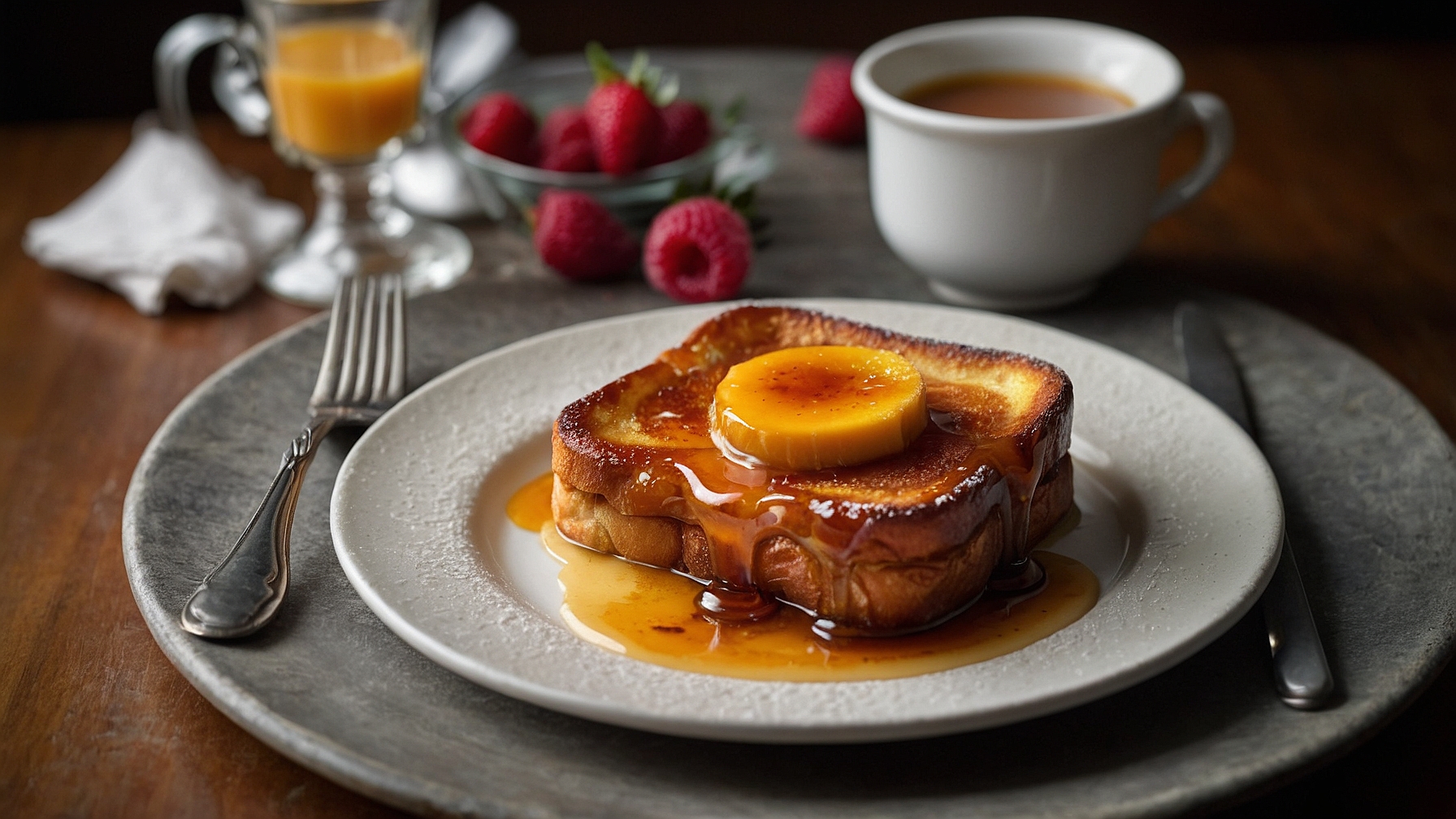
Bake thick brioche slices in custard, top with caramelized sugar crust for a crisp exterior.
Ingredients
For the Caramel Topping
- 1/4 cup (57g) unsalted butter, melted
- 1/2 cup (100g) light brown sugar, packed
- 2 tablespoons (30ml) heavy cream
- 1/4 teaspoon (1.25ml) ground cinnamon
For the French Toast Batter
- 4 large eggs, room temperature
- 1 cup (240ml) whole milk
- 1/2 cup (120ml) heavy cream
- 1/4 cup (50g) granulated sugar
- 1 teaspoon (5ml) vanilla extract
- 1/2 teaspoon (2.5ml) ground cinnamon
- 1/8 teaspoon (0.6ml) salt
For the French Toast
- 8 slices thick-cut brioche or challah bread, 1 inch (2.5 cm) thick, day-old
- 1/4 cup (50g) granulated sugar, for brulee topping
For Serving (Optional)
- 2 tablespoons (18g) powdered sugar, for dusting
- 1 cup (150g) fresh mixed berries
- 1/2 cup (120ml) maple syrup, warmed
Instructions
- Preheat oven to 375°F (190°C). Lightly grease a 9×13 inch (23×33 cm) baking dish with butter or non-stick spray.
- Melt 1/4 cup (57g) unsalted butter in a small microwave-safe bowl or saucepan over medium heat, or in microwave for 30-45 seconds, until fully liquid.
- Add 1/2 cup (100g) packed light brown sugar, 2 tablespoons (30ml) heavy cream, and 1/4 teaspoon (1.25ml) ground cinnamon to melted butter. Whisk 30-60 seconds until smooth.
- Pour caramel mixture into the greased 9×13 inch (23×33 cm) baking dish. Spread evenly across the base with a spatula.
- Crack 4 large eggs into a large mixing bowl. Whisk 1-2 minutes until yolks and whites are fully combined and slightly frothy.
- Add 1 cup (240ml) whole milk, 1/2 cup (120ml) heavy cream, 1/4 cup (50g) granulated sugar, 1 teaspoon (5ml) vanilla extract, 1/2 teaspoon (2.5ml) ground cinnamon, and 1/8 teaspoon (0.6ml) salt to whisked eggs.
- Whisk batter ingredients 1-2 minutes until combined and sugar dissolves.
- Submerge each thick-sliced brioche or challah bread slice into egg batter for 15-20 seconds per side. Saturate bread fully, avoid over-saturating.
- Remove soaked bread slices from batter. Arrange slices in a single layer over the caramel mixture in the 9×13 inch (23×33 cm) baking dish. Overlap slices if needed.
- Bake 18-22 minutes at 375°F (190°C) until golden brown, puffed in center, and batter is set.
- Remove French toast from oven. Sprinkle 1/4 cup (50g) granulated sugar over top surface.
- If using a kitchen torch, move flame over sugar until it melts, bubbles, and turns deep amber or golden-brown.
- Alternatively, place dish under a preheated high broiler, 6-8 inches (15-20 cm) from heat. Broil 1-3 minutes, watching constantly, until sugar melts and caramelizes to deep golden-brown.
- Rest French toast 5-10 minutes after caramelizing. Caramel firms for easier inversion.
- Place a large serving platter upside down over the baking dish. Invert French toast onto platter, caramel-side up. Serve immediately.
- Dust with 2 tablespoons (18g) powdered sugar. Arrange 1 cup (150g) fresh mixed berries. Serve with warm maple syrup.
Notes
- Bread Choice: Use day-old or slightly stale brioche or challah bread for better custard absorption and texture.
- Overnight Preparation: To prepare ahead, assemble through step 9. Cover baking dish tightly, refrigerate overnight (up to 12 hours). Bring to room temperature 15-20 minutes before baking for even cooking.
- Brulee Technique: A kitchen torch provides precise control for caramelizing sugar without overcooking toast. When using a broiler, monitor closely; sugar burns rapidly.
- Serving Temperature: Serve immediately after caramelizing sugar, when the crust is warm and crisp.
Pro Tips for Perfect Creme Brulee French Toast
Ingredient Tips
- Select and Prepare Your Bread:Opt for day-old Brioche or Challah bread, sliced generously to 1-inch thickness. For optimal texture, leave slices uncovered on a wire rack for 4-6 hours, or overnight, to air-dry. This slightly stale state ensures the bread absorbs the custard thoroughly without becoming mushy, creating a firm yet tender base.
- Master the Custard’s Dairy Blend:For a truly luxurious custard, combine 1.5 cups (360ml) heavy cream with 0.5 cup (120ml) whole milk. The higher fat content from the heavy cream yields a richer, smoother custard base that sets beautifully, delivering an incredibly velvety texture to every bite of your French toast.
- Enrich with Extra Egg Yolks:To achieve an exceptionally rich, custardy interior that mirrors a true creme brulee, use 6 large egg yolks alongside 2 whole large eggs in your batter. This higher yolk-to-white ratio delivers profound richness and a creamier mouthfeel, baking up to a tender, almost soufflé-like consistency.
- Choose the Right Brulee Sugar:For the signature crackly topping, use 1-2 tablespoons of turbinado or demerara sugar per slice. Its larger, coarser crystals caramelize more evenly and robustly under the torch compared to fine granulated sugar, forming a thicker, crunchier, and deeply flavorful amber shell with a subtle molasses note.
Technique Tips
- Pre-Dry Bread in the Oven (If Short on Time):If you don’t have day-old bread, arrange 1-inch thick slices on a baking sheet and bake at 250°F (120°C) for 15-20 minutes, flipping once. The bread should feel slightly firm and dry to the touch, which significantly prevents sogginess and ensures optimal custard absorption without disintegration.
- Achieve a Deep, Flavorful Soak:Submerge each 1-inch bread slice into the custard mixture for a full 2-3 minutes per side. Ensure the bread is completely saturated but still holds its structure; this extended soak allows the custard to penetrate thoroughly to the core, creating a moist, custardy interior from edge to edge after cooking.
- Chill Soaked Bread for Ultimate Texture:For maximum flavor infusion and structural integrity, arrange custard-soaked bread slices in a single layer on a parchment-lined baking sheet, cover loosely, and refrigerate for at least 8 hours or, ideally, overnight. This resting period allows the bread to fully absorb and bind with the custard, resulting in a more uniform, rich texture when cooked.
- Bake Low and Slow for Even Doneness:After an initial pan-sear for color (if desired), transfer soaked slices to a baking sheet and bake at 325°F (160°C) for 15-20 minutes. The toast is done when its internal temperature reaches 180°F (82°C), and the center springs back slightly when gently pressed, confirming a fully cooked, custardy interior without an over-browned exterior.
- Controlled Caramelization with Torch:When caramelizing the sugar, hold your kitchen torch 3-4 inches above the turbinado-coated toast. Move the flame in slow, continuous circles for 30-60 seconds per slice, aiming for an even, dark amber color and a visible crackle on the surface. This technique creates a perfectly brittle, glass-like sugar shell.
Common Issues
- Soggy Centers or Undercooked Interior:If your French toast is soggy, ensure your bread is 1-inch thick and either day-old or pre-dried at 250°F (120°C) for 15-20 minutes. After soaking, gently press each side with the back of a spoon for 5-10 seconds to remove any excess custard before cooking, preventing a mushy, unappetizing texture.
- Burned Exterior with Raw Interior:If the exterior browns too quickly (within 2-3 minutes per side) before the center cooks through, reduce your pan heat to medium-low (around 300°F / 150°C) for pan-frying. If baking, tent the baking sheet loosely with aluminum foil during the last 10 minutes of baking at 325°F (160°C) to allow the interior to finish cooking without over-browning the crust.
- Sugar Burns Instead of Caramelizes:If your brulee sugar turns black and bitter, ensure you’re using turbinado or demerara sugar and hold the torch at least 3-4 inches away, moving it constantly for 30-60 seconds per slice. Burnt sugar is unpalatable; it’s better to scrape it off and reapply a fresh layer for another attempt.
How to Store and Reheat Creme Brulee French Toast
Creme Brulee French Toast, with its custardy interior and caramelized sugar topping, is a decadent breakfast or brunch treat. While it’s undoubtedly best enjoyed fresh from the oven, proper storage and reheating techniques can extend its deliciousness, making it an excellent make-ahead option or a delightful leftover. Understanding how to store and reheat ensures that you can savor its unique texture and flavor for days to come.
Refrigerator Storage
Duration: 3-4 days in airtight container
For optimal freshness and food safety, store leftover Creme Brulee French Toast in a shallow, airtight glass or BPA-free plastic container. Placing parchment paper between layers can prevent sticking if stacking multiple slices. Over time, the French toast will lose its initial crisp exterior, becoming softer and more uniformly custardy. The caramelized topping may also soften and become slightly sticky due to moisture absorption. While still delicious, the vibrant ‘creme brulee’ crunch will diminish significantly after day 1. Flavor notes, particularly any subtle spices in the custard, will remain strong.
Freezer Storage
Duration: 1-2 months
To freeze, allow the French toast to cool completely. Arrange individual slices in a single layer on a parchment-lined baking sheet and flash freeze for 1-2 hours until solid. This prevents them from sticking together. Once frozen, transfer the slices to a heavy-duty freezer bag or an airtight freezer-safe container, separating layers with parchment paper. Squeeze out as much air as possible from bags to prevent freezer burn. When ready to enjoy, thaw frozen slices overnight in the refrigerator. Expect a slight change in texture; the bread may be a little softer after thawing and reheating compared to a fresh slice, and the caramel topping might not regain its original snap, becoming more of a chewy glaze.
Reheating Instructions
- Oven (Best for Crispness):Preheat oven to 375°F (190°C). Place refrigerated slices on a baking sheet and heat for 10-15 minutes, or until warmed through and edges are slightly crisp. For thawed slices, heat for 15-20 minutes. Look for a lightly golden hue on the edges and steam rising from the center.
- Toaster Oven (Good for Individual Slices):Set to 350°F (175°C). Reheat refrigerated slices for 5-8 minutes, or until hot and slightly toasted. Thawed slices will take 8-12 minutes. Monitor closely to prevent burning.
- Air Fryer (Quick & Crispy):Preheat air fryer to 350°F (175°C). Place 1-2 slices in a single layer in the basket. Reheat refrigerated slices for 4-6 minutes, or thawed slices for 6-8 minutes, flipping halfway. This method works well for restoring some crispness to the topping.
- Microwave (Fastest, but Texture Change):Place a single slice on a microwave-safe plate. Heat on high for 30-60 seconds (refrigerated) or 1-2 minutes (thawed), depending on thickness. While quick, this method tends to make the French toast soft and potentially soggy, and the topping will lose any remaining crispness. The oven or air fryer methods are highly recommended over microwaving for maintaining quality.
Make-Ahead Tips
Creme Brulee French Toast lends itself beautifully to make-ahead preparation. The custard mixture can be prepared up to 2 days in advance and stored in an airtight container in the refrigerator. For the best results, assemble the entire French toast dish (bread soaked in custard, with the butter/brown sugar layer at the bottom) the night before baking. Cover the baking dish tightly with plastic wrap and refrigerate for 8-12 hours. This overnight soak allows the bread to fully absorb the custard, resulting in an incredibly tender interior. Simply remove from the fridge 30 minutes before baking and proceed with your recipe’s baking instructions, typically adding 5-10 minutes to the total bake time since it’s starting cold. If your recipe calls for broiling sugar on top after baking, you can still do that immediately before serving to achieve that classic crisp sugar crust.