
Easy Thai Chicken Curry Soup: Your One-Pot Weeknight Wonder
This Easy Thai Chicken Curry Soup comes together quickly for a delicious weeknight meal, delivering rich, aromatic flavors without a long cooking process.
It cooks in just 25 minutes using a single pot, making clean-up minimal and preparation straightforward.
Serve this vibrant soup with jasmine rice or rice noodles for a complete and satisfying dinner. Red curry paste provides a quick base for complex flavors, complemented by creamy coconut milk and tender chicken. Fresh ginger, garlic, and a squeeze of lime brighten the entire dish, creating a balanced and comforting bowl. This recipe is perfect for introducing authentic Thai flavors to your kitchen with minimal effort, offering a warm and savory experience that’s easily customizable with your favorite vegetables.
Easy Thai Chicken Curry Soup
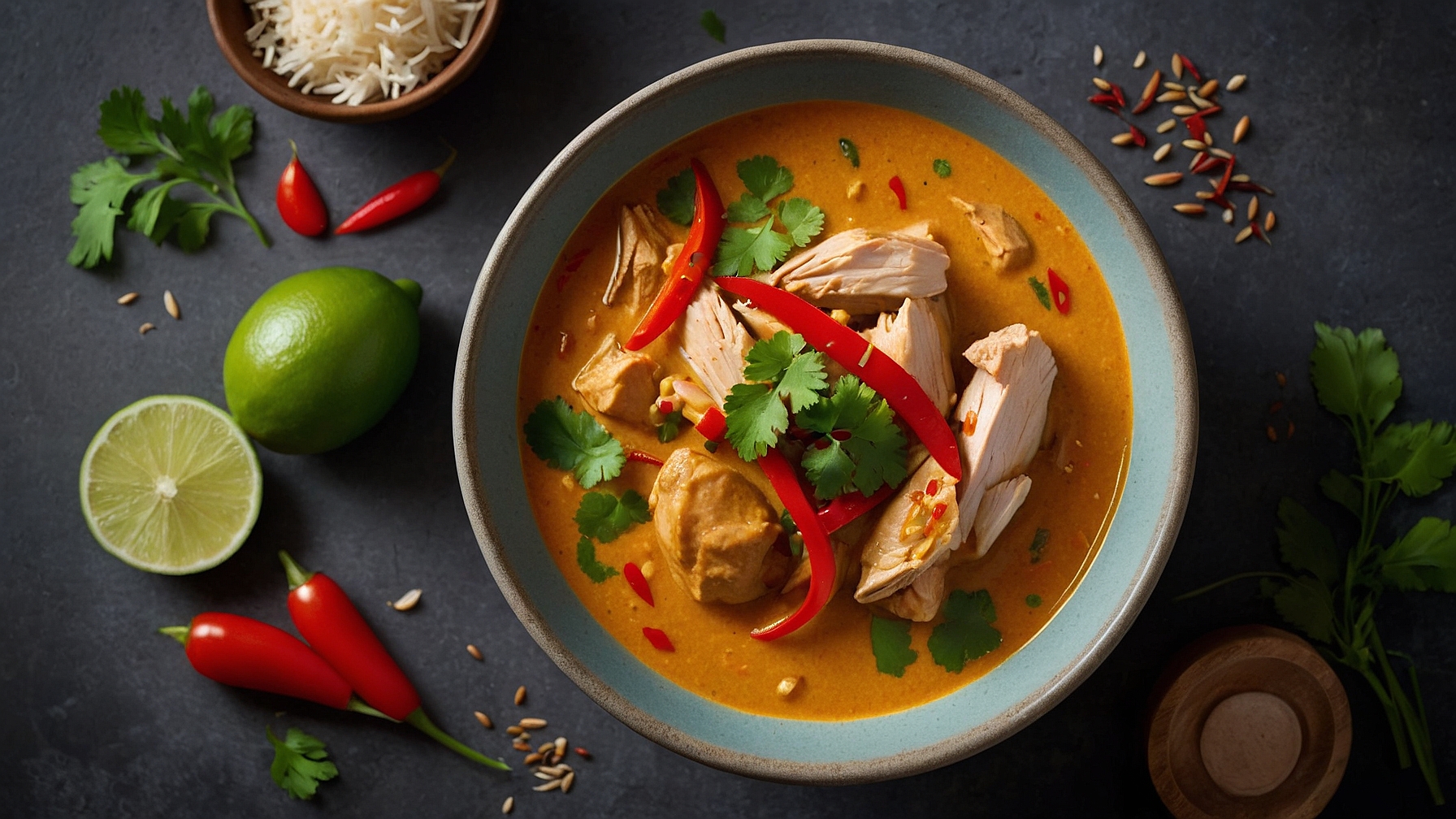
Prepare an Easy Thai Chicken Curry Soup with tender chicken, crisp vegetables, and a coconut broth. This recipe delivers a full-flavored meal.
Ingredients
- 1 tablespoon (15ml) coconut oil or vegetable oil, divided
- 1.5 pounds (680g) boneless, skinless chicken breasts or thighs, cut into 1-inch (2.5 cm) pieces
- 1 medium yellow onion, finely diced
- 3 cloves garlic, minced
- 1 tablespoon (15g) fresh ginger, grated
- 4-6 tablespoons (60-90g) red curry paste (Thai Kitchen or Maesri recommended)
- 4 cups (960ml) chicken broth, low sodium
- 2 cans (13.5 oz / 400ml each) full-fat coconut milk
- 2 tablespoons (30ml) fish sauce (such as Red Boat or Squid Brand)
- 1 tablespoon (15g) brown sugar or palm sugar
- 1 red bell pepper, cored, seeded, and thinly sliced into strips
- 1 cup (150g) snow peas, trimmed and halved diagonally if large
- Juice of 1 fresh lime (2 tablespoons / 30ml)
- Fresh cilantro, chopped, for garnish
- Fresh Thai basil leaves, for garnish (optional)
- 1 small red chili, thinly sliced, for garnish (optional, for extra heat)
Instructions
- Cut chicken into uniform 1-inch (2.5 cm) pieces. Dice 1 medium yellow onion finely. Mince 3 cloves garlic. Grate 1 tablespoon (15g) fresh ginger. Core, seed, and thinly slice 1 red bell pepper into strips. Trim 1 cup (150g) snow peas; halve large ones diagonally. Set all prepped ingredients aside.
- Heat 1 tablespoon (15ml) coconut or vegetable oil in a large heavy-bottomed pot or Dutch oven over medium-high heat to 375°F (190°C). Add chicken pieces. Cook 5-7 minutes, stirring occasionally, until lightly browned on the exterior and mostly cooked through to a light white color. Remove chicken from pot; set aside. Leave rendered drippings in the pot.
- Add diced onion to the same pot. Sauté 3-4 minutes over medium heat, stirring frequently, until onion softens and becomes translucent. Stir in minced garlic and grated ginger. Cook 1 minute more until fragrant; avoid burning garlic. Add 4-6 tablespoons (60-90g) red curry paste. Cook 1-2 minutes, stirring constantly, until very aromatic and slightly darkened.
- Slowly pour in 4 cups (960ml) low-sodium chicken broth. Use a wooden spoon to scrape all browned bits from the pot bottom. Bring broth to a gentle simmer at 200°F (93°C). Ensure curry paste fully dissolves.
- Stir in 2 cans (13.5 oz / 400ml each) full-fat coconut milk, 2 tablespoons (30ml) fish sauce, and 1 tablespoon (15g) brown sugar or palm sugar into the simmering broth. Whisk gently until all ingredients combine and sugar dissolves. Allow soup to return to a gentle simmer (200°F / 93°C); avoid a rolling boil to prevent coconut milk separation.
- Return cooked chicken pieces to the pot; submerge in simmering broth. Add sliced red bell pepper and trimmed snow peas. Cook 3-5 minutes, maintaining a gentle simmer, until vegetables are crisp-tender and chicken heats through to 165°F (74°C).
- Remove pot from heat. Stir in juice of 1 fresh lime (2 tablespoons / 30ml). Taste soup. Adjust seasonings with additional fish sauce for saltiness, sugar for sweetness, or lime juice for acidity until balanced.
- Ladle hot Easy Thai Chicken Curry Soup into individual serving bowls. Garnish each bowl with chopped fresh cilantro, fresh Thai basil leaves, and thin slices of red chili, if desired. Serve immediately.
Notes
- Spice Level Adjustment: For a milder curry, use 4 tablespoons (60g) red curry paste. For spicier, gradually increase to 6 tablespoons (90g) or more, tasting after each addition.
- Vegetable Variations: Substitute or add vegetables: baby corn, sliced mushrooms, bamboo shoots, or fresh spinach. For carrots or broccoli florets, add during step 6 with chicken to ensure cooking.
- Protein Alternatives: Substitute chicken with 1.5 pounds (680g) raw shrimp (add for the last 3-4 minutes of simmering until pink and cooked through) or 14 ounces (400g) firm tofu, pressed and cubed (add with bell peppers).
- Serving Suggestions: Serve soup with jasmine rice to absorb broth. Pair with rice noodles or a green salad for a meal.
- Equipment: Use a large heavy-bottomed pot or 5-6 quart (5-6 liter) Dutch oven.
- Storage: Store leftover soup in an airtight container in the refrigerator for up to 3-4 days. Reheat gently on stovetop over low heat, stirring occasionally, until heated through to prevent coconut milk separation.
Pro Tips for Perfect Easy Thai Chicken Curry Soup
Ingredient Tips
- Curry Paste Bloom:Sauté 2-3 tablespoons of red curry paste in 1 tablespoon of coconut oil over medium heat for precisely 60-90 seconds, stirring constantly, until it darkens slightly and releases an intense, fragrant aroma. This vital step deepens the spice profile by 2x.
- Coconut Milk Selection:Utilize 1 full-fat (13.5 oz) can of unsweetened coconut milk for the richest, creamiest base. For an extra luxurious finish, reserve 1/4 cup of the thick cream from the top of the can to swirl in just before serving, creating visually appealing streaks.
- Chicken Cut:Choose 1.5 lbs of boneless, skinless chicken thighs, cut into uniform 1-inch pieces. Thighs remain significantly more tender and moist than breast meat even after simmering for 12-15 minutes, preventing dryness.
- Aromatic Foundation:Finely mince 1 inch (about 1.5 tablespoons) of fresh ginger, 3 large cloves of garlic, and 1 medium shallot. Sauté these aromatics for 2 minutes until softened and fragrant before adding the curry paste, layering flavor for a noticeably more complex soup.
- Balancing Seasonings:Begin with 1.5 tablespoons of fish sauce and the juice of 1 whole lime (approximately 2 tablespoons). Taste after a 10-minute simmer, adjusting with 1/2 tablespoon of fish sauce for more umami, or 1 teaspoon of lime juice for brightness, until the sweet-sour-salty balance is perfect.
Technique Tips
- Layering Coconut Milk:After blooming the paste, add half a can (approx. 6.5 fl oz) of coconut milk and stir continuously for 2-3 minutes over medium-low heat until it’s fully incorporated and gently simmering. This helps to emulsify the fat and prevent the sauce from separating later.
- Cooking Chicken to Tenderness:Add the 1-inch cubed chicken thighs and simmer for 12-15 minutes, or until the chicken reaches an internal temperature of 165°F. It should be fork-tender and easily shred when pressed with a spoon, indicating perfect doneness without overcooking.
- Vegetable Timing:Incorporate quick-cooking vegetables like sliced bell peppers (1 cup) or baby spinach (2 cups) in the last 3-5 minutes of simmering. For heartier vegetables like broccoli florets (1.5 cups), add them for 7-8 minutes to achieve a crisp-tender texture, not mushy.
- Gentle Simmer Control:Maintain a gentle simmer throughout the cooking process – look for small, consistent bubbles around the edges of the pot, not a rolling boil. This low-and-slow approach for 15-20 minutes allows flavors to meld deeply without over-reducing the liquid or toughening ingredients.
- Herb Infusion:Add kaffir lime leaves (2-3 leaves, torn) and lemongrass stalks (1-2 stalks, bruised and halved) at the start of the simmer, removing them before serving. This infuses a delicate, citrusy aroma that is significantly stronger than adding them later.
Common Issues
- Soup Too Thin:If your soup is too watery, whisk together 1 tablespoon of cornstarch with 2 tablespoons of cold water to create a slurry. Stir this into the simmering soup and continue to cook for 2 minutes, until it visibly thickens to a consistency that lightly coats the back of a spoon.
- Soup Too Spicy:To mitigate excessive heat, stir in an additional 1/4 cup of full-fat coconut milk or 1-2 teaspoons of granulated sugar. A small squeeze of 1/2 a lime (approximately 1 tablespoon) can also help to cut through and balance the lingering spice.
- Lacking Depth/Flavor:If the flavor seems flat, add 1-2 more teaspoons of fish sauce for umami, or 1/2 teaspoon of brown sugar to enhance existing notes. Allow it to simmer for an additional 5-7 minutes to fully infuse the new additions, tasting again for balance.
- Coconut Milk Curdles/Separates:To prevent separation, ensure you add coconut milk gradually and stir constantly over medium-low heat, avoiding high heat. If it does separate, remove from heat, add 1-2 tablespoons of cold water, and whisk vigorously for 30-60 seconds to help re-emulsify the sauce.
Ingredient Substitutions & Flavor Variations
Essential Substitutions
- Chicken Breast/Thighs:
- (Tofu, pressed and cubed, provides a hearty plant-based protein that absorbs the curry flavors beautifully, offering a slightly softer texture. Shrimp cooks much faster, making it an ideal quick-cook option with a distinct seafood flavor and tender bite – add near the end of cooking.)
- Red Curry Paste:
- (Yellow curry paste delivers a milder spice level with a slightly sweeter and earthier flavor profile, often featuring turmeric. Green curry paste is significantly spicier and offers a fresher, more herbaceous taste with vibrant notes of kaffir lime and green chilies – adjust quantity to your heat preference.)
- Full-Fat Coconut Milk:
- (Light coconut milk effectively reduces fat and calories by approximately 50%, resulting in a thinner, less rich soup consistency. Evaporated milk with coconut extract provides a creamy base and a lighter coconut essence, significantly lowering fat content.)
- Fish Sauce:
- (Soy sauce or tamari provides a salty umami flavor but lacks the distinct fermented seafood notes of traditional fish sauce; tamari also ensures a gluten-free option. Vegan fish sauce specifically aims to mimic the traditional salty and umami profile without animal products.)
- Lime Juice:
- (Rice vinegar adds a pleasant tanginess and acidity, though with a milder, less bright citrus note compared to fresh lime. Lemon juice offers similar brightness and acidity, but with its own distinct citrus profile.)
- Brown Sugar:
- (Palm sugar delivers an authentic Thai sweetness with a unique caramel-like, less refined flavor. Maple syrup or honey provide alternative sweetness with distinct earthy or floral undertones, potentially making the soup slightly thinner.)
Dietary Variations
- Vegan:
- Replace 1 lb chicken with 1 lb pressed and cubed firm or extra-firm tofu; substitute fish sauce 1:1 with soy sauce/tamari or a store-bought vegan fish sauce; use vegetable broth 1:1 instead of chicken broth.
- Gluten-Free:
- Confirm your chosen red curry paste is certified gluten-free; replace any soy sauce in the recipe with tamari at a 1:1 ratio; use a gluten-free certified chicken or vegetable broth to ensure the entire soup is GF.
- Low-Carb:
- Substitute brown sugar 1:1 with erythritol (or adjust to taste with a stevia blend); prioritize low-carb vegetables like spinach, bell peppers, mushrooms, or zucchini, and limit higher-carb root vegetables like carrots.
- Low-Fat/Low-Calorie:
- Replace fattier chicken thighs with leaner chicken breast at a 1:1 weight ratio; use light coconut milk 1:1 instead of full-fat coconut milk to significantly reduce fat and overall calorie content.
Flavor Variations
- Spicy Kick:
- For an immediate heat boost, stir in 1-2 sliced bird’s eye chilies (or serranos) with the aromatics, or add them as a fresh garnish. Alternatively, increase the red curry paste by 1-2 tablespoons for a deeper curry flavor and heightened spice level.
- Aromatic Depth:
- Infuse the broth by adding 2 stalks of bruised lemongrass and 3-4 torn kaffir lime leaves. Add them with the broth and remove before serving. This introduces vibrant citrusy and herbaceous notes for greater authenticity and complexity.
- Nutty & Creamy:
- Stir in 2-3 tablespoons of smooth peanut butter or cashew butter along with the coconut milk. This addition contributes a rich, nutty depth and a wonderfully thicker, more velvety texture to the soup, reminiscent of satay.
- Vegetable Medley:
- Replace standard bell peppers with 1.5-2 cups of other vegetables like broccoli florets, fresh snap peas, or thinly sliced zucchini. Adjust cooking times as needed (e.g., broccoli earlier, snap peas near the end) for diverse textures and nutritional benefits.