
One Pan Chicken With Buttered Noodles: Your New Favorite Weeknight Meal
This One Pan Chicken with Buttered Noodles provides a complete, comforting meal with remarkably easy preparation and minimal cleanup.
The entire dish is ready in just 35 minutes, cooking both the succulent chicken and tender pasta on a single sheet pan.
It’s an ideal weeknight dinner solution, offering savory flavors without the usual kitchen mess. Chicken pieces are seasoned and roasted alongside dry noodles that absorb a flavorful broth directly on the pan, resulting in perfectly cooked pasta infused with rich chicken drippings. A generous knob of butter is stirred into the noodles at the end, creating a creamy, irresistible coating. This method ensures maximum flavor transfer and reduces the need for multiple pots and pans. Essential ingredients include boneless chicken thighs or breasts, egg noodles, chicken broth, and fresh herbs. The simple technique guarantees consistent results for a satisfying and hassle-free meal.
One Pan Chicken With Buttered Noodles
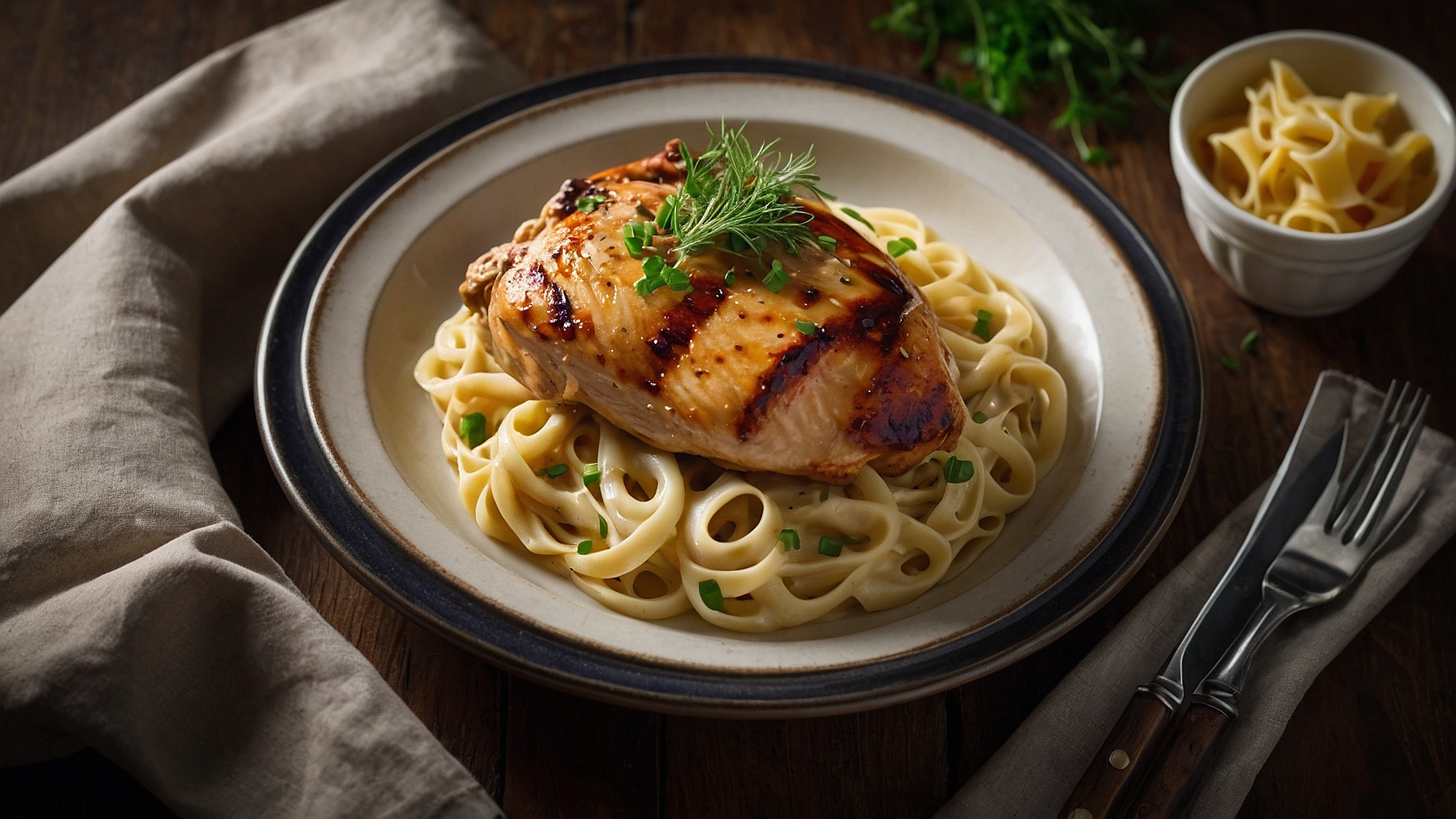
Prepare chicken and buttered noodles in a single pan for a complete meal with minimal cleanup.
Ingredients
- 1.5 lbs (680g) boneless, skinless chicken thighs, cut into 1-inch (2.5 cm) pieces
- 2 tablespoons (30ml) olive oil
- 4 tablespoons (56g) unsalted butter
- 1 medium yellow onion, diced
- 3 cloves garlic, minced
- 4 cups (960ml) low-sodium chicken broth
- 8 ounces (225g) wide egg noodles
- 1/2 cup (120ml) heavy cream
- 1 teaspoon (5ml) Dijon mustard
- 1 teaspoon (5g) kosher salt, divided
- 1/2 teaspoon (1.5g) black pepper, freshly ground, divided
- 1 teaspoon (3g) garlic powder
- 1 teaspoon (3g) onion powder
- 1 teaspoon (1g) dried oregano
- 1 teaspoon (3g) smoked paprika
- 1/4 cup (6g) fresh parsley, chopped, for garnish
- 1/4 cup (25g) grated Parmesan cheese, for serving
Instructions
- Season chicken: In a large bowl, combine 1.5 lbs (680g) chicken thighs, 1/2 teaspoon (2.5g) kosher salt, 1/4 teaspoon (0.75g) black pepper, 1 teaspoon (3g) garlic powder, 1 teaspoon (3g) onion powder, 1 teaspoon (1g) dried oregano, and 1 teaspoon (3g) smoked paprika. Toss until chicken pieces are evenly coated.
- Sear chicken: Heat 2 tablespoons (30ml) olive oil in a large (12-inch/30cm) heavy-bottomed skillet or Dutch oven over medium-high heat until shimmering. Add seasoned chicken in a single layer; cook in two batches if necessary. Sear for 3-4 minutes per side until deep golden-brown. Remove chicken with a slotted spoon and set aside; chicken will not be fully cooked.
- Sauté aromatics: Reduce heat to medium. Add 1 diced yellow onion to the same pan. Cook for 4-5 minutes, stirring and scraping browned bits from the pan, until softened and translucent. Add 3 cloves minced garlic; cook for 1 minute, stirring constantly, until fragrant and lightly golden.
- Deglaze and simmer: Pour 4 cups (960ml) low-sodium chicken broth and 1 teaspoon (5ml) Dijon mustard into the pan. Increase heat to medium-high. Bring to a vigorous simmer, scraping the bottom of the pan to incorporate all fond into the broth.
- Cook noodles and chicken: Once broth simmers, add 8 ounces (225g) wide egg noodles and seared chicken pieces to the pan. Stir to submerge. Cover tightly, reduce heat to medium-low, and cook for 8-10 minutes. Stir every 2-3 minutes to prevent sticking. Continue cooking until noodles are tender and most liquid is absorbed.
- Finish sauce: Remove the pan from heat. Stir in 4 tablespoons (56g) unsalted butter until melted. Stir in 1/2 cup (120ml) heavy cream until combined. Add remaining 1/2 teaspoon (2.5g) kosher salt and 1/4 teaspoon (0.75g) black pepper. Taste and adjust seasoning as needed.
- Serve: Transfer chicken and noodles to serving bowls. Garnish with 1/4 cup (6g) fresh chopped parsley and 1/4 cup (25g) grated Parmesan cheese. Serve hot.
Notes
- Maximum Flavor: Sear chicken for a deep golden crust in Step 2. Do not overcrowd the pan; cook in batches to prevent steaming.
- Noodle Consistency: Noodle liquid absorption varies. If dry before tender, add 1/4 cup (60ml) hot chicken broth or water and continue cooking, covered. If sauce is too thin, remove lid for the last 1-2 minutes to evaporate liquid.
- Protein Alternatives: Substitute 1.5 lbs (680g) boneless, skinless chicken breasts, cut into 1-inch (2.5 cm) pieces. Adjust searing time in Step 2 to 2-3 minutes per side. Turkey tenderloins, similarly cut, also work.
- Vegetable Additions: Stir in 1 cup (150g) frozen peas or 2 cups (60g) fresh spinach during the last 2 minutes of noodle cooking in Step 5.
- Leftover Storage & Reheating: Store leftovers in an airtight container in the refrigerator for up to 3 days. Reheat gently on the stovetop over medium-low heat, adding 1/4 cup (60ml) extra chicken broth, milk, or water to rehydrate noodles and loosen sauce.
- Dairy-Free Option (Partial): Omit heavy cream. The sauce will be less rich. Use a dairy-free cream substitute; results may vary in texture and taste.
Pro Tips for Perfect One Pan Chicken and Noodles
Ingredient Tips
- Chicken Thigh Searing:Use bone-in, skin-on chicken thighs (6-8 oz each); sear skin-down 8 minutes over medium-high heat until deep golden brown and crispy, building a robust flavor foundation.
- Warm Broth Advantage:Warm 2 cups of chicken broth to 160°F-180°F before adding; this prevents a temperature drop, ensuring noodles cook to fork-tender in 12-15 minutes efficiently.
- Noodle Choice & Quantity:Use 8 ounces of quick-cooking noodles (e.g., egg noodles, rotini); avoid thick varieties to guarantee al dente results in 10-12 minutes with the specified liquid amount.
- Finishing Butter:Off heat, stir in 4 tablespoons (1/4 cup) unsalted butter, cut into 1/2-inch cubes; toss 1 minute until melted, creating a rich, glossy sauce that slides off a spoon.
Technique Tips
- Optimal Pan for Searing:Use a 12-inch heavy-bottomed, oven-safe skillet; preheat medium-high 3 minutes until a drop of water sizzles, ensuring even searing without steaming.
- Deep Golden Sear:Sear chicken skin-side down at 375°F-400°F for 8-10 minutes until deep golden brown and easily released; this forms a robust, flavorful fond.
- Effective Deglazing:After removing chicken, pour in 1/2 cup dry white wine or broth; scrape vigorously for 1 minute with a wooden spoon to dissolve all browned bits, infusing intense flavor.
- Noodle Submersion & Simmer:Ensure all 8 ounces dry noodles are fully submerged (add 1/4 cup extra broth if needed). Simmer gently 10-12 minutes, stirring every 3 minutes until al dente.
- Critical Resting Period:Once noodles are fork-tender and liquid mostly absorbed, remove from heat, cover tightly, and rest for 5 minutes; this plumps noodles and thickens the sauce.
Common Issues
- Mushy Noodles Solution:Avoid mushy noodles by reducing initial broth by 1/4 cup (to 1 3/4 cups total) and checking for fork-tenderness after 8 minutes, removing promptly from heat to prevent overcooking.
- Insufficient Sauce Fix:To prevent dry noodles, ensure the pan is covered tightly during the 10-12 minute noodle cooking phase; if still dry, add an extra 1/4 cup broth (total 2 1/4 cups) and cook 2 more minutes.
- Sauce Too Thin Remedy:If sauce is watery, remove lid after noodles are done and simmer uncovered for an additional 2-3 minutes over medium heat, stirring frequently, until the sauce visibly thickens and coats the back of a spoon.
- Bland Flavor Enhancement:Boost flavor depth by seasoning chicken with 1 full teaspoon kosher salt and 1/2 teaspoon black pepper, and always deglaze the pan thoroughly for at least 1 minute after searing to capture rich fond.
How to Store and Reheat Your One Pan Meal
Refrigerator Storage
Duration: 3-4 days in airtight container
For optimal quality and food safety, transfer any leftover One Pan Chicken With Buttered Noodles to an airtight glass container or a BPA-free plastic food storage container immediately after cooling to room temperature (within two hours of cooking). Store in the coldest part of your refrigerator. While generally safe for up to 5 days, the dish is best enjoyed within 3-4 days. Over time, the noodles will continue to absorb the sauce, becoming softer and potentially a bit mushier. The chicken may also lose some of its initial juiciness, and the vibrant herb flavors will mellow. The buttery richness, while still present, might also subtly diminish after day 3.
Freezer Storage
Duration: 2-3 months
Freezing this dish is possible, though expect some texture changes, particularly with the noodles. To freeze, allow the meal to cool completely. For best results, portion individual servings into freezer-safe airtight containers or heavy-duty freezer bags, pressing out as much air as possible to prevent freezer burn. Label with the date. When ready to enjoy, thaw frozen portions overnight in the refrigerator (approximately 8-12 hours). Do not attempt to reheat from frozen, as this will lead to uneven cooking and a significantly degraded texture. Upon thawing, the noodles will likely be softer, and the sauce may appear slightly separated, but stirring during reheating usually helps it emulsify back together.
Reheating Instructions
- Oven (Best Method):Preheat oven to 325°F. Transfer leftovers to an oven-safe dish. Add 1-2 tablespoons of chicken broth or water to help rehydrate and prevent drying. Cover tightly with foil. Bake for 15-20 minutes, or until heated through to an internal temperature of 165°F. Stir gently before serving. This method best preserves the texture of the chicken and prevents the noodles from becoming overly soft.
- Stovetop (Good Method):Place leftovers in a non-stick skillet over medium-low heat. Add 1-2 tablespoons of chicken broth or water. Stir frequently, breaking up any clumps, until heated through, about 5-8 minutes. Ensure chicken reaches 165°F. This method helps reincorporate any separated sauce and keeps the noodles from drying out, but requires active stirring.
- Microwave (Acceptable Method):Transfer a single serving to a microwave-safe dish. Add a splash of water or broth (about 1 teaspoon) and cover loosely. Heat on 70% power for 2-3 minutes, stirring halfway through, until thoroughly hot (165°F). Be aware that microwaving can cause the noodles to become softer and the chicken to dry out more quickly than other methods.
Make-Ahead Tips
While this dish is designed for one-pan simplicity, certain components can be prepped to save time. You can marinate the chicken for up to 24 hours in advance in an airtight container in the refrigerator. Alternatively, you can pre-chop all vegetables (onions, garlic, herbs) and store them in separate airtight containers for 2-3 days. The dry seasoning mix can be pre-blended and kept in a small spice jar. Avoid cooking the noodles too far in advance, as their texture degrades quickly. The beauty of this recipe lies in its quick, fresh assembly, so extensive pre-cooking isn’t necessary and may compromise the final texture.