
Perfect French Butter Cake: Your Guide to a Golden, Buttery Dream
Achieve a perfectly tender and richly flavored French Butter Cake using clear, concise instructions.
This recipe emphasizes the quality of key ingredients and utilizes the reverse creaming method to ensure an exceptionally fine, even crumb.
Ideal for an elegant afternoon tea, a sophisticated dessert, or a simple yet satisfying treat any day.
Perfect French Butter Cake
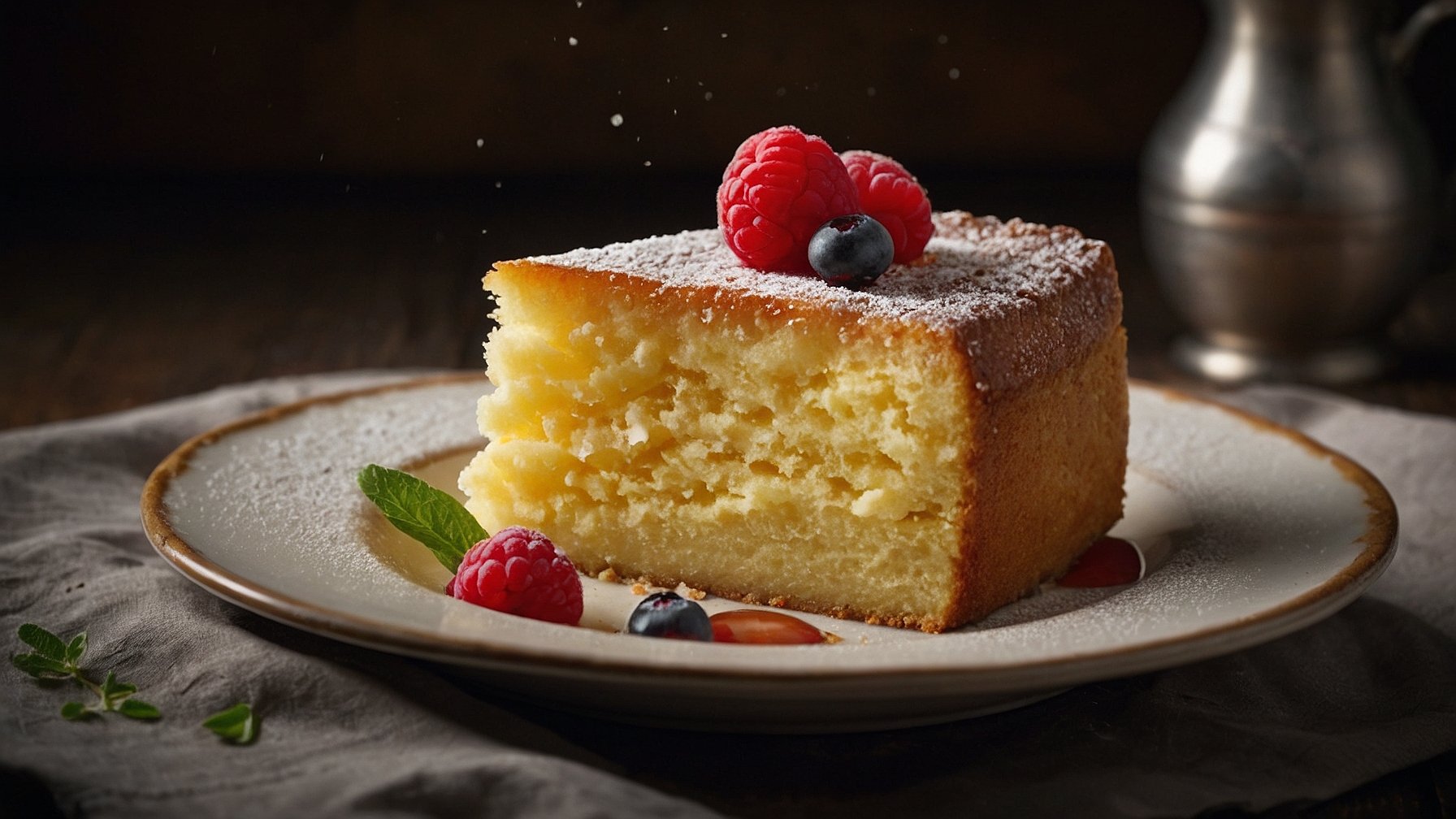
Bake a rich, tender, golden butter cake.
Ingredients
- 2 ¾ cups (330g) all-purpose flour, spooned, leveled, and sifted
- 1 tablespoon (15g) baking powder
- ½ teaspoon (3g) fine sea salt
- 1 cup (226g) unsalted butter, very soft at room temperature (68-72°F / 20-22°C)
- 2 cups (400g) granulated sugar, superfine preferred
- 4 large eggs, at room temperature, lightly beaten
- 1 cup (240ml) whole milk, at room temperature
- 2 teaspoons (10ml) pure vanilla extract
- 1 teaspoon (5ml) fresh lemon zest, finely grated (from ½ medium lemon)
- 1 tablespoon (14g) unsalted butter, softened, for greasing pan
- 2 tablespoons (28g) all-purpose flour, for dusting pan
Instructions
- Preheat oven to 350°F (175°C) with center rack. Grease a 9-inch (23 cm) round cake pan with 1 tablespoon (14g) softened unsalted butter. Dust pan with 2 tablespoons (28g) all-purpose flour; tap out excess until coated.
- Whisk 2 ¾ cups (330g) sifted all-purpose flour, 1 tablespoon (15g) baking powder, and ½ teaspoon (3g) fine sea salt in a medium bowl for 30 seconds. Set aside.
- Beat 1 cup (226g) very soft unsalted butter in a stand mixer with a paddle attachment on medium speed for 2 minutes until creamy. Gradually add 2 cups (400g) granulated sugar, beating on medium-high for 5-7 minutes until light, fluffy, and increased in volume.
- Add 4 lightly beaten large eggs one at a time, beating for 45 seconds after each addition on medium speed until fully incorporated and smooth. Scrape bowl as needed.
- Stir in 2 teaspoons (10ml) pure vanilla extract and 1 teaspoon (5ml) fresh lemon zest (if using), mixing on low speed for 15 seconds until just combined.
- Reduce mixer speed to low. Add one-third of the dry mixture, mixing for 20-30 seconds until mostly incorporated.
- Pour half of the 1 cup (240ml) room temperature whole milk into batter, mixing on low speed for 20-30 seconds until just combined.
- Add the second third of the dry mixture, mixing for 20-30 seconds. Add remaining half of milk, mixing for 20-30 seconds until combined.
- Add the final third of the dry mixture, mixing on low speed for 30-45 seconds until just combined and no visible flour streaks remain. Scrape bowl with spatula.
- Pour batter into the prepared 9-inch (23 cm) cake pan. Tap pan on counter 2-3 times to release air bubbles and level batter.
- Bake for 50-55 minutes until deeply golden brown, edges pull from pan, and surface springs back when touched.
- Insert a wooden skewer into the cake center; it should come out clean or with a few moist crumbs.
- Remove cake from oven. Place pan on wire rack. Cool in pan for 15-20 minutes to firm up.
- After 15-20 minutes, run a thin knife around cake edges to loosen. Invert cake onto wire rack, then flip right-side up. Cool completely for 1-2 hours before slicing.
Notes
- Use all cold ingredients (butter, eggs, milk) at room temperature (68-72°F / 20-22°C). This ensures proper emulsification, preventing curdling and yielding a tender cake.
- Do not overmix after flour addition. Overmixing develops gluten, resulting in a dense, tough cake. Mix only until flour streaks disappear.
- Sift flour and baking powder to remove lumps, aerate ingredients, and ensure lighter cake texture and even leavening.
- Use high-fat, unsalted European-style butter for best richness and buttery flavor.
- Store unfrosted cake tightly wrapped or in an airtight container at room temperature for 3-4 days. Freeze for up to 2 months, wrapped; thaw at room temperature.
- Serve plain, dusted with powdered sugar, or with fresh berries and crème fraîche. Use as a base for glazes or ganaches.
Pro Tips for Your Perfect French Butter Cake
Ingredient Tips
- European-Style Unsalted Butter:Use 226g (1 cup) of butter with at least 82% butterfat, ensuring it sits at room temperature for 60-90 minutes until it yields easily to a gentle finger press. Higher fat content creates a richer flavor and significantly more tender crumb.
- Room Temperature Eggs:Place your 4 large eggs in a bowl of warm (not hot) tap water for 10-15 minutes before using. Room temperature eggs emulsify much better with butter and sugar, preventing curdling and contributing to a smoother, more uniform batter.
- Sifted Cake Flour:Measure 240g (2 cups) of cake flour after sifting it twice through a fine-mesh sieve. This adds crucial air and removes any lumps, ensuring a lighter, finer-textured cake. All-purpose flour can make the cake denser due to higher protein.
- Full-Fat Milk or Cream:Heat 120ml (1/2 cup) of whole milk or light cream gently in a microwave for 30-45 seconds until lukewarm (around 30-35°C / 85-95°F). Room temperature dairy prevents the butter from seizing and keeps the batter smooth.
Technique Tips
- Thorough Butter and Sugar Creaming:Cream 200g (1 cup) granulated sugar with 226g (1 cup) room temperature butter for a full 5-7 minutes on medium-high speed (stand mixer speed 6-8). The mixture must be pale ivory, light, and fluffy, having visibly increased in volume by 50-70% to incorporate sufficient air for lift.
- Gradual Egg Incorporation:Add the 4 room temperature eggs one at a time, beating for 30-45 seconds after each addition on medium speed until fully incorporated. Scrape down the bowl after every two eggs to ensure a smooth, homogeneous emulsion and prevent curdling.
- Alternating Dry and Wet Ingredients:Add the sifted flour mixture in three additions, alternating with the lukewarm milk in two additions, starting and ending with flour. Mix on the lowest speed (stand mixer speed 1-2) for only 15-20 seconds after each addition until just combined, minimizing gluten development.
- Precise Pan Preparation:Generously grease a 9-inch round cake pan with 1 tablespoon of softened butter, then dust with 2 tablespoons of flour, tapping out the excess. For extra insurance, cut a parchment paper circle to fit the bottom and place it in the pan after greasing, ensuring an easy release.
- Two-Stage Baking Temperature:Bake at 190°C (375°F) for an initial 15 minutes to set the structure and promote a good rise, then reduce the oven temperature to 160°C (325°F) for the remaining 30-40 minutes. This prevents the edges from over-baking before the center is cooked through.
- Accurate Doneness Check:The cake is done when a wooden skewer inserted into the center comes out clean with no wet crumbs, and the top is golden brown and springs back lightly when pressed. For ultimate precision, the internal temperature should read 98-100°C (208-210°F).
Common Issues
- Dense, Gummy Texture:This usually indicates overmixing the flour. After adding the dry ingredients, mix on low speed for only 20-30 seconds, stopping as soon as no streaks of flour are visible, then finish gently folding 10-15 times with a spatula to prevent gluten development.
- Dry, Crumbly Cake:Your cake was likely overbaked. Reduce baking time by 5-10 minutes, testing for doneness early. Ensure your oven temperature is calibrated, as a 10-15 degree variance can significantly impact moisture.
- Cracked or Domed Top:The oven temperature was likely too high initially, causing the outside to set before the center fully rose. Ensure your oven thermometer reads accurately, and consider reducing the initial high temperature by 10°C (25°F) for the first 15 minutes.
- Sunken Middle:Avoid opening the oven door during the first 25-30 minutes of baking. If it still sinks, your oven might be too cool, or the batter was undermixed (not enough air incorporated during creaming, needing 5-7 minutes of mixing).
How to Store, Reheat & Creative Variations
Refrigerator Storage
Duration: 5-7 days in airtight container
The Perfect French Butter Cake, with its rich, tender crumb, holds up beautifully when refrigerated. To maintain its exquisite quality and prevent it from absorbing fridge odors, store the cake in an airtight glass cake keeper. If you have slices, wrap each piece tightly in several layers of plastic wrap before placing them in an airtight container. Stored correctly, the cake will maintain its delightful flavor for 5-7 days. Due to the cold, the texture will become firmer and denser, and the initial moistness might subtly decrease after day 5. The rich, buttery notes often deepen slightly with time, but for the best experience, allow it to come to room temperature or gently reheat before serving.
Freezer Storage
Duration: 2-3 months
Freezing is an excellent option for long-term preservation of your French Butter Cake. To freeze, ensure the cake or individual slices are completely cooled. Wrap each piece tightly in multiple layers of plastic wrap, then follow with an additional layer of heavy-duty aluminum foil. This dual-layer protection is crucial to prevent freezer burn and seal in moisture. When ready to enjoy, thaw frozen cake slices overnight in the refrigerator (8-12 hours) or at room temperature for 2-3 hours. A whole cake will require 12-24 hours in the refrigerator or 4-6 hours at room temperature. Thanks to its high butter content, the cake’s texture when thawed will remain remarkably close to fresh, with only a very slight reduction in initial moistness. The luxurious buttery taste will be perfectly preserved.
Reheating Instructions
- Oven:Preheat oven to 300°F (150°C). Place individual slices on a baking sheet. Reheat for 8-10 minutes, or until warmed through and the edges feel slightly crisp. This method works best, yielding a wonderfully fragrant, tender, and moist cake that tastes almost freshly baked. It helps to subtly re-crisp the edges while keeping the interior lusciously soft.
- Microwave:Place a single slice on a microwave-safe plate. Heat on medium power for 15-30 seconds. Check for warmth; continue in 10-second increments if needed. The microwave is acceptable for a quick reheat, but use sparingly. It can sometimes make the cake slightly chewier or drier in spots if overdone, and doesn’t achieve the same delightful exterior crispness as the oven method.
Make-Ahead Tips
The Perfect French Butter Cake is an ideal candidate for making ahead, primarily as a complete, baked product. The batter itself does not store well due to its specific leavening agents and butter emulsion, which are best utilized immediately for optimal lift and texture. You can bake the entire cake 1-2 days in advance if storing at room temperature, or up to 2-3 months in advance if opting for freezer storage. For short-term (1-2 days) room temperature storage, allow the cake to cool completely, then wrap it tightly in plastic wrap and place it under a cake dome or in an airtight container. For longer-term storage, follow the detailed freezer instructions provided above. Baking ahead often allows the flavors to meld beautifully, enhancing the cake’s overall depth and richness for serving.