
Quick Easy Korean Ground Beef Bowl: Your Weeknight Flavor Fix!
This Quick Easy Korean Ground Beef Bowl delivers a flavorful, satisfying meal in under 20 minutes.
It requires only 8 common ingredients and a single skillet for minimal cleanup, making it an ideal weeknight solution.
Serve this versatile dish over fluffy rice with a sprinkle of sesame seeds for a complete dinner.
The ground beef cooks rapidly, absorbing the savory-sweet Korean-inspired sauce featuring soy sauce, brown sugar, and garlic. This recipe offers a balanced, budget-friendly alternative to takeout, allowing for quick customization with added vegetables like spinach or shredded carrots directly into the pan. Prepare a delicious, vibrant meal that is both convenient and full of robust flavors, perfect for busy evenings. This straightforward approach guarantees a consistently delicious outcome with minimal effort, transforming basic pantry staples into a satisfying main course.
Quick Easy Korean Ground Beef Bowl
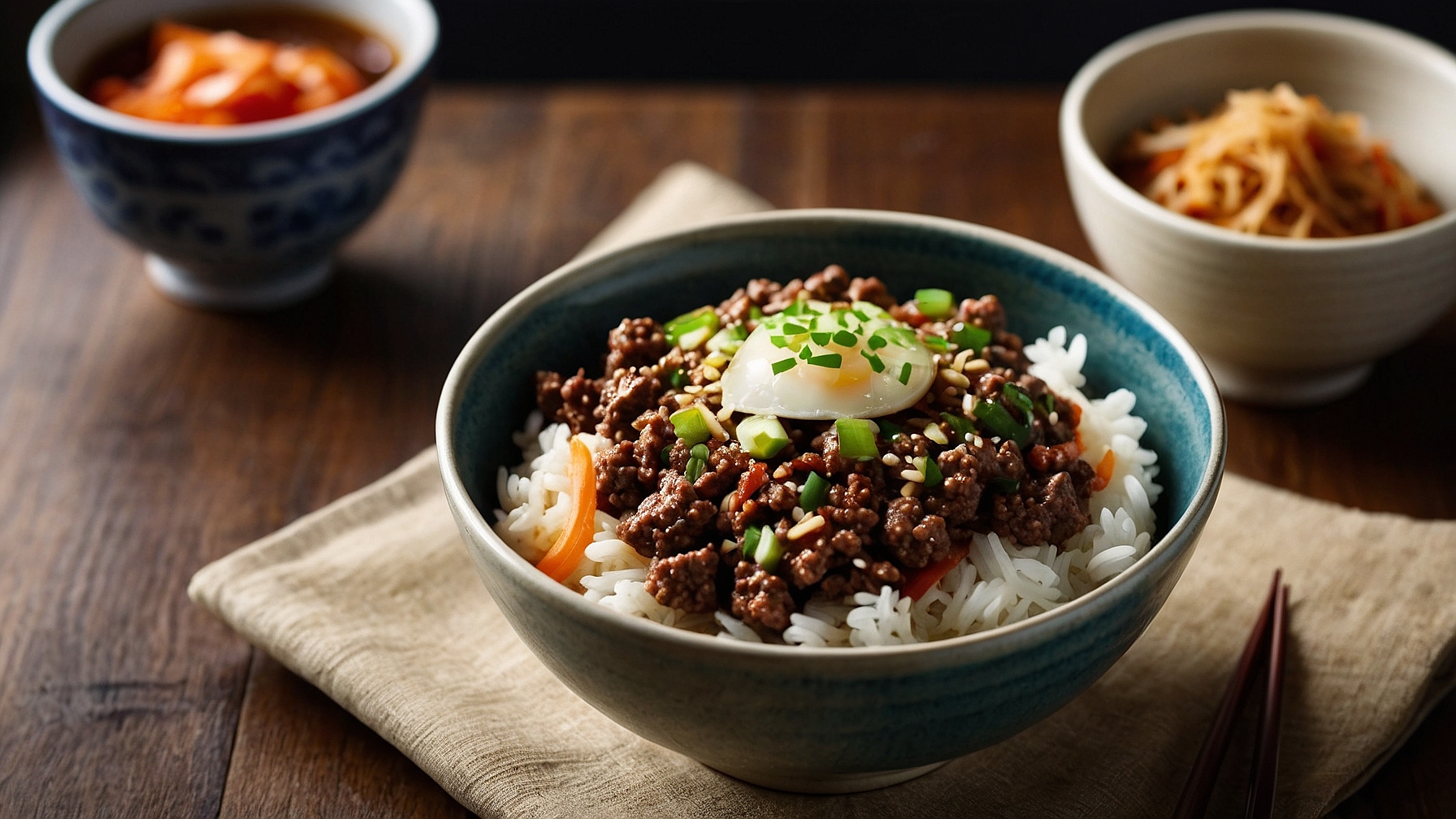
Prepare a savory, sweet, and tangy Korean Ground Beef Bowl in 25-30 minutes.
Ingredients
For the Beef:
- 1 tablespoon (15ml) sesame oil, divided
- 1.5 lb (680g) lean ground beef (80/20 or 85/15 recommended)
- 4 cloves garlic, freshly minced
- 1-inch (2.5cm) piece fresh ginger, peeled and finely grated or minced
For the Sauce:
- 1/2 cup (120ml) low-sodium soy sauce
- 1/4 cup (60ml) water or beef broth
- 1/4 cup (50g) packed light brown sugar
- 1 tablespoon (15ml) rice vinegar, unseasoned
- 1 tablespoon (15g) gochujang (Korean chili paste), optional
- 1 teaspoon (5ml) toasted sesame oil
- 1/2 teaspoon ground black pepper
For Serving:
- 4 cups (720g) cooked short-grain white rice, kept warm
- 4 large eggs, fried as desired (optional)
For Garnish:
- 3 green onions, thinly sliced
- 1 tablespoon (15ml) toasted sesame seeds
Instructions
- Cook 2 cups (360g) dry short-grain white rice according to package directions until fluffy. Cover cooked rice to keep warm.
- Mince 4 cloves garlic. Grate or mince 1-inch (2.5cm) fresh ginger. Thinly slice 3 green onions for garnish.
- Whisk 1/2 cup (120ml) low-sodium soy sauce, 1/4 cup (60ml) water or beef broth, 1/4 cup (50g) packed light brown sugar, 1 tablespoon (15ml) unseasoned rice vinegar, 1 tablespoon (15g) gochujang (optional), 1 teaspoon (5ml) toasted sesame oil, and 1/2 teaspoon ground black pepper in a medium bowl until brown sugar dissolves. Set aside.
- Heat 1/2 tablespoon (7.5ml) sesame oil in a large skillet or non-stick pan over medium-high heat until shimmering.
- Add 1.5 lb (680g) lean ground beef to the hot skillet. Break apart and cook 5-7 minutes, stirring occasionally, until browned.
- Drain all but 1 tablespoon (15ml) excess fat from the skillet.
- Reduce heat to medium. Add minced garlic and grated ginger to beef. Cook 1 minute, stirring constantly, until fragrant.
- Pour sauce mixture over beef and aromatics. Stir to combine. Bring to a simmer until gently bubbling.
- Simmer beef and sauce 5-7 minutes, stirring occasionally, until sauce reduces, thickens, and becomes glossy.
- Optional: Heat 1/2 tablespoon (7.5ml) sesame oil in a separate small non-stick pan over medium heat. Crack 4 large eggs into the pan. Fry 2-3 minutes until whites are set and yolks are desired runniness.
- Divide warm cooked rice among 4 bowls. Spoon Korean ground beef mixture over rice in each bowl.
- Top each bowl with sliced green onions and toasted sesame seeds. If using, add one fried egg to each bowl. Serve immediately.
Notes
- Spice Level Adjustment: Add 1 tablespoon (15g) gochujang for mild heat. Increase to 1.5 tablespoons (22.5g) for spicier. Omit for no spice.
- Added Vegetables: Add 1 cup (150g) shredded carrots or 1 cup (180g) frozen peas to beef mixture during the last 3 minutes of simmering.
- Storage Instructions: Store leftovers in an airtight container in the refrigerator for up to 3 days. Reheat in microwave or on stovetop over medium-low heat until warmed through.
- Soy Sauce Alternatives: If using regular full-sodium soy sauce, reduce amount by 1-2 tablespoons (15-30ml).
- Fresh Ginger: Use fresh ginger; do not substitute with dried ginger powder.
Pro Tips for Perfect Quick Easy Korean Ground Beef Bowl
Ingredient Tips
- Optimal Beef Fat & Draining:Select 80/20 ground beef for optimal richness; brown 1 pound for 5-7 minutes until uniformly golden brown, then drain 2-3 tablespoons of rendered fat to prevent a greasy sauce while retaining essential moisture.
- Fresh Aromatic Timing:Grate 1.5 inches of fresh ginger and 3-4 cloves of garlic directly into the pan for 1 minute after browning the beef; this ensures potent oil release without burning, yielding vibrant flavor throughout the dish.
- Toasted Sesame Oil Finish:Stir in 1.5 teaspoons of toasted sesame oil after removing the beef from heat; direct heat diminishes its delicate nutty aroma, so adding it last ensures its distinct fragrance is pronounced in every bite.
Technique Tips
- High-Heat Beef Browning:Preheat a large non-stick skillet over medium-high heat for 2 minutes, then add 1 pound of ground beef; brown for 5-7 minutes, breaking it into 1/4-inch crumbles until uniformly golden brown, forming a deeply savory base.
- Precise Sauce Simmer:Once sauce ingredients combine with the beef, bring to a gentle simmer and cook for exactly 3-4 minutes, stirring occasionally; the sauce should reduce slightly and begin bubbling at the edges, thickening just enough to coat a spoon.
- Perfect Fluffy Rice:For 2 cups of white rice, use precisely 2.5 cups of cold water; cook covered on low heat for 18 minutes, then remove from heat and let rest, still covered, for 10 minutes before fluffing with a fork, achieving separate, tender grains.
Common Issues
- Overly Salty or Sweet Sauce Fix:If the sauce tastes overly salty, add 1/4 cup of water or unsalted chicken broth with 1 teaspoon of brown sugar. If too sweet, add 1 teaspoon of rice vinegar and 1/2 teaspoon of gochujang. Simmer for 1-2 minutes to rebalance.
- Watery Sauce Solution:If your sauce remains thin after 4 minutes of simmering, create a slurry with 1 tablespoon of cornstarch mixed with 2 tablespoons of cold water; stir half into the simmering sauce and cook for 1 minute until thickened, adding more until it slides off a spoon with a slight cling.
- Flavorless Beef Booster:If the beef lacks punch, stir in 1 teaspoon of low-sodium soy sauce and 1/4 teaspoon of black pepper after cooking; gently reheat for 30 seconds to allow flavors to meld without over-reducing the sauce.
Ingredient Substitutions and Serving Suggestions
Essential Substitutions
- Ground Beef:
- (Ground turkey and chicken will result in a leaner dish with a milder flavor; tofu provides a plant-based alternative that absorbs flavors well, but requires pressing out excess water for optimal texture.)
- Soy Sauce:
- (Tamari is a gluten-free alternative that maintains a very similar savory flavor profile. Coconut Aminos offer a less salty, slightly sweeter, and lower-sodium option, which may require a small adjustment to the overall seasoning.)
- Brown Sugar:
- (Honey adds a distinct floral note and is generally sweeter, so less is needed. Maple syrup offers a slightly different caramel-like sweetness. Granulated sugar provides clean sweetness but lacks the subtle molasses notes of brown sugar.)
- Rice Vinegar:
- (Apple cider vinegar provides a fruitier, slightly milder tang. White vinegar is more acidic and sharp, so reduce the quantity to avoid overpowering the dish.)
- Toasted Sesame Oil:
- (While sesame oil is key to the flavor, a neutral oil like canola or vegetable oil can provide richness. Adding toasted sesame seeds at the end will still impart some nutty aroma, though less intensely mixed into the sauce.)
- Fresh Ginger:
- (Ground ginger offers a spicier, more concentrated ginger flavor compared to fresh, which is brighter and more aromatic. Adjust to your preference.)
Dietary Variations
- Gluten-Free:
- Replace soy sauce with Tamari (1:1 ratio). Ensure all other packaged ingredients (e.g., sesame oil, chili paste if adding) are certified gluten-free.
- Vegan/Vegetarian:
- Replace ground beef with 1 pound finely crumbled firm or extra-firm tofu (pressed well) or a plant-based ground meat alternative (1:1 ratio). Ensure sugar is vegan-certified if following strict guidelines.
- Low-Sodium:
- Use low-sodium soy sauce (1:1) or Coconut Aminos (1:1, note this will be less salty overall and slightly sweeter). Omit any added salt.
- Low-Carb/Keto:
- Replace brown sugar with Erythritol or Monk Fruit sweetener (1:1 equivalent for sweetness). Serve over cauliflower rice or lettuce cups instead of white rice.
Flavor Variations
- Spicy Kick:
- Add 1-2 tablespoons Gochujang (Korean chili paste) to the sauce mixture, or 1-2 teaspoons sriracha/chili flakes to the beef as it cooks. (Gochujang adds a fermented, sweet heat and depth; sriracha offers a more straightforward chili flavor.)
- Extra Umami:
- Incorporate 1 teaspoon fish sauce along with the soy sauce, or a pinch (1/4 teaspoon) of MSG or mushroom powder. (Fish sauce deepens the savory profile, adding a complex layer without a strong “fishy” taste. MSG and mushroom powder are pure umami enhancers.)
- Citrus Brightness:
- Add 1 tablespoon fresh lime juice or lemon juice after cooking, in addition to or as a partial substitute for rice vinegar (use 1/2 the amount of vinegar and add citrus). (This introduces a brighter, zesty note that complements the savory beef and cuts through richness.)