
Creamy Mashed Potatoes: The Ultimate Comfort Side
Master perfectly creamy, lump-free mashed potatoes with a simple, fail-proof method that ensures consistent restaurant-quality results.
This straightforward recipe is ready in just 25 minutes and relies on only 6 common pantry staples.
It pairs beautifully with holiday roasts, weeknight steak dinners, or any comfort food meal requiring a classic side.
Creamy Mashed Potatoes
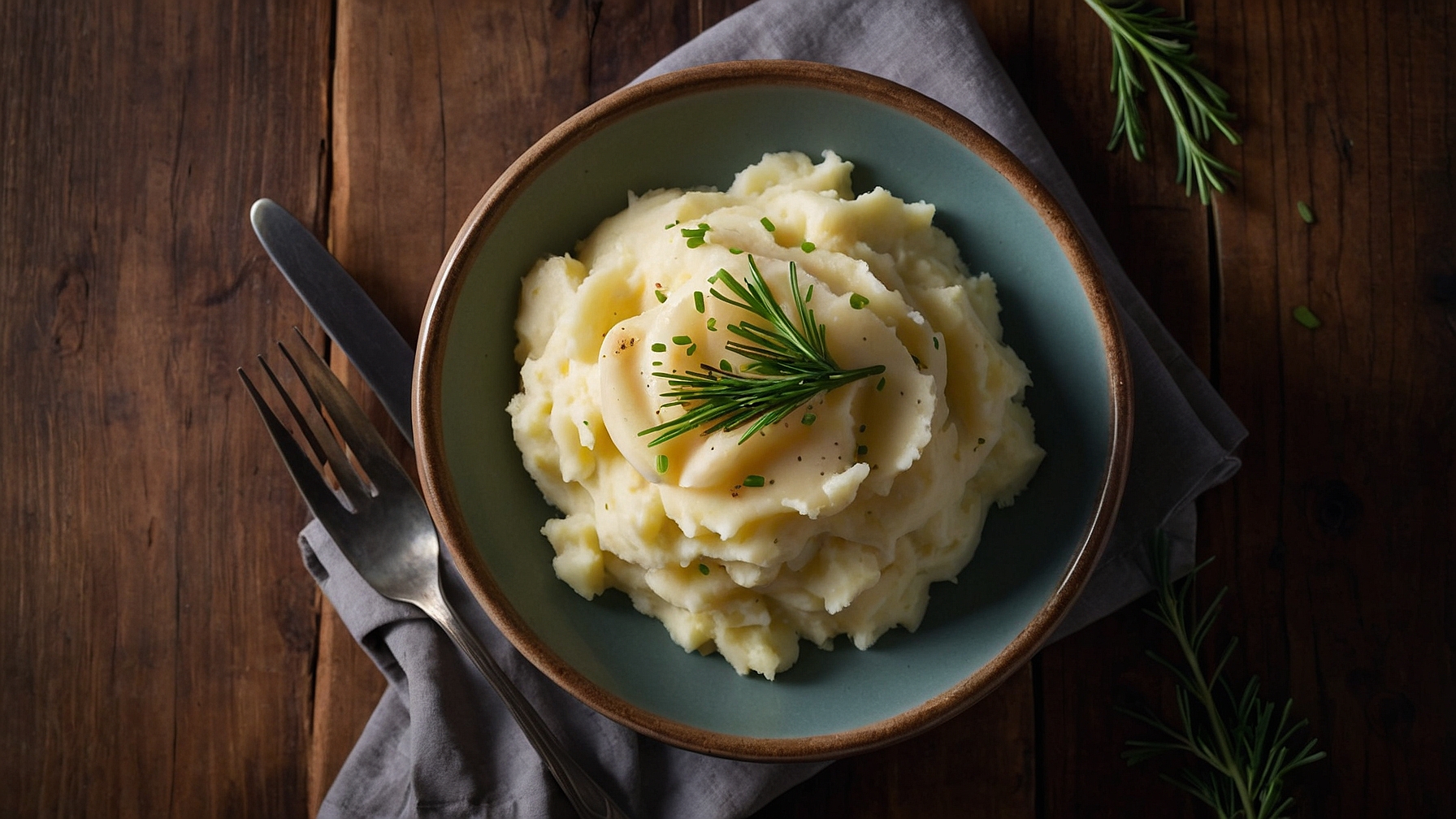
This recipe produces smooth, rich mashed potatoes.
Ingredients
- 2.5 lbs (1.13 kg) Russet potatoes, peeled and cut into uniform 1-inch (2.5 cm) cubes
- 1/2 cup (113g) unsalted butter, cut into 1/2-inch (1.25 cm) pieces, softened to room temperature
- 3/4 cup (180ml) whole milk or half-and-half, warmed
- 1.5 teaspoons (9g) fine sea salt
- 1/4 teaspoon (0.6g) freshly ground black pepper
- 2 tablespoons (8g) fresh chives, finely chopped, for garnish (optional)
Instructions
- Peel 2.5 lbs (1.13 kg) Russet potatoes. Cut potatoes into uniform 1-inch (2.5 cm) cubes.
- Place cubed potatoes into a large pot. Cover potatoes with cold water by 1 inch (2.5 cm). Add 1 teaspoon (6g) fine sea salt. Bring water to a rolling boil over high heat.
- Reduce heat to medium-high. Cook potatoes for 15-20 minutes until fork-tender.
- Drain cooked potatoes using a large colander. Allow potatoes to steam dry for 1-2 minutes.
- Return potatoes to the empty pot. Mash with a potato masher, ricer, or food mill until most lumps are gone and potatoes appear fluffy.
- Add 1/2 cup (113g) softened unsalted butter, cut into 1/2-inch (1.25 cm) pieces. Mash or stir until butter is fully melted and absorbed.
- Gradually add 3/4 cup (180ml) warmed whole milk or half-and-half. Fold or mash until potatoes reach desired creamy consistency.
- Stir in 1/2 teaspoon (3g) fine sea salt and 1/4 teaspoon (0.6g) freshly ground black pepper. Taste; add more salt or pepper if desired. Serve immediately, garnished with fresh chopped chives (optional).
Pro Tips for Perfect Creamy Mashed Potatoes
Ingredient Tips
- Choose the Right Potato:Use 2.5 pounds (approx. 5-6 medium) starchy Russet potatoes for a fluffy, absorbent mash, or slightly waxy Yukon Golds for a naturally creamy, buttery base that needs less added fat.
- Salt the Cooking Water Generously:Add 2 tablespoons (30g) of kosher salt per gallon of water when boiling your potatoes. This infuses flavor into the potatoes from within, ensuring they are seasoned throughout and taste noticeably better.
- Warm Your Dairy and Fat:Gently heat 1/2 cup (113g) unsalted butter, cubed, and 1/2 cup (120ml) heavy cream (minimum 36% fat) to a temperature of 180°F (82°C) before adding. This prevents the potatoes from cooling and seizing, ensuring a smooth, emulsified, velvety finish.
- Infuse Garlic, Then Remove:Gently simmer 3-4 crushed, unpeeled garlic cloves in the warming cream/milk for 5-7 minutes. Strain the liquid before adding it to impart a subtle, aromatic garlic essence without strong flavor or chunky bits.
Technique Tips
- Uniform Potato Cut:Peel potatoes thoroughly and cut them into uniform 1.5-inch (3.8 cm) cubes. This ensures all pieces cook at the same rate, preventing undercooked lumps or overcooked mush, leading to a consistently tender result.
- Boil from Cold, Don’t Overcook:Place cubed potatoes in a large pot, cover with cold water by 1 inch (2.5 cm), and bring to a boil. Reduce heat and simmer for 15-20 minutes until “fork-tender”—a fork slides in with no resistance, and edges slightly break down.
- Aggressively Dry the Potatoes:After draining potatoes completely in a colander, return them to the hot, empty pot over low heat for 2-3 minutes, shaking. You’ll see significant steam rising vigorously; this evaporates excess moisture, preventing a waterlogged or gummy mash.
- Use a Ricer for Smoothness:Pass the hot, dried potatoes through a potato ricer directly into a warm bowl. This process breaks down the potato cells without overworking them, yielding the lightest, fluffiest, lump-free base, superior for creaminess.
- Incorporate Fat First:Add all 1/2 cup (113g) of the warm, cubed unsalted butter to the riced potatoes. Stir gently for 1-2 minutes until fully melted and absorbed, coating each particle for a rich, glossy foundation.
- Add Warm Dairy Gradually:Slowly pour in 1/2 cup (120ml) warm heavy cream, folding gently with a rubber spatula. Mix for 2-3 minutes, just until smooth, velvety, and beginning to “slide off the spoon” in soft waves, stopping immediately to prevent over-mixing.
Common Issues
- Gummy Texture:If your mash turns gluey from over-mixing, stop. To partially salvage, fold in an additional 2 tablespoons (28g) of softened butter and 1 tablespoon (15ml) of warm cream for only 30 seconds to slightly loosen without further starch breakdown.
- Watery Mash:If too wet, return the mashed potatoes to a dry pot over medium-low heat. Stir constantly for 3-5 minutes until thickened and a thin, dry film starts to form on the pot bottom, indicating excess moisture evaporated.
- Lumpy Mashed Potatoes:Lumps suggest undercooked potatoes. To fix, pass the mashed potatoes through a fine-mesh sieve with the back of a spoon. For future batches, ensure potatoes are boiled until they “collapse easily” when pressed with a fork.
- Cold/Stiff Potatoes:When potatoes firm up, reheat gently in a double boiler over simmering water or microwave on medium for 1-2 minutes, stirring every 30 seconds. Incorporate 1-2 tablespoons (15-30ml) of warm cream until they reach their original loose, “slides off the spoon” consistency.
- Bland Flavor:If flat, add an extra 1/2 to 1 teaspoon of kosher salt and 1/4 teaspoon of white pepper. Stir for 30 seconds and taste; repeat in small increments until the flavor is bright and balanced, ensuring not overly salty.
How to Store, Reheat, and Repurpose Mashed Potatoes
Refrigerator Storage
Duration: 5-7 days in airtight container
For optimal freshness and food safety, always allow your creamy mashed potatoes to cool completely to room temperature (within 2 hours) before transferring them to an airtight glass or BPA-free plastic container. Proper cooling prevents condensation, which can lead to sogginess. When stored, the potatoes will naturally become denser and slightly drier over time as the starches firm up and absorb moisture. The initial light and fluffy texture will diminish, and the vibrant buttery and creamy flavors may mellow after a few days. Quality begins to noticeably decline after day 5, where the potatoes can become firmer and lose some of their original bright flavor profile, though they remain safe to eat for the stated duration.
Freezer Storage
Duration: 1-2 months
Creamy mashed potatoes freeze remarkably well. To freeze, ensure the potatoes are completely cool. For individual servings, scoop portions onto a parchment-lined baking sheet and freeze until solid (1-2 hours), then transfer to a heavy-duty zip-top freezer bag, pressing out as much air as possible. Alternatively, store cooled mashed potatoes directly in freezer-safe, airtight containers, leaving about an inch of headspace.
Thawing instructions: For best results, thaw frozen mashed potatoes overnight (8-12 hours) in the refrigerator before reheating. While you can reheat from frozen, it will take longer. Upon thawing and reheating, the texture may become slightly grainier or a bit more watery due to starch breakdown and water release. Some of the initial creaminess might be lost, but adding a splash of warm milk or cream during reheating can easily restore it.
Reheating Instructions
- Oven (Best for maintaining texture):Preheat oven to 350°F (175°C). Transfer thawed mashed potatoes to an oven-safe dish. Add 1-2 tablespoons of milk, cream, or chicken broth per cup of potatoes and stir gently to incorporate. Cover the dish tightly with aluminum foil to prevent drying. Bake for 20-30 minutes, or until the potatoes are thoroughly heated through and steaming. Stir halfway through baking. For a slightly browned top, remove the foil for the last 5 minutes. The potatoes should be creamy and hot throughout.
- Stovetop (Excellent for restoring creaminess):Transfer thawed mashed potatoes to a heavy-bottomed saucepan or pot over medium-low heat. Add 1-2 tablespoons of milk or cream per cup of potatoes, along with a small pat of butter (optional) for added richness. Stir frequently with a rubber spatula or whisk, gently breaking up any lumps, until the potatoes are thoroughly heated, smooth, and creamy, typically within 8-12 minutes. Ensure constant stirring to prevent scorching the bottom of the pot.
- Microwave (Quick, but can alter texture):Place thawed mashed potatoes in a microwave-safe bowl. Add 1 tablespoon of milk or cream per cup of potatoes. Cover the bowl with a microwave-safe lid or plastic wrap, leaving a small vent. Heat on 50% power for 2-3 minutes, then stir thoroughly. Continue heating in 1-2 minute intervals, stirring after each, until the potatoes are uniformly hot. Be cautious not to overheat, as this can lead to a gummy or gluey texture, and heating may be uneven.
Make-Ahead Tips
Mashed potatoes are a fantastic make-ahead component for busy days or special occasions.
Potatoes (unprocessed): You can peel and cube potatoes up to 1 day in advance. Store the prepared potato cubes submerged in cold water in an airtight container in the refrigerator to prevent browning. Drain them thoroughly before cooking.
Fully Mashed Potatoes: Prepare your creamy mashed potatoes completely as per your recipe. Allow them to cool entirely before storing them using either the refrigerator or freezer methods described above. Store-bought or homemade mashed potatoes can be made 1-2 days in advance if refrigerating, or up to 2 months if freezing. Reheat using your preferred method on the day of serving. For the freshest, most luxurious texture, add a final pat of cold butter and a splash of hot milk or cream, incorporating it gently just before serving after reheating. This helps to emulsify and restore the ultimate creaminess, combating any density changes from storage.