
Easy Mongolian Ground Beef Noodles: Your Weeknight Flavor Fix!
Ready in under 25 minutes, these Easy Mongolian Ground Beef Noodles deliver a takeout-style meal with minimal effort.
This satisfying one-pan dish utilizes just 8 core ingredients, transforming simple pantry staples into a flavorful and hearty dinner.
Perfect for busy weeknights, this recipe offers a complete meal that’s both comforting and packed with savory, slightly sweet, and umami notes.
Easy Mongolian Ground Beef Noodles
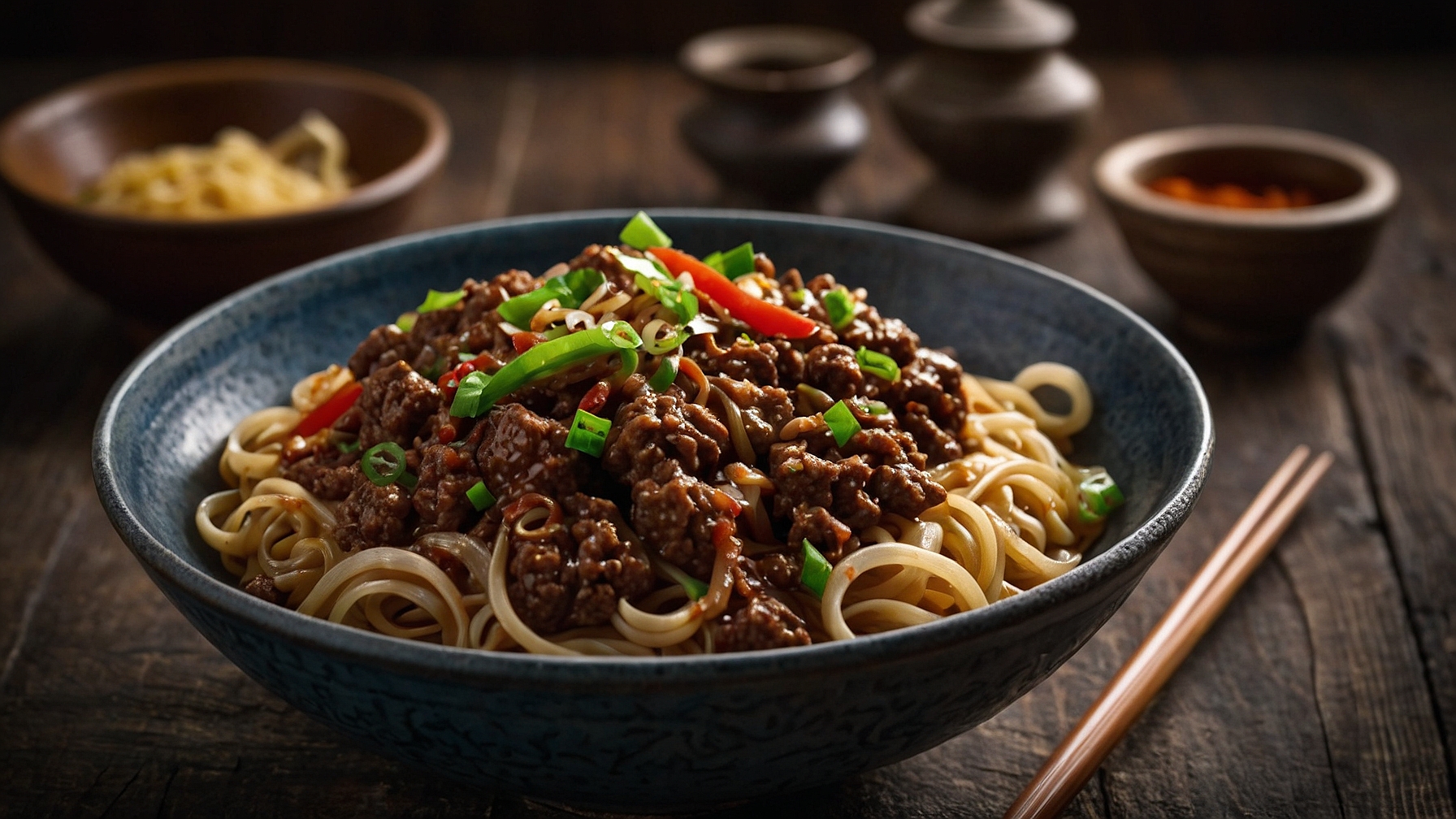
This recipe features ground beef and noodles coated in a savory, slightly sweet Mongolian sauce.
Ingredients
- 1 tablespoon (15ml) vegetable oil, or canola oil
- 1 lb (450g) lean ground beef, 80/20 or leaner
- 1 medium yellow onion, finely diced
- 4 cloves garlic, minced
- 1 inch (2.5cm) fresh ginger, peeled and grated
- 1 large red bell pepper, cored, seeded, and thinly sliced
- 2 cups (200g) fresh broccoli florets, bite-sized
- 8 oz (225g) dried lo mein noodles, ramen noodles, or spaghetti, cooked according to package directions
- 1 tablespoon (15ml) cornstarch, mixed with 2 tablespoons (30ml) cold water (for slurry)
- 1/2 cup (120ml) low-sodium soy sauce
- 1/2 cup (120ml) water
- 1/2 cup (100g) packed light brown sugar
- 2 tablespoons (30ml) rice vinegar
- 1 tablespoon (15ml) toasted sesame oil
- 1 teaspoon (5ml) red pepper flakes, optional
- 3 green onions, thinly sliced, for garnish
- 1 tablespoon (15g) toasted sesame seeds, for garnish
Instructions
- Prepare ingredients: Finely dice 1 medium yellow onion, mince 4 cloves garlic, peel and grate 1 inch (2.5cm) fresh ginger. Core, seed, and thinly slice 1 large red bell pepper. Chop 2 cups (200g) fresh broccoli into bite-sized florets. Measure all sauce ingredients.
- Cook noodles: Fill a large pot with 6-8 cups (1.4-1.9 liters) water; add 1 teaspoon (5g) salt. Bring water to a rolling boil over high heat. Add 8 oz (225g) dried lo mein noodles. Cook 5-7 minutes, stirring occasionally, until tender-firm (al dente). Drain noodles in a colander; set aside.
- Brown ground beef: Heat 1 tablespoon (15ml) vegetable oil in a large skillet or wok over medium-high heat for 1-2 minutes, until shimmering. Add 1 lb (450g) lean ground beef. Break beef into small crumbles. Cook 6-8 minutes, stirring occasionally, until fully browned with no pink remaining.
- Drain excess fat: Tilt skillet. Remove and discard excess fat, leaving 1 tablespoon (15ml) rendered fat with the beef.
- Sauté aromatics: Add 1 finely diced yellow onion, 4 minced garlic cloves, and 1 grated fresh ginger (2.5cm) to the skillet with ground beef. Cook 3-4 minutes, stirring frequently, until onion is translucent and garlic/ginger are fragrant.
- Add vegetables: Stir in 1 thinly sliced red bell pepper and 2 cups (200g) bite-sized broccoli florets. Cook 3-5 minutes, stirring occasionally, until vegetables are tender-crisp.
- Prepare sauce: In a medium bowl, combine 1/2 cup (120ml) low-sodium soy sauce, 1/2 cup (120ml) water, 1/2 cup (100g) packed light brown sugar, 2 tablespoons (30ml) rice vinegar, 1 tablespoon (15ml) toasted sesame oil, and optional 1 teaspoon (5ml) red pepper flakes. Whisk 1-2 minutes until brown sugar is dissolved and sauce is uniform.
- Add sauce: Pour prepared sauce over beef and vegetable mixture in skillet. Stir to coat. Bring to a gentle simmer over medium heat, until sauce bubbles lightly around edges.
- Thicken sauce: In a small bowl, whisk 1 tablespoon (15ml) cornstarch with 2 tablespoons (30ml) cold water until a smooth slurry forms. Slowly pour slurry into simmering sauce, stirring continuously. Cook 1-2 minutes, stirring gently, until sauce visibly thickens to a glossy, coating consistency.
- Combine noodles: Add drained, cooked noodles to skillet. Toss with tongs or spatulas for 1-2 minutes until evenly coated in sauce and heated through.
- Serve: Remove skillet from heat. Divide noodles among serving bowls. Garnish each portion with 3 thinly sliced green onions and 1 tablespoon (15g) toasted sesame seeds. Serve hot.
Notes
- Customizing Heat: Increase red pepper flakes to 1 1/2 teaspoons (7.5ml) or 2 teaspoons (10ml) for spicier results. Omit for a milder dish.
- Gluten-Free Option: Substitute low-sodium soy sauce with an equal amount of tamari. Use certified gluten-free noodles (e.g., rice vermicelli, gluten-free spaghetti).
- Storage and Reheating: Store leftovers in an airtight container in the refrigerator for up to 3 days. Reheat on stovetop over medium-low heat with 1-2 tablespoons (15-30ml) water or broth, or microwave in 60-second intervals, stirring between, until heated through.
- Sweetness Adjustment: After Step 9, taste sauce. Stir in an additional 1-2 teaspoons (5-10ml) packed light brown sugar until dissolved for sweeter sauce.
- Cornstarch Slurry Tip: Mix cornstarch with cold water to create a smooth slurry before adding to hot liquids. This prevents lumps and ensures even thickening.
- Vegetable Variations: Substitute or add vegetables like sliced carrots, snow peas, mushrooms, or baby corn. Cook alongside bell pepper and broccoli until tender-crisp.
Pro Tips for Perfect Easy Mongolian Ground Beef Noodles
Ingredient Tips
- Ground Beef Fat (85/15):Use 85/15 ground beef for optimal flavor. Drain all but 1 tablespoon of rendered fat after browning to prevent a greasy dish and ensure sauce adherence.
- Beef Crumbles (1/4-inch):Break ground beef into consistent 1/4-inch crumbles with a wooden spoon within the first 2-3 minutes of cooking. This ensures even browning and better noodle integration.
- Fresh Aromatics (Mince/Grate):Mince 4 large garlic cloves (1/8-inch pieces) and grate a 1-inch fresh ginger knob via microplane. Delivers pungent, evenly dispersed flavor without raw chunks.
- Noodle Al Dente (1-2 min less):Cook instant ramen or thin lo mein noodles 1-2 minutes less than package directions until just al dente. Prevents mushiness when tossed vigorously with hot sauce.
- Low-Sodium Soy (1/2 cup start):Opt for low-sodium soy sauce. Start with 1/2 cup; this allows gradual addition of 1-2 tablespoons more if needed, preventing an overly salty outcome.
Technique Tips
- Optimal Beef Browning (Medium-High):Cook 1 lb ground beef over medium-high heat (375-400°F) in a large skillet for 6-8 minutes, breaking into 1/4-inch crumbles. Achieve deep golden brown with crispy bits for rich flavor.
- Aromatic Activation (30-60 seconds):After draining fat, sauté 4 cloves minced garlic and 1-inch grated ginger for 30-60 seconds until intensely fragrant. Avoid browning to prevent bitterness.
- Sauce Thickening (2-3 minutes):Simmer sauce gently 2-3 minutes until it coats a spoon’s back and shows small edge bubbles. This creates a perfect glaze for noodles.
- Noodle Coating (1-2 minutes):Add cooked, drained noodles directly to simmering sauce and beef. Toss vigorously for 1-2 minutes until every strand is evenly coated, glossy, and absorbs flavor.
- Vegetable Crisp-Tender (2-3 minutes):If adding 1 cup sliced bell peppers, stir-fry 2-3 minutes after aromatics (before sauce) until crisp-tender, retaining a slight bite.
Common Issues
- Greasy Noodles:After browning 1 lb beef, drain all but 1 tablespoon fat. Absorb any remaining excess with a paper towel for a lighter sauce.
- Mushy Noodles:Cook noodles 1-2 minutes less than package directions (e.g., 3 mins instead of 4). They should be al dente, preventing disintegration in sauce.
- Bland Flavor:Ensure 4-5 cloves minced garlic and 1-inch grated ginger. If bland, add 1 tablespoon low-sodium soy sauce and 1 teaspoon toasted sesame oil before serving for deeper umami.
- Sauce Too Thin:Whisk 1 tablespoon cornstarch with 2 tablespoons cold water. Stir slurry into simmering sauce; cook 1 minute until it thickens to a glossy sheen, gently bubbling.
- Sauce Too Thick:If too viscous, gradually stir in 1-2 tablespoons hot water or low-sodium chicken broth until it slides off a spoon easily and coats noodles.
Ingredient Substitutions and How to Store/Reheat Mongolian Ground Beef Noodles
Creating Easy Mongolian Ground Beef Noodles is a fantastic weeknight meal, but sometimes you don’t have every ingredient on hand, or you want to tailor it to specific dietary needs or flavor preferences. This guide provides reliable substitutions to ensure your meal is always delicious and adaptable.
Essential Substitutions
- Ground Beef:
- (Ground turkey or chicken will result in a leaner dish with a slightly milder, less rich flavor profile. Crumbled firm tofu, well-pressed and browned, makes the dish vegetarian and absorbs flavors exceptionally well, though it lacks the umami depth of beef.)
- Ramen/Lo Mein Noodles:
- (Spaghetti or linguine provides a firmer, heartier bite, similar to traditional lo mein. Rice noodles offer a gluten-free alternative with a softer texture and quicker cooking time. Adjust cooking time according to package directions.)
- Soy Sauce:
- (Tamari is a gluten-free soy sauce with a very similar flavor profile. Coconut Aminos is a soy-free and gluten-free alternative; it’s slightly sweeter and less salty than soy sauce, so a small pinch of salt may be needed to balance the savory notes.)
- Brown Sugar:
- (Granulated sugar provides sweetness but lacks the subtle molasses depth of brown sugar. Maple syrup or honey contribute sweetness along with their unique aromatic notes, but since they are liquid, reduce the amount to prevent an overly thin sauce.)
- Rice Vinegar:
- (Apple cider vinegar offers a slightly fruitier, milder tang. White wine vinegar provides a sharper acidity. Both work well to provide the necessary balance to the rich sauce, but might subtly alter the specific Asian tang.)
- Cornstarch:
- (Arrowroot powder thickens effectively and provides a very clear, glossy finish to the sauce, especially when reheated. Potato starch also thickens well but can sometimes result in a slightly more opaque sauce.)
Dietary Variations
- Gluten-Free:
- Replace regular soy sauce with tamari (1:1). Use gluten-free hoisin sauce (verify label). Substitute wheat-based noodles with 1:1 rice noodles or gluten-free ramen noodles.
- Low-Carb:
- Substitute noodles with 1:1 spiralized zucchini noodles (sautéed briefly) or cauliflower rice. Replace brown sugar with a 1:1 granular sugar substitute (e.g., erythritol or monk fruit sweetener, adjusting to taste). Omit cornstarch, or use 1/4 teaspoon xanthan gum for every 1 tablespoon cornstarch for thickening.
- Vegetarian/Vegan:
- Replace ground beef with 1:1 crumbled firm or extra-firm tofu (pressed and browned until crispy). Ensure hoisin sauce is vegan (some contain honey or oyster extract). Use vegetable broth instead of beef broth if applicable, and ensure noodles are egg-free.
Flavor Variations
- Spicy Kick:
- Add 1-2 teaspoons of chili garlic sauce or sriracha to the sauce mixture, or stir in 1/2-1 teaspoon of red pepper flakes with the ground beef while cooking for a fiery punch.
- Umami Boost:
- Stir in 1 teaspoon of mushroom powder or 1/2 teaspoon of MSG into the sauce for a profound, savory depth. A splash (1/2 teaspoon) of fish sauce can also enhance umami without imparting a fishy taste.
- Citrus Brightness:
- Squeeze in 1-2 teaspoons of fresh lime juice or lemon juice right before serving. This adds a vibrant, zesty finish that cuts through the richness of the sauce.
- Ginger/Garlic Punch:
- Double the amount of fresh ginger and garlic (e.g., use 2 tablespoons each instead of 1) for a more pronounced aromatic and pungent flavor.