
Traditional Sourdough Pancakes: Fluffy, Tangy Perfection
Traditional Sourdough Pancakes provide a naturally leavened breakfast with deep, complex flavors and an exceptionally fluffy texture.
The batter requires just 10 minutes of preparation the evening before, allowing for overnight fermentation that enhances digestibility and taste.
Once fermented, the pancakes cook quickly in the morning, perfect for a satisfying and easy breakfast.
This recipe effectively utilizes sourdough starter or discard, minimizing waste while creating a unique breakfast. The natural acids contribute to a tender crumb and subtle tang, distinguishing these pancakes from ordinary flapjacks. This method improves flavor and ensures a lighter result by breaking down starches. Serve them hot with fresh berries, butter, and a generous pour of maple syrup. This straightforward approach consistently yields perfectly golden, airy pancakes.
Traditional Sourdough Pancakes
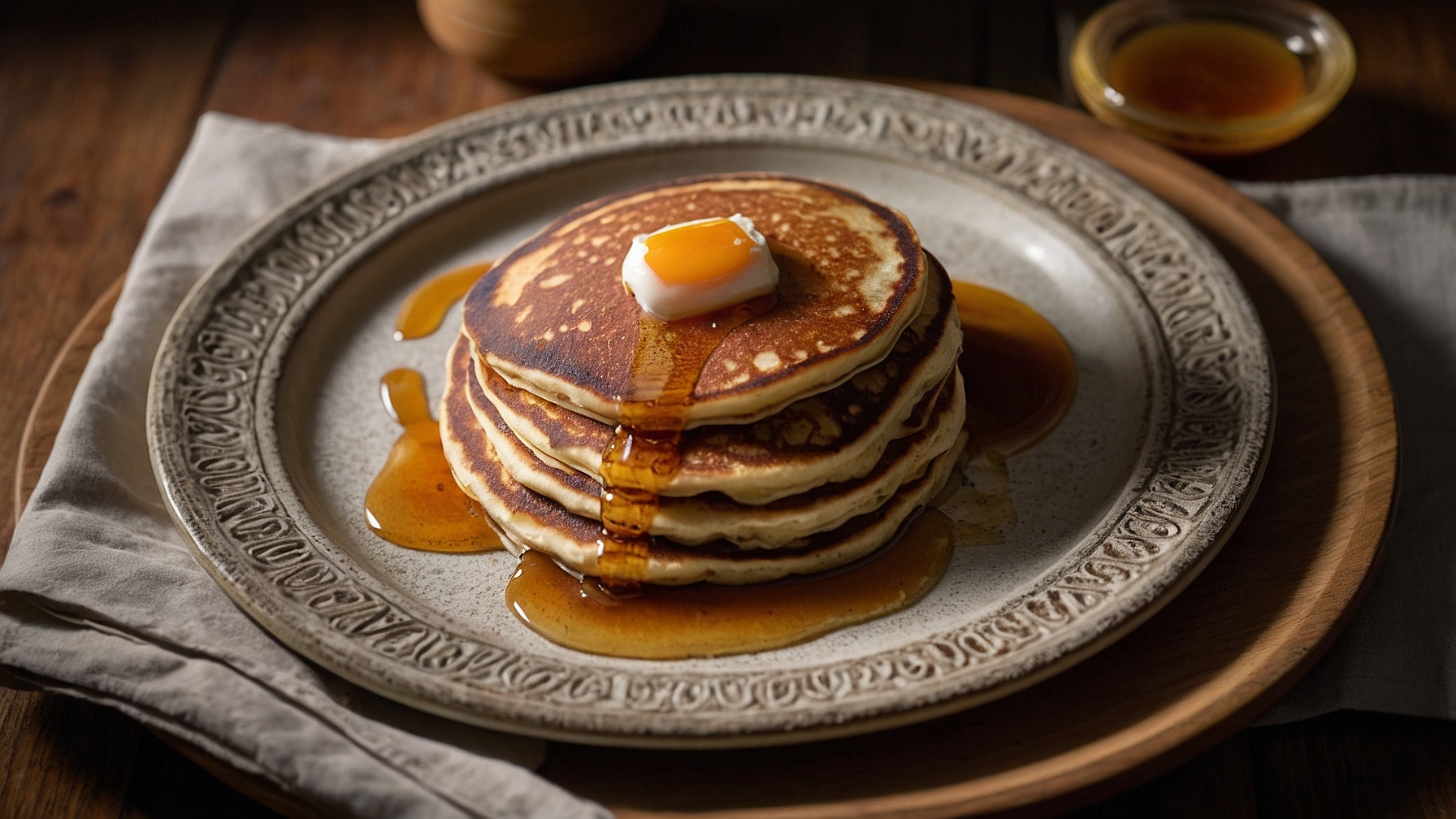
Utilize unfed sourdough discard or active starter for overnight-fermented pancakes.
Ingredients
Pancake Batter
- 1 cup (240ml) active sourdough starter or unfed discard, at room temperature (68-75°F / 20-24°C)
- 1 cup (240ml) whole milk or buttermilk, lukewarm (90-100°F / 32-38°C)
- 1 large egg, lightly beaten
- 2 tablespoons (30g) granulated sugar
- 2 tablespoons (30g) unsalted butter, melted, cooled
- 1 teaspoon (5ml) pure vanilla extract
- 1 cup (120g) all-purpose flour, spooned, leveled
- 1 teaspoon (5g) baking powder
- 1 teaspoon (5g) baking soda
- ½ teaspoon (3g) fine sea salt
Optional Toppings
- Pure maple syrup
- Fresh berries (blueberries, raspberries, sliced strawberries)
- Whipped cream
- Powdered sugar, for dusting
Instructions
- Combine Wet Ingredients: Combine 1 cup (240ml) sourdough starter or discard, 1 cup (240ml) lukewarm milk, 1 lightly beaten large egg, 2 tablespoons (30g) granulated sugar, 2 tablespoons (30g) melted, cooled unsalted butter, and 1 teaspoon (5ml) pure vanilla extract in a large mixing bowl. Whisk until uniform.
- Incorporate Flour: Gradually add 1 cup (120g) all-purpose flour to the wet mixture. Stir with a whisk or rubber spatula until just combined; stop when flour streaks disappear.
- Ferment Batter: Cover the bowl with plastic wrap or a clean kitchen towel. Ferment the batter at room temperature (68-75°F / 20-24°C) for 8-12 hours, or refrigerate for 12-24 hours. The batter will show small bubbles on the surface.
- Activate Leavening: Uncover the fermented batter. Sprinkle 1 teaspoon (5g) baking powder, 1 teaspoon (5g) baking soda, and ½ teaspoon (3g) fine sea salt over the batter. Fold into the batter with a rubber spatula until just combined; batter will expand and become airy.
- Preheat Griddle: Heat a griddle or skillet over medium heat to 350°F (175°C). Brush or wipe the surface with ½ teaspoon (2.5g) unsalted butter or neutral cooking oil; butter will sizzle.
- Portion Pancakes: Pour ¼ cup (60ml) batter per pancake onto the hot griddle, spacing pancakes 1 inch (2.5cm) apart.
- Cook First Side: Cook pancakes for 2-3 minutes. Observe bubbles forming on the surface, edges setting, and bottom turning light golden brown.
- Flip and Finish: Flip each pancake with a spatula. Cook for 1-2 minutes until golden brown and springs back when pressed.
- Serve Warm: Transfer cooked pancakes to a plate. For batches, keep finished pancakes warm on a baking sheet in a 200°F (95°C) oven.
Notes
- Starter/Discard Usage: Use active sourdough starter (fed 4-8 hours prior) for lighter pancakes, or unfed sourdough discard for tangier, denser pancakes. Ensure starter/discard is at room temperature (68-75°F / 20-24°C).
- Preventing Tough Pancakes: Overmixing batter develops gluten, producing tough pancakes. Stir only until ingredients combine; small lumps are acceptable.
- Griddle Temperature Control: Maintain medium heat (350°F / 175°C). High heat burns outsides; low heat dries pancakes. Test griddle temperature with a small batter drop.
- Storage and Reheating: Store leftover pancakes in an airtight container in the refrigerator for up to 3 days. Reheat in a toaster, toaster oven, or on a griddle for 1-2 minutes per side until warm. Freeze for up to 1 month, separated by parchment paper in a freezer-safe bag.
Pro Tips for Perfect Sourdough Pancakes
Ingredient Tips
- Sourdough Starter Activity:Use 1/2 cup (120g) of active starter, fed 4-6 hours prior, at its peak rise; a small spoon of it should float on water for robust leavening.
- Controlling Sourness:For a milder flavor, use 1/2 cup (120g) of starter 2-3 hours after feeding, when it’s just peaked but not yet deeply acidic; this significantly reduces tang.
- Flour Type & Measurement:Weigh 1.5 cups (180g) of unbleached all-purpose flour for consistent results; its moderate protein content (10-11%) ensures a tender, not chewy, crumb.
- Dairy Temperature:Bring 1 cup (240ml) of buttermilk to room temperature (70-72°F / 21-22°C) for 30 minutes; warmer dairy reacts more efficiently with leavening agents.
- Boosting Leavening:Incorporate 1 teaspoon of baking soda and 1/2 teaspoon of baking powder with your dry ingredients; this provides an extra lift beyond the sourdough’s natural activity, crucial for fluffy pancakes.
Technique Tips
- Gentle Mixing:Combine wet and dry ingredients with a spatula, mixing only 10-15 gentle stirs until just incorporated, leaving small lumps; overmixing develops gluten, resulting in dense pancakes.
- Batter Rest Time:Allow the batter to rest for 15-20 minutes at room temperature before cooking; this fully hydrates the flour and activates the baking soda with the sourdough’s acidity, creating more bubbles.
- Precise Griddle Temperature:Preheat your griddle to a consistent 325-350°F (163-177°C) for 5-7 minutes; use an infrared thermometer for accuracy, ensuring even golden-brown pancakes without burning or undercooking.
- Optimal Pancake Size:Ladle exactly 1/4 cup (60ml) of batter per pancake, aiming for a 4-5 inch (10-12 cm) diameter; this ensures uniform cooking and easy flipping.
- Perfect Flip Timing:Flip after 2-3 minutes, once visible bubbles begin to break on the surface and edges appear set and dry; the underside should be a uniform golden brown.
- Keeping Pancakes Warm:Transfer cooked pancakes to a wire rack on a baking sheet in an oven preheated to 200°F (93°C); this keeps them warm and prevents steaming, maintaining their fluffy texture until serving.
Common Issues
- Flat, Dense Pancakes:If your starter isn’t active enough, feed it 1:1:1 (starter:flour:water) and let it peak for 4-6 hours before using 1/2 cup (120g). Alternatively, if batter is too thin, add 1-2 tablespoons of additional flour until it slowly slides off a spoon rather than drips rapidly.
- Gummy or Chewy Texture:Avoid overmixing; stir only 10-15 times until just combined, as excessive mixing develops gluten. Also, verify your baking soda (1 tsp) and baking powder (1/2 tsp) are fresh by testing small amounts with vinegar/hot water respectively, ensuring adequate chemical leavening.
- Burned Outside, Raw Inside:Reduce griddle heat to 325-350°F (163-177°C) and confirm with an infrared thermometer; too high heat scorches the exterior before the interior cooks. Also, reduce batter per pancake to 1/4 cup (60ml) to ensure even heat penetration.
- Pancakes Sticking to Griddle:Ensure the griddle is preheated to 325-350°F (163-177°C) for 5 minutes before greasing. Then, apply 1/2 teaspoon of butter or oil per batch, wiping excess for a thin, even layer, preventing sticking.
How to Store, Reheat, and Serve Sourdough Pancakes
Refrigerator Storage
Duration: 3-5 days in airtight container
Allow traditional sourdough pancakes to cool completely before storing to prevent condensation. Stack with parchment paper between layers, then place in an airtight glass or BPA-free plastic container. For optimal quality, consume within 3-5 days. While safe up to 7 days, texture softens considerably after 3 days, becoming denser and chewier; edges may also dry out. The signature sourdough tang mellows considerably after day 5, losing some initial bright complexity.
Freezer Storage
Duration: 2-3 months
To freeze sourdough pancakes effectively, ensure they are completely cool. Lay them in a single layer on a baking sheet and freeze until solid (1-2 hours). This ‘flash-freezing’ prevents sticking. Transfer to a freezer-safe, heavy-duty zip-top bag, removing as much air as possible, or wrap tightly in plastic then foil. Thaw overnight in the refrigerator for best texture, or reheat directly from frozen. Expect a slightly denser texture post-thawing, but the robust sourdough flavor preserves well.
Reheating Instructions
- Oven:Preheat oven to 350°F (175°C). Arrange pancakes in a single layer on a baking sheet. Reheat for 10-15 minutes, flipping halfway, until thoroughly warmed and edges are slightly crisp. This method works best for an evenly heated pancake with a pleasant, crispy exterior.
- Toaster/Toaster Oven:For individual pancakes, place directly into a toaster on a medium-low setting for 1-2 cycles (1-3 minutes) until heated and lightly golden. For a toaster oven, preheat to 350-375°F (175-190°C) and toast for 5-8 minutes. Excellent for single servings and quickly restoring crispness.
- Microwave:Place 1-2 pancakes on a microwave-safe plate. Heat on high for 30-60 seconds, or until warm to the touch. Add 15-second increments for additional pancakes. This method is acceptable for speed, but can result in a softer, chewier texture lacking crispness.
- Skillet:Heat a non-stick skillet over medium-low heat. A tiny pat of butter or oil is optional. Warm pancakes for 1-2 minutes per side until heated through and gently golden. Very good for restoring gentle crispness and even warmth without drying out.
Make-Ahead Tips
The beauty of sourdough pancakes lies in their make-ahead potential. The sourdough starter can be fed and active the night before. The entire pancake batter can be mixed up to 2 days in advance and stored in an airtight glass jar or bowl in the refrigerator; whisk well before cooking. For maximum convenience, cook a large batch and follow “Freezer Storage” instructions, making them up to 2-3 months ahead. This allows for quick, easy breakfasts or brunch simply by reheating from frozen or thawed.