
Easy Homemade White Bread: Your Ultimate Guide
Bake a perfectly soft and fluffy loaf of homemade white bread using a remarkably straightforward process, eliminating the need for complex techniques.
This recipe relies on just 6 fundamental pantry ingredients and an active preparation time of only 15 minutes, making fresh, warm bread an achievable reality for any home kitchen.
The simple steps guide you through mixing, proofing, and baking to ensure a consistent, delicious result every time. Enjoy this versatile bread fresh from the oven, as hearty toast, or as the perfect foundation for classic sandwiches and comforting sides.
Easy Homemade White Bread
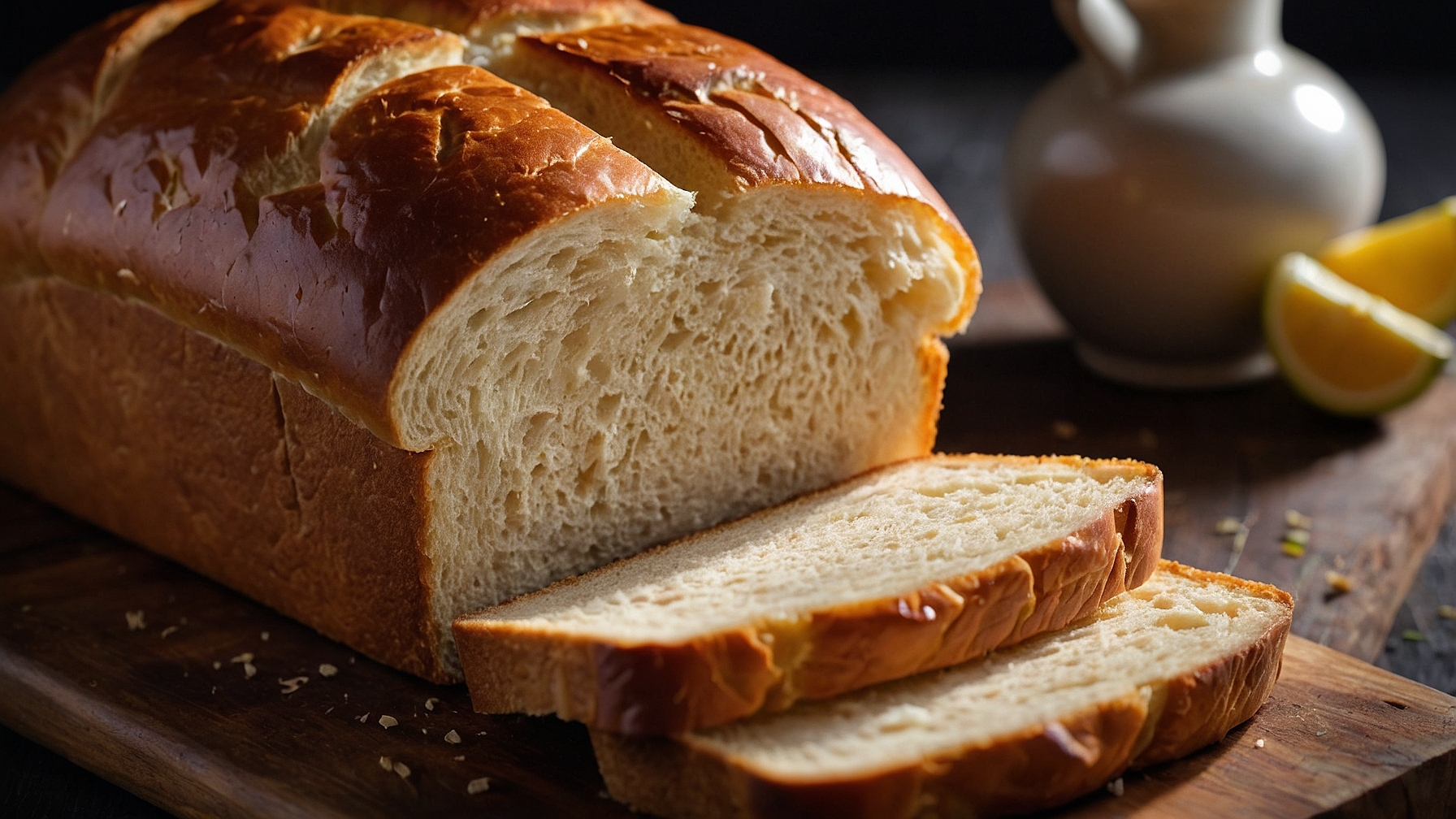
Bake a soft, airy homemade white bread loaf with these step-by-step instructions.
Ingredients
- 1 cup (240ml) warm water, 105-115°F (40-46°C)
- 2¼ teaspoons (7g) active dry yeast
- 2 tablespoons (25g) granulated sugar, divided
- 3 cups (360g) all-purpose flour, spooned and leveled, plus more for dusting
- 1½ teaspoons (9g) fine sea salt
- 2 tablespoons (30ml) vegetable oil or melted unsalted butter, plus more for greasing
- 1 tablespoon (15g) unsalted butter, softened, for greasing the loaf pan
Instructions
- Pour 1 cup (240ml) warm water into a large bowl. Sprinkle 2¼ teaspoons (7g) active dry yeast and 1 teaspoon (4g) granulated sugar over the water. Stir gently for 5 seconds. Let mixture sit for 5-10 minutes until foamy and visibly bubbly.
- In a separate medium bowl, whisk 3 cups (360g) all-purpose flour, the remaining 5 teaspoons (21g) granulated sugar, and 1½ teaspoons (9g) fine sea salt for 15 seconds.
- Pour 2 tablespoons (30ml) vegetable oil or melted butter into the activated yeast mixture. Stir for 5 seconds.
- Gradually add the dry flour mixture to the wet ingredients, 1 cup at a time. Mix with a wooden spoon or stand mixer on low speed for 2-3 minutes until a shaggy, cohesive dough forms and all flour incorporates.
- Turn dough onto a lightly floured surface. Knead by hand for 8-10 minutes until smooth, elastic, and no longer sticky. Alternatively, knead with a stand mixer dough hook on medium-low speed for 6-8 minutes until dough pulls cleanly from bowl sides and passes the windowpane test.
- Lightly grease a clean large bowl with vegetable oil. Place dough in bowl, turn once to coat. Cover bowl tightly with plastic wrap or a clean kitchen towel. Let dough rise in a warm, draft-free place (75-80°F / 24-27°C) for 60-90 minutes until doubled in size.
- Thoroughly grease a 9×5 inch (23×13 cm) loaf pan with 1 tablespoon (15g) softened unsalted butter.
- Gently press down on the risen dough to deflate. Turn dough onto a lightly floured surface.
- Form dough into a rectangle. Fold shorter ends into the middle. Roll dough tightly from one long side to the other. Pinch seam firmly along the bottom to seal. Tuck ends under.
- Place shaped dough seam-side down into the prepared loaf pan. Cover loaf pan loosely with plastic wrap or a clean kitchen towel. Let dough rise in a warm, draft-free place (75-80°F / 24-27°C) for 30-45 minutes until almost doubled in size and dough crests above pan rim.
- Adjust oven rack to middle position. Preheat oven to 375°F (190°C) during the last 15-20 minutes of the second rise.
- Place risen loaf pan into the preheated oven. Bake 30-35 minutes until top is deep golden brown and internal temperature registers 190-200°F (88-93°C). Tent loaf loosely with aluminum foil for the last 10 minutes of baking if crust browns too quickly.
- Remove loaf from oven. Let rest in pan for 5 minutes. Invert loaf onto a wire cooling rack. Remove pan. Cool completely for at least 60 minutes before slicing to avoid gummy texture.
Notes
- Yeast Activity Check: If yeast mixture does not foam after 10 minutes, water was too hot, too cold, or yeast is expired. Discard; restart with fresh yeast and water between 105-115°F (40-46°C).
- Flour Variations: All-purpose flour yields a soft loaf. Substitute bread flour for a chewier texture (higher protein). Spoon and level flour to prevent overpacking and dense bread.
- Kneading Technique: Knead by hand: Push dough away with heel of hand, fold, rotate, repeat. For stand mixer: Use dough hook; avoid overloading.
- Ideal Rising Environment: For rising: Use a warm, draft-free spot (75-80°F / 24-27°C). Options: turned-off oven or microwave, or near a sunny window.
- Proofing Time Adjustment: Adjust rising times based on visual cues (doubled in size, puffy appearance), not solely the clock. Over-proofing causes collapsed loaf or strong yeasty flavor.
- Storage: Once cooled, store bread at room temperature in an airtight container or bread bag for 3-4 days. For longer storage, slice and freeze in a freezer-safe bag for up to 3 months. Thaw individual slices as needed.
- Troubleshooting Dense Bread: Dense bread results from inactive yeast, insufficient kneading, or inadequate rising. Ensure correct warm water for yeast, thorough kneading, and proper rise times.
Pro Tips for Perfect Homemade White Bread
Ingredient Tips
- Yeast Activation Temperature:Activate 2.25 teaspoons (one packet) active dry yeast in 1/2 cup (120ml) water heated to precisely 105-115°F (40-46°C) for 5-10 minutes, until a visible 1/2-inch layer of foam appears on the surface, confirming active yeast.
- Precise Flour Measurement:Spoon 4 cups (480 grams) all-purpose or bread flour lightly into a measuring cup, then level with a straight edge, preventing excess flour for a tender, not dense, crumb structure.
- Salt Integration Timing:Add 1.5 teaspoons fine sea salt after initial flour and liquid are combined and a rough dough forms (about 2 minutes of mixing), but before extensive kneading, ensuring even distribution without inhibiting yeast.
- Optimal Water Temperature for Mixing:For the main mix, use water at 90-100°F (32-38°C), targeting a final dough temperature of 75-80°F (24-27°C) for ideal yeast fermentation and a consistent, predictable rise.
Technique Tips
- Effective Kneading Duration:Knead dough consistently for 8-10 minutes by hand, or 6-8 minutes on medium speed (setting 2-3) in a stand mixer, until it passes the “windowpane test” – stretches thin enough to see light through without tearing.
- First Proofing Conditions:Place dough in a lightly oiled bowl, cover, and let rise at 75-80°F (24-27°C) for 60-90 minutes, until it has visibly doubled in size and gently springs back when poked with two fingers.
- Tension-Building Loaf Shaping:After deflating, roll dough into a 9×12-inch rectangle on a lightly floured surface, then tightly roll from one long side, pinching the seam firmly along the bottom and ends to create surface tension for a uniform, high-rising loaf.
- Second Proofing Indicator:Allow shaped dough to rise in greased 9×5-inch loaf pans for 30-45 minutes in a warm spot, until the dough crowns about 1 inch above the pan rim, indicating optimal readiness for baking.
Common Issues
- Dense, Heavy Loaf:If your bread is consistently dense, reduce the flour by 1/4 cup (30g) and increase water by 1-2 tablespoons (15-30ml) in the initial mix, aiming for a dough that’s slightly sticky but manageable, not dry.
- Excessively Sticky Dough:If dough is unmanageably sticky after 5 minutes of initial kneading, incorporate an additional 1-2 tablespoons (15-30g) of flour, one tablespoon at a time, until it just clears the sides of the bowl and is tacky, not glued to your fingers.
- Insufficient Rise:Verify active dry yeast is fresh (check expiration date) and activated in 105-115°F (40-46°C) water; if no foam after 10 minutes, discard and use new yeast. Ensure proofing temperature is consistently 75-80°F (24-27°C).
- Pale or Uneven Crust:For a rich, golden brown crust, bake at 375°F (190°C) for 30-35 minutes, rotating halfway. If still pale, increase oven temperature by 25°F (14°C) for the final 10-15 minutes, or brush with 1 tablespoon milk before final proof.
- Hard, Thick Crust:Reduce baking time by 5-7 minutes, or lower the oven temperature by 15-20°F (8-11°C) during the last 15-20 minutes. For a softer crust, brush the hot loaf with 1 tablespoon melted butter immediately after removing from the oven, then cool.
How to Store and Reheat Homemade White Bread
Easy Homemade White Bread, with its tender crumb and delightful crust, is a joy to bake and even better to eat. To fully enjoy your efforts beyond the first day, proper storage and reheating techniques are essential. While fresh, room-temperature storage is ideal for the first 1-2 days (in a breathable bread box or paper bag to maintain crust texture), eventually you’ll need to consider longer-term solutions. Here’s how to keep your bread delicious.
Refrigerator Storage
Duration: 3-5 days in an airtight container or bag
Refrigeration is generally not recommended for homemade bread unless you absolutely need to extend its shelf life slightly beyond room temperature, or if your kitchen is particularly warm and humid. The cold temperature of the refrigerator accelerates the staling process, making the bread lose its soft texture and become dry and crumbly faster than at room temperature. The crust will also soften considerably. If you must refrigerate, ensure the bread is completely cooled before placing it in an airtight plastic bag or an airtight glass container to prevent moisture loss. While safe to eat for 3-5 days, the quality will noticeably decline after day 2, becoming best suited for toasting or turning into breadcrumbs.
Freezer Storage
Duration: 2-3 months
Freezing is by far the best method for long-term storage of homemade white bread, preserving its quality far better than refrigeration. Ensure the bread is completely cooled before freezing. For best results, slice the loaf before freezing; this allows you to thaw only what you need. Wrap individual slices or the entire loaf tightly in plastic wrap, then an additional layer of aluminum foil, and finally place it in a heavy-duty freezer bag. This triple-layer approach minimizes freezer burn and odor absorption. To thaw, simply remove the desired amount of slices or the whole loaf from the freezer and let it sit at room temperature for 1-2 hours for slices, or 3-4 hours for a whole loaf. While the texture may be very slightly drier than freshly baked bread, it will still be excellent for sandwiches or toast.
Reheating Instructions
- Oven (Best Method for Whole/Half Loaves):Preheat oven to 350°F (175°C). For a whole loaf, wrap it loosely in aluminum foil to prevent excessive browning and bake for 10-15 minutes, or until warmed through and the crust is slightly crispy. For individual slices, place directly on a baking sheet and bake for 3-5 minutes. The bread will feel soft and warm to the touch. This method restores some of the crust’s crispness and warms the interior beautifully.
- Toaster/Toaster Oven (Best Method for Slices):Place individual slices directly into a toaster or toaster oven. Toast on a medium setting for 2-4 minutes, depending on desired crispness and warmth. Ideal for frozen slices as well. The bread will be golden brown and warm, perfect for butter or spreads.
- Microwave (Quick but watch texture):Place a single slice on a microwave-safe plate. Heat on high for 10-20 seconds. While quick, the microwave can make the bread chewy and rubbery if overcooked, and it won’t restore any crispness to the crust. This method is acceptable for quickly softening bread for a sandwich, but not for achieving a fresh-baked feel.
- Air Fryer (For Crispy Slices):Place slices in a single layer in the air fryer basket. Cook at 300°F (150°C) for 2-3 minutes, flipping halfway. This method creates a lovely crispy exterior, similar to a toaster oven, and warms the interior without drying it out too much.
Make-Ahead Tips
Homemade white bread is an excellent candidate for making ahead. The primary make-ahead strategy is to bake the full loaf, allow it to cool completely, and then proceed directly to freezer storage. Freezing an entire, pre-sliced loaf allows you to have fresh-tasting bread on demand for several months without compromising quality significantly. You can also bake multiple loaves at once and freeze them. This ensures you always have a wholesome homemade option readily available, saving time on busy weekdays. Always ensure the bread is fully cooled to prevent moisture buildup and ice crystals during freezing, which can impact texture upon thawing.