
Ginger Garlic Chicken Noodle Soup: Your Ultimate Comfort Bowl
This Ginger Garlic Chicken Noodle Soup delivers exceptional comfort and flavor in a quick, nourishing meal, perfect for busy weeknights or a soothing pick-me-up.
It features a robust, aromatic broth infused with abundant fresh ginger and garlic, coming together in just 30 minutes using a simple one-pot method. Using pre-cooked rotisserie chicken streamlines preparation, ensuring a hearty and satisfying meal without extensive cooking. This recipe is also easy to customize with your favorite vegetables or by adding a squeeze of lime for extra brightness.
The fragrant combination of ginger and garlic makes this soup an excellent choice when you need a warming, fortifying dish, served with crusty bread or a light green salad.
Ginger Garlic Chicken Noodle Soup
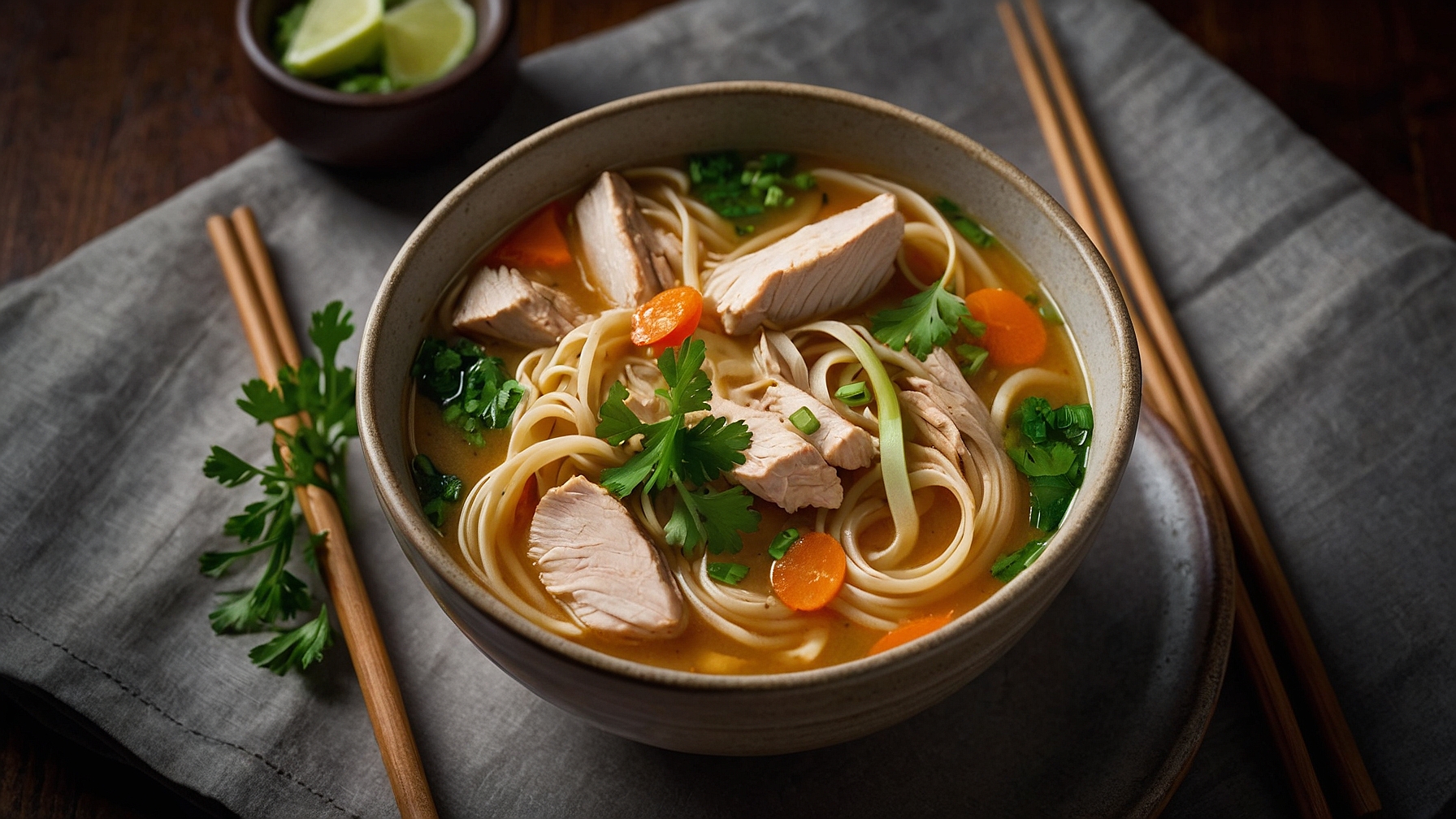
Aromatic chicken noodle soup with ginger and garlic.
Ingredients
- 2 tbsp (30ml) olive oil or neutral cooking oil
- 1 large yellow onion, finely diced
- 4 medium cloves garlic, peeled, minced
- 2-inch (5cm) piece fresh ginger root, peeled, finely grated
- 2 large carrots, peeled, thinly sliced 1/4 inch (0.6 cm) thick
- 2 stalks celery, trimmed, thinly sliced into crescent shapes
- 8 cups (1.9 liters) low-sodium chicken broth
- 1/4 cup (60ml) low-sodium soy sauce
- 1 tbsp (15ml) unseasoned rice vinegar
- 1 tsp (5ml) toasted sesame oil
- 1/2 tsp ground white pepper
- 1.5 lbs (680g) boneless, skinless chicken breasts or thighs, trimmed, cut into 1-inch (2.5cm) cubes
- 8 oz (225g) dried egg noodles or ramen noodles (without flavor packets)
- 4 green onions (scallions), trimmed, thinly sliced on the bias
- 1/4 cup (60ml) fresh cilantro leaves, roughly chopped
- 2 fresh limes, cut into wedges
Instructions
- Prepare Aromatics: Heat 2 tbsp (30ml) olive oil in a 6-quart (5.7-liter) stockpot over medium heat. Add 1 finely diced yellow onion; sauté 5-7 minutes, stirring occasionally, until softened and translucent.
- Infuse Flavors: Stir in 4 minced garlic cloves and 2-inch (5cm) grated ginger. Cook 1-2 minutes, stirring constantly, until fragrant.
- Add Vegetables: Add 2 thinly sliced carrots and 2 thinly sliced celery stalks. Cook 3-4 minutes, stirring occasionally, until slightly softened.
- Simmer Broth: Pour in 8 cups (1.9 liters) low-sodium chicken broth, 1/4 cup (60ml) low-sodium soy sauce, 1 tbsp (15ml) unseasoned rice vinegar, and 1/2 tsp ground white pepper. Bring to a rolling boil over medium-high heat. Reduce heat to low, cover, and simmer 10 minutes.
- Cook Chicken: Add 1.5 lbs (680g) 1-inch (2.5cm) cubed chicken. Increase heat to medium; cook 8-10 minutes, stirring occasionally, until chicken reaches 165°F (74°C) and shows no pink.
- Add Noodles: Stir in 8 oz (225g) dried egg noodles or ramen noodles (without flavor packets). Cook 5-7 minutes, or per package directions, until tender (al dente).
- Finish Soup: Remove pot from heat. Stir in 1 tsp (5ml) toasted sesame oil. Taste and adjust seasoning with additional low-sodium soy sauce or salt as needed.
- Serve: Ladle soup into bowls. Garnish each serving with thinly sliced green onions and chopped cilantro. Serve immediately with lime wedges.
Notes
- Vegetable Variation: Add baby spinach (stir in last minute until wilted) or sliced mushrooms (sauté with carrots and celery until softened).
- Spicy Kick: Add 1/2 tsp red pepper flakes with ginger and garlic in Step 2. Serve with sriracha.
- Storage: Store leftover soup in an airtight container in the refrigerator for up to 3 days. Noodles absorb broth; add extra broth when reheating. Reheat on stovetop or microwave until warmed.
- Herb Freshness: Add cilantro and green onions just before serving; cooking diminishes fresh taste and crisp texture.
Pro Tips for Perfect Ginger Garlic Chicken Noodle Soup
Ingredient Tips
- Fresh Ginger Preparation:Grate 2 tablespoons (about a 3-inch piece) of fresh ginger on a microplane immediately before adding; this ensures its pungent, citrusy oils are at peak potency and diffuse effectively into the broth.
- Garlic Mincing for Flavor:Mince 6-8 large cloves (2-3 tablespoons) of garlic very finely, aiming for a paste-like consistency; this maximizes allicin release during sautéing, preventing burnt chunks and intensifying flavor.
- Optimal Chicken Choice:Use 1.5 lbs of boneless, skinless chicken thighs; they remain exceptionally juicy after simmering for 20-25 minutes until fork-tender and easily shredded, unlike breast which dries quickly within 15 minutes.
- Uniform Vegetable Dice:Dice carrots and celery to a uniform 1/4-inch size; this ensures they cook evenly and become tender-crisp in approximately 5-7 minutes of simmering, preventing inconsistent textures.
Technique Tips
- Sautéing Aromatics Precisely:Sauté minced ginger and garlic in 2 tablespoons of neutral oil (like grapeseed) over medium-low heat for 1-2 minutes, stirring constantly, until highly fragrant but before any golden browning; burnt aromatics turn bitter.
- Achieving Gentle Simmer:After adding chicken, bring broth to a gentle simmer (small, consistent bubbles at the edges) for 20-25 minutes, or until an instant-read thermometer reads 165°F (74°C) and the meat easily shreds.
- Preventing Mushy Noodles:Cook egg noodles in separate boiling salted water for 3-4 minutes until just al dente, then rinse with cold water; add 1/2 cup to individual bowls just before serving to prevent them absorbing excess broth.
- Layered Seasoning Strategy:Add an initial 1 teaspoon of kosher salt to aromatics, then taste after 15 minutes of simmering; adjust with additional 1/2 teaspoon increments, allowing 2 minutes for dissolution before re-tasting.
- Finishing with Fresh Herbs:Stir in 1/4 cup of finely chopped fresh cilantro or green onion greens (scallions) just after removing from heat; residual warmth lightly wilts them, releasing vibrant notes while maintaining bright green color.
Common Issues
- Soup is Bland:If soup tastes bland after 30 minutes, stir in 1 tablespoon of low-sodium soy sauce or 1 teaspoon of fish sauce; these umami boosters deepen flavor, followed by an additional 1/4 teaspoon of black pepper.
- Aromatics Turned Bitter:If ginger or garlic turn dark brown or smell bitter after 2 minutes of sautéing, discard, wipe pot clean, and restart with fresh oil; burnt alliums permeate the entire soup with unpalatable taste.
- Soup Consistency Adjustment:If soup is too thin, simmer uncovered for 10-15 minutes to reduce by about 1 cup; if too thick, stir in 1/2 cup increments of hot chicken broth until it lightly coats the back of a spoon.
Storage, Reheating, and Variations for Your Soup
Refrigerator Storage
Duration: 3-4 days in airtight container
Store your Ginger Garlic Chicken Noodle Soup in an airtight glass or BPA-free plastic container. For the best experience, consider storing the noodles separately from the broth, chicken, and vegetables if you anticipate leftovers. When stored together, the noodles will absorb much of the broth, becoming significantly softer and mushy upon reheating, and the soup’s consistency will thicken. While the chicken and vegetables retain good quality, the vibrant ginger and garlic flavors will mellow slightly after the first day, and the overall freshness of the soup peaks within the first 2 days. The broth may also become less translucent over time.
Freezer Storage
Duration: Up to 2 months
Freezing Ginger Garlic Chicken Noodle Soup is an excellent option for long-term storage, but expect noticeable texture changes, particularly with the noodles. For optimal results, freeze the broth along with the cooked chicken and vegetables without the noodles. Once you’re ready to serve, thaw the base, bring it to a simmer, and cook fresh noodles to add directly to the hot soup. If you choose to freeze the soup with noodles included, ensure it is completely cooled before transferring to freezer-safe airtight containers or heavy-duty freezer bags. Leave about an inch of headspace in containers to allow for expansion. Thaw frozen soup overnight in the refrigerator (12-24 hours) or use the defrost setting on your microwave. Upon thawing and reheating, the noodles will be very soft and potentially mushy. The broth might also become slightly cloudy, and the distinct ginger and garlic flavors may be less pronounced, so a fresh grate of ginger or a squeeze of lime can help revive it.
Reheating Instructions
- Stovetop (Recommended):Pour the desired portion into a saucepan over medium-low heat. Stir gently and occasionally. Heat for 5-8 minutes, or until the soup is gently simmering and thoroughly heated through. Add a splash of fresh chicken broth or water if the soup has thickened too much during storage. This method offers the most even heating and best preservation of any remaining noodle texture.
- Microwave (Quick, but may alter texture):Transfer an individual serving to a microwave-safe bowl. Heat on high for 2-3 minutes, stirring halfway through. Continue heating in 30-second increments until the soup is steaming hot. Be aware that microwaving can lead to hot spots and further soften the noodles, potentially making them mushier than with stovetop reheating.
- Oven (For large batches, not ideal for noodles):If reheating a large quantity from the refrigerator, transfer the soup to an oven-safe pot or Dutch oven. Cover and bake at 300°F (150°C) for 20-30 minutes, stirring once or twice, until thoroughly heated. This method is generally less efficient for individual servings and can overcook the noodles significantly, making it the least recommended option for noodle soup.
Make-Ahead Tips
To enjoy freshly made Ginger Garlic Chicken Noodle Soup with minimal effort on a busy day, prepare several components in advance. Cook and shred your chicken up to 3 days ahead, storing it in an airtight container in the refrigerator. You can also prepare the aromatic base by sautéing the ginger and garlic, storing this mixture in the fridge for up to 5 days. The chicken broth itself can be made entirely in advance, infused with extra ginger and garlic for deeper flavor, and stored separately in an airtight container in the refrigerator for up to 4 days, or frozen for up to 3 months. For truly perfect noodle texture, always cook the noodles fresh just before serving. If pre-cooking noodles is essential, cook them very al dente, rinse immediately with cold water to halt the cooking process, toss with a tiny amount of neutral oil to prevent sticking, and store separately in the refrigerator for no more than 1 day. Combine and gently heat all components when ready to enjoy.