
Never Run Out: Make Your Own Muffin Liners!
Crafting your own muffin liners provides an immediate solution when you’re short on supplies and offers complete customization for any baking occasion.
This practical skill ensures you always have a non-stick option, transforming regular parchment paper into perfectly sized liners for cupcakes or muffins. Producing custom liners is also a cost-effective alternative to continually purchasing store-bought versions, saving money in the long run.
The process involves a simple folding and cutting technique, requiring only parchment paper, scissors, and your muffin tin as a guide. You can prepare a dozen custom liners in less than 10 minutes, making it ideal for impromptu baking sessions or when you want to match a specific party theme.
These handmade liners are effective for keeping your baked goods from sticking and add a unique, personal touch to every batch, whether it’s for a casual breakfast or a special event.
How To Make Your Own Muffin Liners
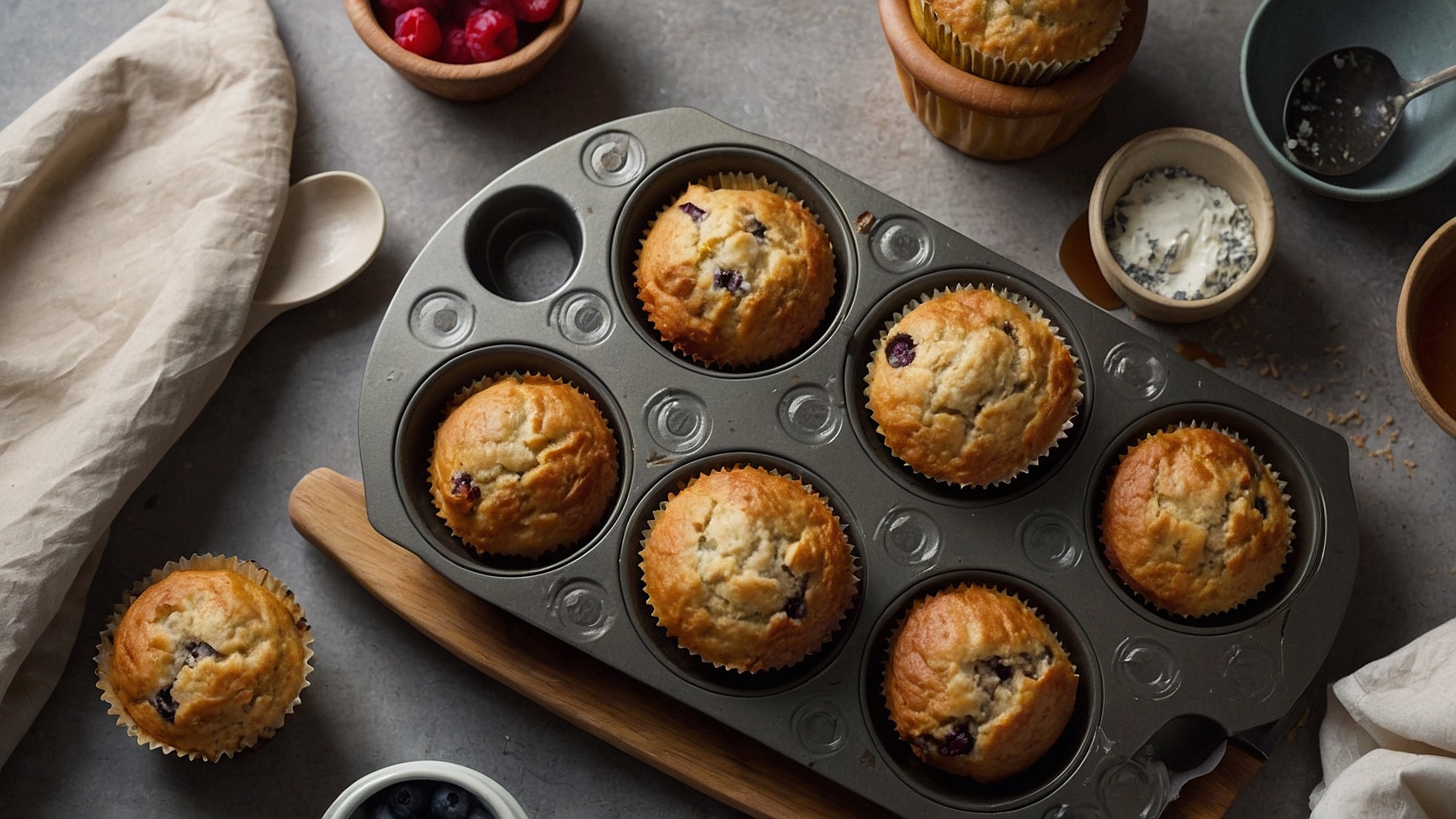
Craft custom parchment paper muffin liners for any baking pan.
Materials
- 1 roll (15 inches x 50 feet / 38 cm x 15 meters) parchment paper, oven-safe up to 450°F (230°C)
- 1 pair clean, sharp scissors
- 1 unit (12 inches / 30 cm or longer) rigid ruler or measuring tape
- 1 sharpened, non-toxic pencil
- 1 standard 12-cup muffin pan
- 1 round object (2.5 inches / 6.4 cm diameter), e.g., small drinking glass or cookie cutter
- 1 sturdy, clean cylindrical pressing tool (2.75-3 inches / 7-7.6 cm diameter), e.g., spice jar or larger glass
Optional Materials & Tools
- 1 set printed circular templates (optional, for precise cutting)
- 1 pair decorative-edge scissors (optional, for patterned edges)
- 1 set food-safe coloring pens (optional, for decorating liners)
- 1 package (12×16 inches / 30×40 cm) pre-cut parchment sheets (optional, alternative to roll)
Instructions
- Collect all listed materials on a clean, flat work surface.
- Unroll parchment paper smoothly onto the work surface. Measure and cut 5.5 inches x 5.5 inches (14 cm x 14 cm) squares for standard muffin cups.
- Place the 2.5 inches (6.4 cm) diameter round object into a muffin cup. Ensure it fits snugly at the base without touching sloped sides.
- Fold one parchment square diagonally in half, press, then unfold. Fold again diagonally in the opposite direction, press, then unfold. A pencil dot will mark the center.
- Center the round object over the pencil dot on the parchment square. Hold the object firmly in place.
- Bring parchment square edges up and around the round object. Press the paper against the object’s flat base to create a circular crease.
- Transfer the parchment paper with the round object inside into a muffin cup. Center the paper and object within the cup, sitting flat.
- Press down with the round object to secure the parchment base. Use fingers to fold and pleat excess parchment paper up the muffin cup sides, creating even pleats around the circumference.
- Remove the round object. Use the pressing tool (2.75-3 inches / 7-7.6 cm diameter) to press down into the liner in the muffin pan. Rotate the tool with downward pressure to define creases and set pleat shape.
- Lift the shaped parchment liner from the muffin cup. Repeat Steps 4-9 for remaining parchment squares until all liners are shaped.
- (Optional) Trim the top edge of each liner with sharp scissors to a uniform height of 0.5-0.75 inches (1.3-1.9 cm) above the muffin cup rim.
- (Optional) Use food-safe coloring pens to decorate liner exteriors. Allow ink to dry for 1-2 minutes.
- Stack finished liners. Store in an airtight container or dry box at room temperature.
Notes
- Adjust parchment square side length to double the muffin cup’s base diameter plus height for a perfect fit.
- Use a pre-printed circular template to mark the initial base circle before folding for consistent pleats.
- Lightly grease liner interiors with non-stick spray or butter before adding batter for easy release with delicate recipes.
- Use patterned or colored parchment paper to match themes.
- Lightly mist parchment paper with water before shaping to increase pliability. Avoid saturation to prevent tearing.
- Adapt this method for standard, jumbo, or mini muffin pans by adjusting parchment square size and round object diameter.
- Ensure pleats are even and uniform around the circumference for best results.
- Use high-quality, oven-safe parchment paper rated up to 450°F (230°C) to prevent sticking.
- Cut all parchment squares before shaping in batches for efficiency.
- For mini liners, use a 3.5 inches x 3.5 inches (9 cm x 9 cm) parchment square and a smaller round object (e.g., bottle cap).
Pro Tips for Perfect DIY Muffin Liners
Ingredient Tips
- Optimal Paper Choice:Select unbleached parchment paper with a minimum thickness of 40 GSM (grams per square meter) and explicitly labeled “silicone-coated.” This ensures superior non-stick properties and reliable heat resistance up to 425°F (220°C), preventing sticking and burning.
- Precise Paper Dimensions:For standard muffin tins (2.75-inch top diameter), cut parchment paper into exact 5×5 inch squares. This dimension allows for ideal pleat formation, ensuring the liner extends approximately 0.5 inches above the tin’s rim, providing ample coverage.
- Non-Parchment Treatment:If using non-parchment paper, brush each 5×5 inch square with a very thin, even layer of melted unsalted butter (approximately 1/8 teaspoon per square) or a neutral oil. This creates a translucent, non-stick barrier, preventing batter adhesion.
- Decorative Wrappers:For post-bake, decorative liners, utilize food-safe wax paper cut to 4×4 inch squares. These add visual flair for serving but are not suitable for baking, as wax melts at around 120°F (49°C).
Technique Tips
- Sharp Cutting for Clean Folds:Use sharp kitchen scissors or a paper trimmer to cut perfectly straight 5×5 inch squares. Clean, precise edges prevent tearing during shaping and ensure uniform, crisp pleats, crucial for the liner’s structural integrity.
- Glass Shaping Method:To achieve a well-defined shape, center a paper square inside the muffin cup. Firmly press a 2.5-inch diameter drinking glass into the center and twist for 10 seconds. This deepens the pleats, making the liner conform tightly and hold its structure.
- Pre-Baking for Form Stability:To enhance liner rigidity and prevent collapse, place empty, shaped liners into the muffin tin. Pre-bake them in a 300°F (150°C) oven for exactly 5 minutes. This process lightly ‘sets’ the paper’s folds, creating visibly stiffer, more stable liners.
- Anchoring Liners with Spray:To prevent liners from shifting when filling with batter, lightly spray the inside of each muffin tin cup with a quick 1-second burst of non-stick cooking spray before inserting the paper liner. This creates a subtle adhesive bond that keeps the liner securely in place.
Common Issues
- Liners Sticking:If muffins adhere, ensure you’re using silicone-coated parchment. For other papers, confirm 1/8 teaspoon of shortening was applied and lightly floured. Crucially, let muffins cool for 15-20 minutes in the tin; residual steam facilitates a clean release, making them slide off easily.
- Liners Collapsing/Shrinking:Liner collapse often stems from paper too thin (below 40 GSM) or insufficient shaping. Re-shape meticulously with a 2.5-inch diameter glass, pressing and rotating for at least 10 seconds. The 5-minute, 300°F (150°C) pre-bake also significantly stiffens folds, preventing shrinkage.
- Grease Bleed-Through:To stop grease absorption, always opt for silicone-coated parchment. If using alternatives, apply a meticulous 1/8 teaspoon of solid shortening per 5×5 inch square for a denser, impermeable barrier. Avoid filling muffin cups beyond 2/3 full to prevent overflow.
- Incorrect Fit (Too Tall/Short):For standard 2.75-inch muffin cups, if liners are too short, increase your paper squares to 5.5×5.5 inches for an extra 0.5 inches in height. If too tall, reduce to 4.5×4.5 inches. Aim for the liner to extend 0.25 to 0.5 inches above the tin’s rim.
Customize & Store Your Homemade Muffin Liners
These ‘Homemade Muffin Liners’ are delicate, edible pastry or cookie cups, perfect for holding sweet or savory fillings. Their appeal lies in their light, crisp texture and fresh flavor. Proper storage is crucial to maintaining their delicate crispness, as moisture is their primary enemy.
Refrigerator Storage
Duration: 5-7 days in an airtight container
Store your baked, unfilled Homemade Muffin Liners in an airtight glass container or a heavy-duty plastic container with a secure lid. Avoid storing near strong-smelling foods, as their delicate composition can absorb ambient odors. After day 3, they will begin to lose initial crispness, becoming softer and slightly chewier due to moisture absorption. The delicate buttery flavor may also dull slightly by day 5. Always store them unfilled; any moisture from fillings will accelerate softening significantly. A quick reheat can often restore much of their texture.
Freezer Storage
Duration: 1-2 months
Freezing is an excellent option for long-term storage. Once completely cooled, flash freeze shells on a baking sheet for 30 minutes until solid to prevent sticking. Transfer frozen liners to an airtight freezer-safe container or heavy-duty freezer bag, separating layers with parchment paper. To thaw, transfer from freezer to the refrigerator overnight (8-12 hours) or allow to come to room temperature for 1-2 hours. Expect a slightly more brittle texture upon thawing, but this can be largely remedied by re-crisping in the oven before use. Avoid thawing in the microwave, which can make them rubbery.
Reheating Instructions
- Oven:Preheat oven to 325°F for 5-8 minutes. Place thawed or refrigerated liners directly on a baking sheet. They are ready when firm to the touch and lightly golden around the edges, indicating crispness has returned. This method works best for restoring their original crisp texture and is highly recommended.
- Toaster Oven:Preheat to 300°F for 3-5 minutes. Keep a close eye to prevent burning. Ready when firm and fragrant. Acceptable for small batches, offering good results.
- Microwave:Not recommended. Microwaving will draw out moisture, making edible liners soft, chewy, or rubbery, destroying their desired crisp texture. Avoid if texture is a priority.
Method Rating: Oven works best for superior crispness. Toaster oven is acceptable for small quantities. Microwave is not recommended as it significantly degrades texture.
Make-Ahead Tips
These Homemade Muffin Liners are fantastic for make-ahead meal prep. The dough itself can be prepared up to 3 days in advance and stored tightly wrapped in plastic film in the refrigerator. Alternatively, the dough can be frozen for up to 1 month; thaw overnight in the fridge before rolling and shaping. Once baked, unfilled liners can be stored at room temperature for 1-2 days in an airtight container, or as detailed above in the refrigerator for 5-7 days, or frozen for 1-2 months. If adding a fresh fruit or cream-based filling, prepare the filling separately and store in an airtight container in the refrigerator for 2-3 days. Always assemble filled liners just before serving to maintain crispness and freshness, maximizing both texture and flavor.