
Baked German Pancake: A Breakfast Masterpiece Made Easy
This Baked German Pancake offers a dramatic, puffy presentation with minimal effort for an impressive breakfast.
It bakes in just 20-25 minutes using only 6 common pantry ingredients, making it an ideal choice for busy mornings.
Serve this versatile pancake for a quick weekday breakfast, an elegant brunch, or even as a unique light dessert.
The key to its signature puff is the hot buttered pan and high oven temperature, which rapidly cooks the egg-rich batter. This creates a spectacular rise as the steam expands within the batter. Made from a simple blend of eggs, milk, flour, sugar, and vanilla, the batter comes together quickly. Customize with your favorite toppings like fresh berries, powdered sugar, lemon juice, or a drizzle of maple syrup for a delicious meal. This recipe consistently delivers a light, airy texture with slightly crisp edges.
Baked German Pancake
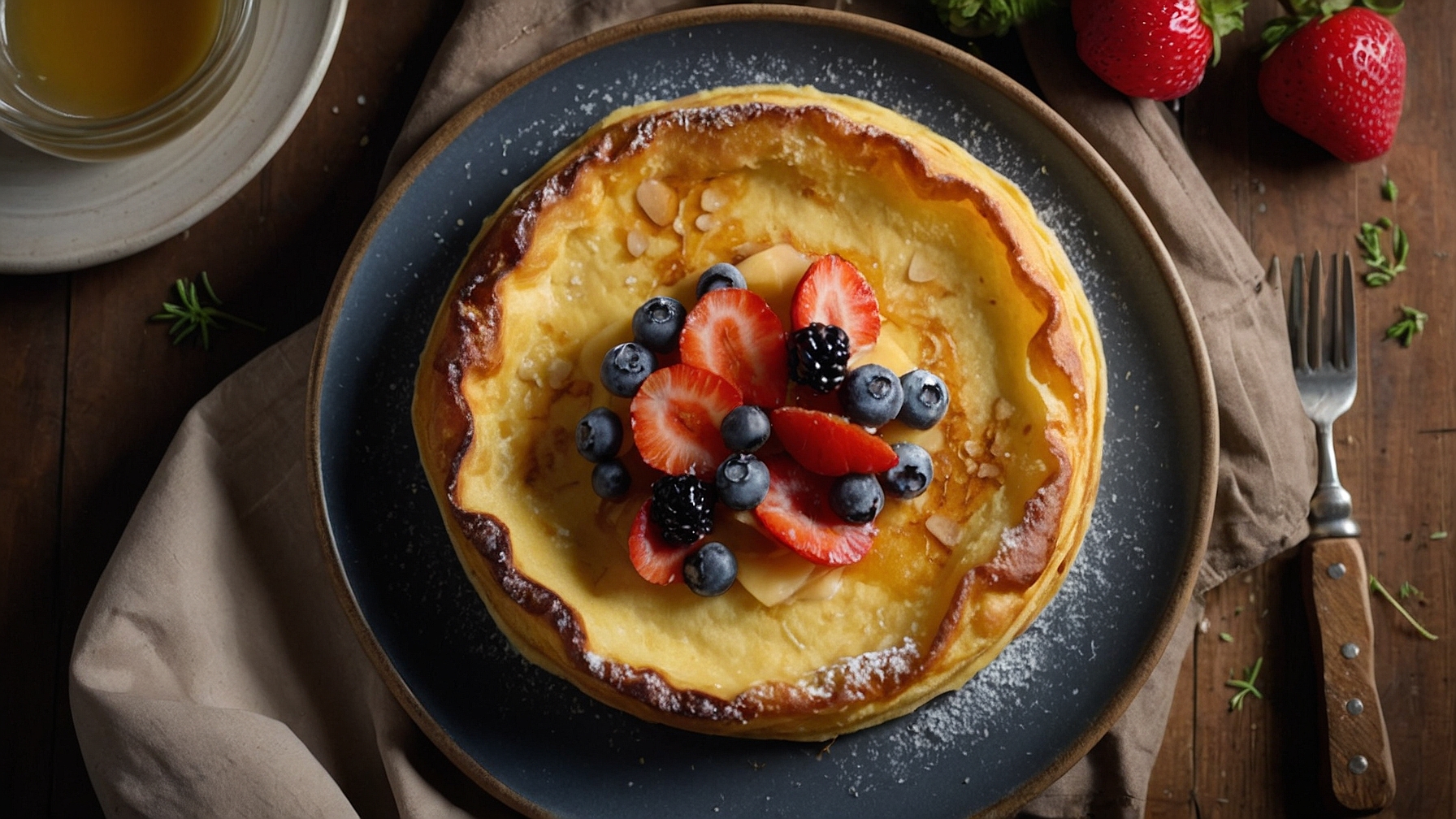
Baked German Pancake (Dutch Baby) features a crispy edge and a tender, custardy center, ideal for breakfast or brunch.
Ingredients
- 1 cup (120g) all-purpose flour, sifted
- 2 tablespoons (25g) granulated sugar
- 1/2 teaspoon (3g) fine sea salt
- 1 cup (240ml) whole milk, at room temperature
- 4 large eggs, at room temperature
- 1 teaspoon (5ml) pure vanilla extract
- 4 tablespoons (56g) unsalted butter, melted
Optional Toppings
- 2 tablespoons (25g) confectioners’ sugar, for dusting
- 1 cup (150g) mixed fresh berries, washed and hulled/stemmed
- 1/2 medium lemon, cut into wedges
- 1/4 cup (60ml) pure maple syrup, warmed
Instructions
- Preheat Oven and Skillet: Position an oven rack in the middle. Preheat oven to 425°F (220°C). Place a 10-inch (25 cm) oven-safe skillet into the preheating oven. Preheat skillet for 10-15 minutes until piping hot.
- Melt Butter: Carefully add 4 tablespoons (56g) unsalted butter to the hot skillet in the oven. Melt butter for 3-5 minutes until liquefied, sizzling, and lightly browned.
- Prepare Dry Ingredients: In a medium bowl, combine 1 cup (120g) sifted all-purpose flour, 2 tablespoons (25g) granulated sugar, and 1/2 teaspoon (3g) fine sea salt. Whisk for 15-20 seconds until uniformly mixed.
- Prepare Wet Ingredients: In a large bowl, whisk 4 large eggs for 1-2 minutes until light and pale yellow. Gradually add 1 cup (240ml) room temperature whole milk and 1 teaspoon (5ml) pure vanilla extract. Whisk until combined.
- Combine Batter: Slowly pour dry ingredients into wet ingredients. Whisk for 30-45 seconds until batter is smooth with no flour streaks. If using a blender, blend on medium speed for 20-30 seconds until smooth.
- Pour Batter into Hot Skillet: Using oven mitts, carefully remove the hot skillet with melted butter from the oven. Swirl butter to coat the bottom and sides. Pour batter into the hot skillet.
- Bake the Pancake: Return skillet to oven. Bake for 20-25 minutes without opening the door. Bake until edges are golden-brown and puffed, and the center is set. Internal temperature should reach 200°F (93°C).
- Serve Immediately: Remove pancake from oven. The pancake will deflate upon cooling.
- Garnish and Enjoy: Dust hot pancake with 2 tablespoons (25g) confectioners’ sugar. Serve immediately with 1 cup (150g) mixed fresh berries and 1/2 medium lemon, cut into wedges. Optionally, serve with 1/4 cup (60ml) warmed pure maple syrup.
Notes
- Optimal Temperature Ingredients: Use room temperature eggs and whole milk for optimal batter consistency. Cold ingredients can cause butter to seize and batter to be less smooth. Remove from refrigerator 30-60 minutes before cooking.
- The Power of Preheating: Preheat the skillet in the oven. A hot pan ensures characteristic puff and a crispy crust.
- Resist the Urge to Peek: Keep the oven door closed during baking, especially for the first 15-20 minutes. Opening the door introduces cool air, causing premature deflation.
- Skillet Size Matters: Use a 10-inch (25cm) cast iron skillet. A 9-inch (23cm) skillet yields a thicker pancake; add 2-3 minutes baking time. An 11-inch (28cm) skillet yields a thinner pancake; reduce baking time by 2-3 minutes. Bake until edges are golden-brown and center is set.
- Advance Preparation (Batter): Prepare batter up to 1 hour in advance; store in the refrigerator. For best puff, bake immediately after preparation. If chilled, let batter sit at room temperature for 15-20 minutes before baking.
- Customizing Sweetness: To reduce sweetness, use 1 tablespoon (12.5g) granulated sugar. To increase sweetness, use 3 tablespoons (37.5g) granulated sugar; monitor browning.
- Gluten-Free Alternative: For gluten-free, substitute all-purpose flour with 1 cup (120g) 1:1 gluten-free baking blend containing xanthan gum.
- Serving Suggestions: Serve with sliced bananas and chocolate sauce, sautéed apples with cinnamon, whipped cream, or toasted nuts.
Pro Tips for a Perfect Baked German Pancake
Ingredient Tips
- Room Temperature Dairy & Eggs:Bring 4 large eggs and 1/2 cup of whole milk to room temperature for at least 30 minutes before mixing. This promotes superior emulsification, yielding a smoother, more cohesive batter that contributes to a higher, more consistent puff.
- Sifted All-Purpose Flour:Sift 1/2 cup (60g) of all-purpose flour directly into your mixing bowl. This crucial step eliminates lumps and incorporates air, resulting in a lighter, airier batter that expands uniformly and dramatically when baked.
- High-Fat Unsalted Butter:Opt for 2 tablespoons of unsalted butter with a minimum of 80% butterfat for pan preparation. Its higher smoke point creates a superior non-stick surface and helps achieve a beautifully crisp, golden-brown bottom crust.
Technique Tips
- Batter Resting Time:After mixing, allow the batter to rest at room temperature for a minimum of 20 minutes, or ideally, refrigerate for 1 hour. This allows the flour to fully hydrate and the gluten to relax, which is paramount for achieving that signature high puff and a truly tender, non-chewy texture.
- Intensely Hot Pan Preheat:Place your 10-inch cast iron skillet (or similar oven-safe pan) into a cold oven, then preheat to 425°F (220°C). Keep the pan in the oven for at least 20 minutes after it reaches temperature. This extreme heat is the single most critical factor for the immediate “steam explosion” required for an impressive rise.
- Swift Butter & Batter Transfer:Once the pan is intensely hot (smoking slightly), carefully add 2 tablespoons of cold, cubed unsalted butter. Swirl for 10-15 seconds until completely melted and bubbling, coating the bottom and 1 inch up the sides. Immediately pour in the rested batter and return the pan to the oven within 30 seconds to prevent significant heat loss.
- Two-Stage Baking Temperature:Bake at 425°F (220°C) for the first 15 minutes, watching for dramatically puffed and deeply golden brown edges. Then, reduce the oven temperature to 350°F (175°C) and continue baking for an additional 5-8 minutes. This ensures the center sets thoroughly without over-browning the delicate edges.
Common Issues
- Insufficient Puff/Rise:If your pancake lacks impressive puff, ensure your oven is at a true 425°F (220°C) for at least 25 minutes with the pan inside. Additionally, pour the batter within 30 seconds of adding butter to maximize the initial steam lift and dramatic expansion.
- Soggy Bottom or Sticking:A damp, un-golden, or stuck bottom indicates either not enough fat or an insufficiently hot pan. Increase the preheating time to 30 minutes, using a generous 2 tablespoons of butter, ensuring it’s actively bubbling. Cook until the bottom is visibly golden-brown and slides off with a gentle nudge.
- Dense or Rubbery Texture:This issue typically arises from overmixing the batter. After adding the flour, mix for no more than 60 seconds, just until no dry streaks of flour remain. Also, religiously adhere to the 20-minute batter resting period to allow gluten to relax, preventing toughness.
- Rapid Collapse Post-Bake:While some deflation is natural for German pancakes, excessive rapid collapse suggests the internal structure wasn’t fully set. Ensure you bake for the full 8 minutes at 350°F (175°C) in the second stage. This solidifies egg proteins more thoroughly, helping the pancake hold its majestic form for several minutes longer.
How to Store, Reheat, and Serve Your Baked German Pancake
A freshly baked German Pancake, with its dramatic puff and custardy interior, is a delight. While best enjoyed straight from the oven, proper storage and reheating techniques allow you to savor its unique charm for days to come, ensuring no delicious bite goes to waste. Understanding how to manage leftovers also opens up opportunities for convenient make-ahead breakfasts.
Refrigerator Storage
Duration: 3-4 days in airtight container
Once cooled completely, transfer individual slices or the entire deflated pancake to an airtight glass or sturdy plastic container. The characteristic puff will have already subsided, and the pancake will settle into a denser, more uniform texture. While still delicious, the crisp edges will soften, and the custardy interior will become firmer. The rich, eggy flavor remains pleasant, though the delicate buttery aroma is less pronounced after the first day. Quality begins to decline after day 3, with a slight drying around the edges, making it best to consume within this timeframe.
Freezer Storage
Duration: 2-3 months
For longer storage, freezing is an excellent option, especially for pre-portioned slices. To freeze, ensure the pancake is completely cool. Wrap individual slices tightly in heavy-duty aluminum foil, then place the foil-wrapped portions into a freezer-safe zip-top bag or an airtight freezer container. This double layer of protection helps prevent freezer burn. When ready to enjoy, thaw the pancake overnight in the refrigerator. Alternatively, smaller frozen slices can often be reheated directly from frozen in the oven or toaster oven, adding a few extra minutes to the reheating time. Expect the texture to be slightly denser and less airy than freshly baked, and any initial crispness will be lost, but the flavor will still be very enjoyable.
Reheating Instructions
- Oven (Recommended):Preheat oven to 350°F (175°C). Place pancake slices on a baking sheet and heat for 10-15 minutes, or until the edges begin to crisp slightly and the center is thoroughly warm. This method works best for restoring some of the original texture, ensuring even heating and preventing sogginess.
- Toaster Oven:Similar to a full oven, preheat to 350°F (175°C) and heat individual slices for 5-8 minutes. Great for single servings, as it helps crisp up the exterior nicely.
- Microwave (Acceptable, with caveats):Heat individual slices on a microwave-safe plate for 30-60 seconds, or until steaming hot. While convenient, the microwave can sometimes make the pancake slightly chewier or rubbery and will not restore any crispness. It’s a quick fix but sacrifices texture.
- Skillet:Heat a non-stick skillet over medium-low heat. Add a tiny pat of butter if desired. Place pancake slice in skillet and heat for 3-5 minutes per side, until heated through and edges are lightly crisped. This method is excellent for individual slices, adding back some delightful buttery crispness.
Make-Ahead Tips
The batter for Baked German Pancake can be prepared up to 24 hours in advance. Whisk all ingredients together (eggs, milk, flour, sugar, vanilla, salt) until smooth, then transfer the batter to an airtight container or a jar with a tight-fitting lid. Store it in the refrigerator. When ready to bake, simply give the batter a quick whisk to recombine any separated ingredients, then proceed with the recipe as usual. This allows for minimal morning prep, making it perfect for a stress-free weekend breakfast or brunch. Alternatively, the entire pancake can be baked ahead, cooled, and stored in the fridge for up to 3 days, then reheated using one of the methods above. Freshly baked is always superior, but a prepped batter is a fantastic time-saver.